Sunday, October 22, 2023

NASA's John Mather keeps redefining our understanding of the cosmos

Space isn't hard only on account of the rocket science. The task of taking a NASA mission from development and funding through construction and launch — all before we even use the thing for science — can span decades. Entire careers have been spent putting a single satellite into space. Nobel-winning NASA physicist John Mather, mind you, has already helped send up two.

In their new book, Inside the Star Factory: The Creation of the James Webb Space Telescope, NASA's Largest and Most Powerful Space Observatory, author Christopher Wanjek and photographer Chris Gunn take readers on a behind the scenes tour of the James Webb Space Telescope's own journey from inception to orbit. Weaving examinations of the radical imaging technology that enables us to peer deeper into the early universe than ever before with profiles of the researchers, advisors, managers, engineers and technicians that made it possible through three decades of effort. In this week's Hitting the Books excerpt, a look at JWST project scientist John Mather and his own improbable journey from rural New Jersey to NASA. 

it's the cover of the book
MIT Press

Excerpted from “Inside the Star Factory: The Creation of the James Webb Space Telescope, NASA's Largest and Most Powerful Space Observatory” Copyright © 2023 by Chris Gunn and Christopher Wanjek. Used with permission of the publisher, MIT Press.


John Mather, Project Scientist 

— The steady hand in control 

John Mather is a patient man. His 2006 Nobel Prize in Physics was thirty years in the making. That award, for unswerving evidence of the Big Bang, was based on a bus-sized machine called COBE — yet another NASA mission that almost didn’t happen. Design drama? Been there. Navigate unforeseen delays? Done that. For NASA to choose Mather as JWST Project Scientist was pure prescience. 

Like Webb, COBE — the Cosmic Background Explorer — was to be a time machine to reveal a snapshot of the early universe. The target era was just 370,000 years after the Big Bang, when the universe was still a fog of elementary particles with no discernable structure. This is called the epoch of recombination, when the hot universe cooled to a point to allow protons to bind with electrons to form the very first atoms, mostly hydrogen with a sprinkling of helium and lithium. As the atoms formed, the fog lifted, and the universe became clear. Light broke through. That ancient light, from the Big Bang itself, is with us today as remnant microwave radiation called the cosmic microwave background. 

Tall but never imposing, demanding but never mean, Mather is a study in contrasts. His childhood was spent just a mile from the Appalachian Trail in rural Sussex County, New Jersey, where his friends were consumed by earthly matters such as farm chores. Yet Mather, whose father was a specialist in animal husbandry and statistics, was more intrigued by science and math. At age six he grasped the concept of infinity when he filled up a page in his notebook with a very large number and realized he could go on forever. He loaded himself up with books from a mobile library that visited the farms every couple of weeks. His dad worked for Rutgers University Agriculture Experiment Station and had a laboratory on the farm with radioisotope equipment for studying metabolism and liquid nitrogen tanks with frozen bull semen. His dad also was one of the earliest users of computers in the area, circa 1960, maintaining milk production records of 10,000 cows on punched IBM cards. His mother, an elementary school teacher, was quite learned, as well, and fostered young John’s interest in science.

A chance for some warm, year-round weather ultimately brought Mather in 1968 to University of California, Berkeley, for graduate studies in physics. He would fall in with a crowd intrigued by the newly detected cosmic microwave background, discovered by accident in 1965 by radio astronomers Arno Penzias and Robert Wilson. His thesis advisor devised a balloon experiment to measure the spectrum, or color, of this radiation to see if it really came from the Big Bang. (It does.) The next obvious thing was to make a map of this light to see, as theory suggested, whether the temperature varied ever so slightly across the sky. And years later, that’s just what he and his COBE team found: anisotropy, an unequal distribution of energy. These micro-degree temperature fluctuations imply matter density fluctuations, sufficient to stop the expansion, at least locally. Through the influence of gravity, matter would pool into cosmic lakes to form stars and galaxies hundreds of millions of years later. In essence, Mather and his team captured a sonogram of the infant universe. 

Yet the COBE mission, like Webb, was plagued with setbacks. Mather and the team proposed the mission concept (for a second time) in 1976. NASA accepted the proposal but, that year, declared that this satellite and most others from then on would be delivered to orbit by the Space Shuttle, which itself was still in development. History would reveal the foolishness of such a plan. Mather understood immediately. This wedded the design of COBE to the cargo bay of the unbuilt Shuttle. Engineers would need to meet precise mass and volume requirements of a vessel not yet flown. More troublesome, COBE required a polar orbit, difficult for the Space Shuttle to deliver. The COBE team was next saddled with budget cuts and compromises in COBE’s design as a result of cost overruns of another pioneering space science mission, the Infrared Astronomical Satellite, or IRAS. Still, the tedious work continued of designing instruments sensitive enough to detect variations of temperatures just a few degrees above absolute zero, about −270°C. From 1980 onward, Mather was consumed by the creation of COBE all day every day. The team needed to cut corners and make risky decisions to stay within budget. News came that COBE was to be launched on the Space Shuttle mission STS-82-B in 1988 from Vandenberg Air Force Base. All systems go.

Then the Space Shuttle Challenger exploded in 1986, killing all seven of its crew. NASA grounded Shuttle flights indefinitely. COBE, now locked to Shuttle specifications, couldn’t launch on just any other rocket system. COBE was too large for a Delta rocket at this point; ironically, Mather had the Delta in mind in his first sketch in 1974. The team looked to Europe for a launch vehicle, but this was hardly an option for NASA. Instead, the project managers led a redesign to shave off hundreds of pounds, to slim down to a 5,000-pound launch mass, with fuel, which would just make it within the limits of a Delta by a few pounds. Oh, and McDonnell Douglas had to build a Delta rocket from spare parts, having been forced to discontinue the series in favor of the Space Shuttle. 

The team worked around the clock over the next two years. The final design challenge was ... wait for it ... a sunshield that now needed to be folded into the rocket and spring-released once in orbit, a novel approach. COBE got the greenlight to launch from Vandenberg Air Force Base in California, the originally desired site because it would provide easier access to a polar orbit compared to launching a Shuttle from Florida. Launch was set for November 1989. COBE was delivered several months before. 

Then, on October 17, the California ground shook hard. A 6.9-magnitude earthquake struck Santa Cruz County, causing widespread damage to structures. Vandenberg, some 200 miles south, felt the jolt. As pure luck would have it, COBE was securely fastened only because two of the engineers minding it secured it that day before going off to get married. The instrument suffered no damage and launched successfully on November 18. More drama came with the high winds on launch day. Myriad worries followed in the first weeks of operation: the cryostat cooled too quickly; sunlight reflecting off of Antarctic ice played havoc with the power system; trapped electrons and protons in the Van Allen belts disrupted the functioning of the electronics; and so on. 

All the delays, all the drama, faded into a distant memory for Mather as the results of the COBE experiment came in. Data would take four years to compile. But the results were mind-blowing. The first result came weeks after launch, when Mather showed the spectrum to the American Astronomical Society and received a standing ovation. The Big Bang was safe as a theory. Two years later, at an April 1992 meeting of the American Physical Society, the team showed their first map. Data matched theory perfectly. This was the afterglow of the Big Bang revealing the seeds that would grow into stars and galaxies. Physicist Stephen Hawking called it “the most important discovery of the century, if not of all time.” 

Mather spoke humbly of the discovery at his Nobel acceptance speech in 2006, fully crediting his remarkable team and his colleague George Smoot, who shared the prize with him that year. But he didn’t downplay the achievement. He noted that he was thrilled with the now broader “recognition that our work was as important as people in the professional astronomy world have known for so long.” 

Mather maintains that realism today. While concerned about delays, threats of cancellation, cost overruns, and not-too-subtle animosity in the broader science community over the “telescope that ate astronomy,” he didn’t let this consume him or his team. “There’s no point in trying to manage other people’s feelings,” he said. “Quite a lot of the community opinion is, ‘well, if it were my nickel, I’d spend it differently.’ But it isn’t their nickel; and the reason why we have the nickel in the first place is because NASA takes on incredibly great challenges. Congress approved of us taking on great challenges. And great challenges aren’t free. My feeling is that the only reason why we have an astronomy program at NASA for anyone to enjoy — or complain about — is that we do astonishingly difficult projects. We are pushing to the edge of what is possible.” 

Webb isn’t just a little better than the Hubble Space Telescope, Mather added; it’s a hundred times more powerful. Yet his biggest worry through mission design was not the advanced astronomy instruments but rather the massive sunshield, which needed to unfold. All instruments and all the deployment mechanisms had redundancy engineered into them; there are two or more ways to make them work if the primary method fails. But that’s not the only issue with a sunshield. It would either work or not work. 

Now Mather can focus completely on the science to be had. He expects surprises; he’d be surprised if there were no surprises. “Just about everything in astronomy comes as a surprise,” he said. “When you have new equipment, you will get a surprise.” His hunch is that Webb might reveal something weird about the early universe, perhaps an abundance of short-lived objects never before seen that say something about dark energy, the mysterious force that seems to be accelerating the expansion of the universe, or the equally mysterious dark matter. He also can’t wait until Webb turns its cameras to Alpha Centauri, the closest star system to Earth. What if there’s a planet there suitable for life? Webb should have the sensitivity to detect molecules in its atmosphere, if present. 

“That would be cool,” Mather said. Hints of life from the closest star system? Yes, cool, indeed.

This article originally appeared on Engadget at https://ift.tt/lzeF8IR

from Engadget is a web magazine with obsessive daily coverage of everything new in gadgets and consumer electronics https://ift.tt/lzeF8IR
via IFTTT https://ift.tt/YhcHwuP

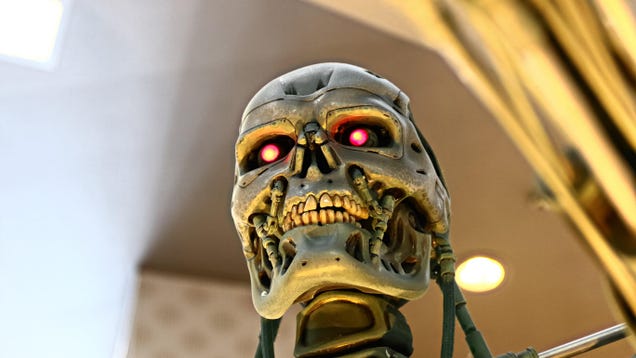
Here Are the Top AI Stories You Missed This Week

If you’re behind on what’s happening with the robot uprising, have no fear. Here’s a quick look at some of the weirdest and wildest artificial intelligence news from the past week. Also, don’t forget to check out our weekly AI write-up, which will go into more detail on this same topic.

Read more...


from Gizmodo https://ift.tt/JZx7MgI
via IFTTT https://ift.tt/B8Lu1kQ

Saturday, October 21, 2023

SAG-AFTRA Tells Striking Actors to Avoid Character Costumes for Halloween

Halloween is just over a week away, with parties for the annual holiday likely hitting next weekend. Normally, this year’s festivities would be like any other year: you dress up with your friends as your favorite characters and hang out or watch some horror movies, or you watch other people dress up as your favorite…

Read more...


from Gizmodo https://ift.tt/FPRVtgq
via IFTTT https://ift.tt/r9Tapem

SpaceX will ramp up its launches in 2024 for Starlink's satellite-to-cell service

SpaceX is planning to launch as many rockets as it can over the next two-and-a-half months in an attempt to fly 100 flights by the end of the year, company exec Bill Gerstenmaier recently told the US Senate Subcommittee on Space and Science. He also revealed that the company has an even more ambitious goal for 2024: To launch around 12 flights a month, for a total of 144 missions for the whole year. According to a company official who talked to Ars Technica, SpaceX intends to ramp up its mission numbers next year, mostly so that it could officially roll out its satellite-to-cell phone service. 

"With our 2 million users, (we) need that constellation refreshed," the spokesperson told Ars. "We're also going to look at direct to cell communications with Starlink, and that's a key feature that gets added next year with those 144 flights."

The company first announced the service, which will allow normal smartphones to connect with its satellites, back in 2022. It made the revelation alongside T-Mobile, which promised to make the capability accessible to its subscribers. T-Mobile CEO Mike Sievert likened the technology to putting a cellular tower in the sky and said it could eliminate deadzones one day, allowing people to easily get in touch with loved ones even if they're in the middle of the ocean. SpaceX VP of Starlink enterprise sales Jonathan Hofeller also said earlier this year that the company is gearing up to start testing the service. 

As Ars notes, SpaceX previously said that the capability will require larger satellites that will launch onboard the company's Starship vehicle. The giant rocket is yet to be operational, though, and the company had to design an intermediate-sized Starlink satellite that can fly on its Falcon 9 rockets. That satellite is bigger than older models but smaller than the ones needed to enable voice and data services. SpaceX doesn't have plans to roll out Starlink voice and data until 2025, though, and will introduce its direct-to-cell capability with texting coverage only next year. 

This article originally appeared on Engadget at https://ift.tt/osbdcjB

from Engadget is a web magazine with obsessive daily coverage of everything new in gadgets and consumer electronics https://ift.tt/osbdcjB
via IFTTT https://ift.tt/TkZ3tJs

The Biggest Moments of the SBF Trial So Far

The trial of FTX founder Sam Bankman-Fried reached its halfway point, and a flurry of incriminating evidence, emotional testimonies, and odd tales have surfaced in the last three weeks.

Read more...


from Gizmodo https://ift.tt/Q5dk3ZG
via IFTTT https://ift.tt/Ndw9zD7

Friday, October 20, 2023

NVIDIA's latest AI model helps robots perform pen spinning tricks as well as humans

The use for humans in the world of robotics, even as teachers, is shrinking thanks to AI. NVIDIA Research has announced the creation of Eureka, an AI agent powered by GPT-4 that has trained robots to perform tasks using reward algorithms. Notably, Eureka taught a robotic hand to do pen spinning tricks as well as a human can (honestly, as you can see in the YouTube video below, better than many of us).

Eureka has also taught quadruped, dexterous hands, cobot arms and other robots to open drawers, use scissors, catch balls and nearly 30 different tasks. According to NVIDIA Research, the AI agent's trial and error-based reward programs are 80 percent more effective than those written by human experts. This shift meant the robots' performance also improved by over 50 percent. Eureka also self-evaluates based on training results, instructing changes in reward functions as it sees fit.

NVIDIA Research has published a library of its Eureka algorithms, encouraging others to try them out on NVIDIA Isaac Gym, the organization's "physics simulation reference application for reinforcement learning research."

The idea of robots teaching robots is seeing increased interest and success. A May 2023 paper published in the Transactions on Machine Learning Research journal presented a new system called SKILL (Shared Knowledge Lifelong Learning), which allowed AI systems to learn 102 different skills, including diagnosing diseases from chest X-rays and identifying species of flowers. The AIs shared their knowledge — acting as teachers in a way — with each other over a communication network and were able to master each of the 102 skills. Researchers at schools like MIT and the University of Bristol have also had success, specifically in using AI to teach robots how to manipulate objects.

This article originally appeared on Engadget at https://ift.tt/z6EP3CF

from Engadget is a web magazine with obsessive daily coverage of everything new in gadgets and consumer electronics https://ift.tt/z6EP3CF
via IFTTT https://ift.tt/h357Jms

Engadget Podcast: Breaking down the “Techno-Optimist Manifesto” with Paris Marx

It seems like Marc Andreessen had a lot of free time this week, as the VC wrapped up his entire pro-tech worldview in a massive tome, the Techno-Optimist Manifesto. Andreessen claims “technology is the glory of human ambition and achievement, the spearhead of progress, and the realization of our potential,” and he goes on to vilify anyone who dares to step in the way of “progress.” To break down this document, we’re joined by tech critic Paris Marx, host of the Tech Won’t Save Us podcast, and the author of the Disconnect newsletter, as well as the book Road to Nowhere: What Silicon Valley Gets Wrong About the Future of Transportation.

Also, Deputy Editor Nathan Ingraham discusses why he loves Spider-Man 2 on the PlayStation 5, and we try to make sense of Apple’s new $79 Pencil.


Listen below or subscribe on your podcast app of choice. If you've got suggestions or topics you'd like covered on the show, be sure to email us or drop a note in the comments! And be sure to check out our other podcast, Engadget News!

Subscribe!

Topics

  • Nate Ingraham’s Spider-Man 2 review: The rare game that’s both bigger and better – 0:55

  • We break down Mark Andreessen’s dangerously optimistic manifesto on AI – 11:39

  • Microsoft now officially owns Activision/Blizzard – 35:44

  • X (fka Twitter) tests $1 “Not a bot” program for new users – 38:53

  • There’s a new, cheaper Apple Pencil with USB-C but what generation is it? – 41:03

  • YouTube debuts ‘news hub’ to direct users to reliable sources – 46:46

  • Working on – 51:20

  • Pop culture picks – 52:20

Credits
Hosts: Devindra Hardawar and Nathan Ingraham
Guest: Paris Marx
Producer: Ben Ellman
Music: Dale North and Terrence O'Brien

This article originally appeared on Engadget at https://ift.tt/a9PZMJo

from Engadget is a web magazine with obsessive daily coverage of everything new in gadgets and consumer electronics https://ift.tt/a9PZMJo
via IFTTT https://ift.tt/aqGhEdu

The Morning After: OnePlus' thinner, more affordable flagship foldable

Compared to Samsung's Galaxy Z Fold 5, not only does OnePlus’ first foldable pack two larger displays, it’s also thinner and lighter — as long as you don’t count the hulking camera module. The most impressive thing the Open is doing is putting pressure on the price of big foldables. 

TMA
Engadget

Starting at $1,700, it costs $100 less than the Z Fold 5 and Google’s Pixel Fold — and that’s before you factor in the launch deal that knocks another $200 off with the trade-in of any phone. We put it through its paces in our full review.

And if you’re more interested in Oppo’s new foldable… well, they’re pretty much the same device.

— Mat Smith

​​You can get these reports delivered daily direct to your inbox. Subscribe right here!​​

The biggest stories you might have missed

India wants to build its own space station

Jon Stewart’s Apple TV+ show reportedly ends following clash over AI and China

Hulu’s $2-per-month student deal for its ad-supported plan is back

Adobe adds plenty of AI wizardry to Photoshop and Premiere

Elements 2024 can upscale JPEGs and replace visual elements with just a click.

TMA
Adobe

Adobe’s latest iterations of Photoshop Elements and Premiere Elements feature plenty of new AI-powered tools, using Adobe’s Sensei AI. On the Photoshop side of things, there’s a new tool that automatically selects objects and backgrounds for removal, editing or replacement. Adobe’s Sensei AI also lets you upscale JPEGs to remove artifacts, creating a “smooth, natural look.” As for Premiere, the popular video-editing software suite now uses AI to automatically create highlight Reels culled from uploaded footage. The company says these AI-created clips will “draw people in by focusing on motion, close-ups and your highest quality footage.”

Continue reading.

Crypto company owned by Winklevoss twins hit by lawsuit

The lawsuit alleges it defrauded investors of $1 billion.

Gemini Trust Company, a cryptocurrency exchange helmed by the infamous Cameron and Tyler Winklevoss, just got hit with a lawsuit alleging it defrauded investors. The suit was brought forth by New York Attorney General Letitia James, the same AG currently prosecuting former president Donald Trump on sweeping charges of fraud. The suit is directed at two other companies, alongside Gemini Trust, which the civil lawsuit alleges collectively defrauded 230,000 investors of more than $1 billion.

Continue reading.

FCC’s restoration of Obama-era net neutrality protections progresses

It’ll reclassify broadband as an essential communications service.

The Federal Communications Commission voted along party lines to move forward with a plan to largely restore Obama-era net neutrality protections. All three of the agency’s Democratic commissioners voted in favor, with the two Republican commissioners dissenting. Reclassifying fixed broadband as an essential communications service would give the FCC greater scope to regulate it and more leeway to re-establish net neutrality rules. These rules would mean internet service providers have to give users access to every site, content and app at the same speeds and conditions.

Continue reading.

Watch a Shiba Inu speedrun video games for charity

A new challenger appears.

TMA
JSR / YouTube

Games Done Quick speedrunning marathons have seen plenty of unusual attempts at beating games as quickly as possible in the name of charity. This time, they’re doing it with a dog called Peanut Butter. Any questions?

Continue reading.

This article originally appeared on Engadget at https://ift.tt/IDvN0FB

from Engadget is a web magazine with obsessive daily coverage of everything new in gadgets and consumer electronics https://ift.tt/IDvN0FB
via IFTTT https://ift.tt/t3D9nRK

DoJ says North Korean IT workers were sent abroad to help finance weapons programs

The United States Justice Department reports that North Korean nationals have been using fake identities to work remotely for US companies as IT professionals in a scheme to fund weapons of mass destruction programs. At a news conference in St. Louis, Missouri, the FBI alleged that thousands of individuals have moved to countries such as Russia and China and posed as freelance IT workers living in the US. Companies in St. Louis and around the US were targeted in this plot.

The bad actors used false information for emails, payment platforms and websites — sometimes paying Americans to use their Wi-Fi and setting up proxy computers. Along with funneling their income to North Korea's weapons programs, some workers also hacked their employers' computer networks to take private information and leave the possibility for other schemes, such as extortion.

Special Agent in Charge Jay Greenberg of the FBI St. Louis Division went so far as to say that any company that employs freelance IT workers "more than likely" hired one of these bad actors. "This scheme is so prevalent that companies must be vigilant to verify whom they're hiring," Greenberg stated. "At a minimum, the FBI recommends that employers take additional proactive steps with remote IT workers to make it harder for bad actors to hide their identities. Without due diligence, companies risk losing money or being compromised by insider threats they unknowingly invited inside their systems."

The FBI didn't disclose when they first learned of the plot or which businesses were impacted. However, the bureau first released a warning to the IT industry-focused scheme in May 2022. The FBI also collected about $1.5 million in money earned by these workers during previously sealed seizures in October 2022 and January 2023. 

This article originally appeared on Engadget at https://ift.tt/Jg2TXBF

from Engadget is a web magazine with obsessive daily coverage of everything new in gadgets and consumer electronics https://ift.tt/Jg2TXBF
via IFTTT https://ift.tt/oOy8UKG

Thursday, October 19, 2023

WhatsApp tests self-destructing voice notes

WhatsApp is finally giving you the option to send voice notes without concerns about them being recorded or shared. The messaging app is rolling out a feature that lets you set voice notes to view once and then self-destruct, WABetaInfo reports. Now, there's really very little reason to call anyone.

The new feature works similarly to when you set a photo sent over WhatsApp to be viewable only once. When recording a voice note, you'll see the number one inside a circle. Simply click that, and your voice note will become a one-time listen. However, you cant hear it again either, so if you're someone who either likes the sound of your own voice (rare) or to analyze everything you've just said, then you might want to skip it. It also appears that the audio will be lost if your recipient accidentally closes out of the conversation while listening to it.

With voice notes' popularity growing tremendously over the past few years, this new feature could be a great option for sending friends your streaming password, card information or just cold-hard gossip without it getting out there. The ability to set your audio messages to listen once is currently in beta testing on both Android and iPhone devices but should roll out to more testers in the coming days. 

This article originally appeared on Engadget at https://ift.tt/0buV65Z

from Engadget is a web magazine with obsessive daily coverage of everything new in gadgets and consumer electronics https://ift.tt/0buV65Z
via IFTTT https://ift.tt/NMe3zIA

YouTube may soon let musicians lend their AI voices to creators

YouTube creators may be able to upload music that sounds like it was actually sang by famous musicians one day. According to Billboard and Bloomberg, the video hosting platform is developing an artificial intelligence tool that can mimic the voice of recording artists. It was also hoping to introduce the feature during its Made On YouTube event in September, where it debuted other AI-powered creator tools including a generative green screen. Obviously, its plan didn't push through, and it was apparently because negotiating with recording companies is taking time. The technology is new, after all, and there are a lot of questions that need to be answered first. 

Billboard says one of the key issues they're still hashing out is how monetization would work. Will artists be paid for the music YouTube feeds its AI model, or for the output made using the AI tool? Further, how would songwriters be compensated for any of their music used to train YouTube's AI? Recording companies still reportedly have questions about how the AI model is trained, as well, and about how artists will have the power to opt in or out. If and when the tool does come out, YouTube intends to beta test it first by giving a select group of creators access to the voices of artists who opt in. 

While negotiations are taking time, recording companies are receptive to YouTube's idea, according to the sources. That's because they're looking at the use of AI in music as an inevitability, and they're concerned about getting left behind if they resist licensing deals like what YouTube is offering. As Bloomberg notes, though, YouTube is walking a tricky path and may have to brace itself for legal issues in its quest to explore the use of generative AI in music. OpenAI, for instance, had been sued by a group of authors, including John Grisham and George R.R. Martin, for the alleged use of their novels to train its large language model. 

This article originally appeared on Engadget at https://ift.tt/X8qmSAw

from Engadget is a web magazine with obsessive daily coverage of everything new in gadgets and consumer electronics https://ift.tt/X8qmSAw
via IFTTT https://ift.tt/fndULwI

Oppo's Find N3 foldable goes big on displays and durability

Oppo's first two horizontally folding phones caught our attention with their shorter 9:8.4 "golden" aspect ratio, but with the brand new Find N3, the company sided with a more conventional design, which is backed by some new software tricks to boost the multitasking experience. Not to mention an upgraded set of Hasselblad-branded rear cameras, a vastly improved folding durability, and the alert slider inherited from OnePlus — as we've already seen on the recent Find N3 Flip.

The new foldable AMOLED display on the Oppo Find N3 comes in at 7.8 inches wide, with a resolution set at 2,240 x 2,268, which ends up being a pixel density of 426 ppi. As far as crease goes, it's even less visible than before, so it's definitely fair to call it "virtually crease-free" this time round. The more interesting feature here is the new self-healing coating, which can apparently smooth out scuffs to keep the panel in pristine condition for a little longer.

With the increased body height, the Find N3's cover display features a more familiar — and arguably more practical — 20:9 aspect ratio (though it's still shorter than, say, the Xiaomi Mix Fold 3). Here we have a flat 6.3-inch, 2,484 x 1,116 AMOLED panel (431 ppi), and much like the flexible screen, it supports 1,440Hz PWM dimming for less eye fatigue, 1-120Hz refresh rate, Dolby Vision, HDR10+, up to 1,400 nits in High Brightness Mode and up to 2,800 nits peak. This is noteworthy, considering that many earlier foldable phones have weaker display properties on the inner screen.

Oppo Find N3
Oppo

The Find N3 is built with Oppo's third-generation Flexion hinge, which consists of zirconium-based liquid metal for compactness, as well as the company's self-developed aircraft-grade steel for strength. The flexible screen is also backed by carbon fiber support plates for structural strength, making the device "36-percent more resistant to warping than past-generation foldables." Better yet, Oppo got TÜV Rheinland to certify the Find N3's 1,000,000-fold durability, which is more than double that of the Find N2's "mere" 400,000 folds, let alone the Samsung Galaxy Z Fold 5's 200,000 folds. The fold counts remain at 100,000 for both the 50ºC (122°F ) and -20ºC (-4°F) tests. While there's no Ingress Protection Rating here, Oppo has applied a weather-sealing process to make the Find N3 splash-proof.

Photography is also a significant upgrade here. Find N3 is the first smartphone to pack Sony's 48-megapixel (4:3), 1/1.43-inch LYTIA-T808 sensor (it's actually 52 megapixels, 1/1.35 inches in full — 20-percent larger than the main rival's). This is apparently the first sensor to feature a two-layer transistor pixel structure, which is a cunning trick to let each pixel receive more light, thus more image detail. Sony goes as far as claiming that this chip "rivals the high-quality 1-inch type sensor." Additionally, this f/1.7, 24mm-equivalent main camera comes with optical image stabilization.

There's also a 64-megapixel, f/2.6 periscope telephoto camera with an unnamed 1/2-inch sensor — one that's apparently three times larger than what you'd get on a main competitor's foldable. With this 70mm-equivalent lens, you get 3x optical zoom and 6x "lossless" zoom (by cropping), both of which are assisted by optical stabilization via a floating prism structure. You can use the same camera in Hasselblad Portrait mode.

Last but not least, the 48-megapixel, 14mm equivalent ultra-wide camera packs a Sony IMX5811/2-inch sensor, which Oppo claims to be 130-percent larger than key rival’s. It comes with an f/2.2 lens, a 114-degree field of view and macro shot support down to 4cm.

Oppo Find N3
Oppo

To complement the photography hardware upgrade, the Find N3 packs a new Oppo Computational Photography (OCP) feature, which captures the original brightness information for fine-tuning each HDR shot "pixel by pixel." The result is supposedly "a more natural image with rich highlights and shadows." This sounds somewhat like what the now-retired MariSilicon X imaging neural processor would have handled in the past, but Oppo has yet to dive into the technical details on OCP. On a related note, the ProXDR display mode in the gallery app leverages OCP details to optimize the screen’s peak brightness, in order to make the photos pop; but you can also long-press the ProXDR button to see the photos as-is.

For video calls, you also have the option to use either the external 32-megapixel f/2.4 selfie camera (1/3.14-inch, 22mm equivalent), or the internal 20-megapixel f/2.2 counterpart (1/4-inch, 20mm equivalent).

As for the remaining core phone specs, the Find N3 is unsurprisingly packing Qualcomm's flagship Snapdragon 8 Gen 2 processor, along with 16GB of LPDDR5X RAM, 512GB of UFS 4.0 storage, a dual SIM tray, NFC, a triple-speaker system (with spatial audio support) and a larger 4,800mAh battery. With 67W SuperVOOC charging support, the device reaches over 80-percent charge in 30 minutes, or a full charge in 42 minutes. You'll find the new alert slider (silent, vibrate and ring) located right next to the volume rocker, which is above the side-mounted fingerprint reader. The whole package comes in at 239 grams heavy and 5.8mm thick when opened — not record-breaking numbers but still impressive in this category.

On the software side, Oppo justified its shift in aspect ratio by adding some handy multitasking features. In this ColorOS 13.2 (based on Android 13), the new "Global Taskbar" offers an "App Library" button on the far left, which toggles a pop-up menu for quickly launching an app or even dragging it into a split-screen view. There's also a "File Pocket" button next to that, which is another pop-up menu showing your recent files, images and clipboard items, so that you can easily drag and drop into an active app.

Boundless View on Oppo Find N3
Oppo

Another powerful multitasking feature is "Boundless View," which is basically split-screen on steroids. By tapping the top bar above your desired app in split-screen mode, you can click on "Expand View" which then automatically widens said app, but still leaving a small portion of the other app in view, thus letting you quickly swipe between apps. Similarly, you can also have up to three apps in this horizontal split-screen view — just drag the third app from the dock to the center of the screen. By expanding all three apps in this split screen, you'll be creating a "15-inch Boundless View" layout, and you can get an interactive overview with a four-finger pinch at any time. Much like the usual split-screen mode, you can save these Boundless View app combos for quick access on the home screen.

My favorite handy features from before, namely two-finger split screen (swiping down the middle of the screen) and "FlexForm Capture" (partly open the phone while in the camera app), are here to stay. As a bonus, Oppo promises four years of software updates and five years of security updates for the Find N3.

Oppo Find N3
Oppo

The Oppo Find N3, available in "champagne gold" and "classic black," will be rolling out to global markets soon, with pre-orders starting in Singapore on October 20th. The damage is S$2,399 (around US$1,745) which, to our surprise, is a big jump from the Find N2's price for the same 16GB RAM and 512GB storage configuration. The China version is offered as a premium kit, which is asking for 12,999 yuan or about US$1,777, and it comes with a kickstand case, a car charger and other accessories. Luckily for folks over there, they also have a more affordable 12GB RAM and 512GB storage variant for just 9,999 yuan (about US$1,367), but this is still a lot pricier than last year's base model. It'll be interesting to see how the supposedly near-identical OnePlus Open foldable — launching later today — will differentiate itself from its Oppo twin, be it pricing or software.

This article originally appeared on Engadget at https://ift.tt/AUrZWVd

from Engadget is a web magazine with obsessive daily coverage of everything new in gadgets and consumer electronics https://ift.tt/AUrZWVd
via IFTTT https://ift.tt/yvNEPKC

Wednesday, October 18, 2023

Tesla's new Driver Drowsiness Warning feature counts yawns and blinks

Tesla is now attempting to gauge the tiredness of its drivers through a new feature rolling out called "Driver Drowsiness Warning." It uses the cabin-facing camera — built to ensure the driver was watching the road and not on their phone — to gauge facial characteristics of drowsiness, such as the frequency of yawns and blinks. Rumors of the new feature first circulated in May when a Tesla hacker, known as Green, found indications of drowsiness tracking in Tesla's software

In action, the Driver Drowsiness Warning tool looks at both facial characteristics and driving behavior. An alert will appear on the touchscreen in the cards area, and an internal alarm will sound if the system records indications of tiredness. Drivers can choose to disable the feature by navigating to Controls and then Safety. Though, unless it's constantly beeping anytime the car moves from the direct center of a lane, there is little reason to do so. 

In any case, the Driver Drowsiness Warning should automatically turn back on during a new drive. However, the feature only activates when the car goes over 40 miles per hour and if Autopilot is not switched on. Even if an alert occurs, the warning system will deactivate if the car drops below that minimum speed. Tesla includes the usual disclaimer in its announcement, cautioning drivers that it's their "responsibility" to stay alert and focused on the road ahead. 

This article originally appeared on Engadget at https://ift.tt/GzHxR0d

from Engadget is a web magazine with obsessive daily coverage of everything new in gadgets and consumer electronics https://ift.tt/GzHxR0d
via IFTTT https://ift.tt/gR5yos2

BMW becomes the latest car maker to adopt Tesla's EV charging standard

BMW's North American EV customers should have an easier time finding charging stations in the future. The company has announced it's adopting the North American Charging Standard (NACS) for all its battery-powered EVs in the United States and Canada. The changeover should be official beginning in early 2025.

The rollout coincides with all BMW and Rolls-Royce EVs built with a Combined Charging System (CCS) getting access to specific Tesla Supercharger stations. "With six fully electric BMW, MINI and Rolls-Royce models now available in the US market, and more to come, it is our top priority to ensure that our drivers have easy access to reliable, fast charging," Sebastian Mackensen, President and CEO, BMW of North America, said in a statement. "This agreement is the latest in our longstanding and continued effort to expand charging options for our customers as we continue on the road to electrification."  

BMW was one of the last car manufacturers in the region which had yet to adopt the NACS. The company follows Ford, General Motors and Volvo — among others — who have recently made the change. Toyota, Volkswagen and Honda are all still holdouts, though the latter two have been in talks with Tesla about making the shift. 

In July, BMW announced a joint venture with six other car manufacturers — including General Motors and Honda — to build a minimum of 30,000 charging stations in urban areas and highways. They should each offer compatibility with the CCS and the NACS. The joint venture plans to start rolling out locations across the US in early 2024 and in Canada at a later point. 

This article originally appeared on Engadget at https://ift.tt/zUMChK8

from Engadget is a web magazine with obsessive daily coverage of everything new in gadgets and consumer electronics https://ift.tt/zUMChK8
via IFTTT https://ift.tt/h174seH

Tuesday, October 17, 2023

EV startup Volta Trucks files for bankruptcy

Volta Trucks has declared bankruptcy in Sweden after four years in business. The EV manufacturers' board announced the news in a statement that thanked its workers and pointed to its existing accomplishments and unattained potential. "We created the world's first purpose-built 16-tonne all-electric truck, including a unique cab and chassis design, that would have contributed to decarbonising the environment and enhanced the health and safety and air quality of urban centres." The company had piloted its delivery vehicle, Volta Zero, in five European countries and originally planned to expand to Los Angeles in mid-2023. 

Volta Trucks blames its situation, in part, on that of another bankruptcy: Its battery supplier, Proterra, filed for bankruptcy protection in August following cost-trimming efforts. According to Volta Trucks, this turn of events reduced the number of vehicles it planned to produce and made raising the capital necessary to continue operations more challenging. 

The EV industry has faced a great deal of layoffs and closures, especially from startups navigating the ever-evolving (and supply chain issues-plagued) field. Lordstown Motors declared bankruptcy in mid-2023 after five years in business, and Arrival has gone through multiple rounds of layoffs with all signs pointing toward bankruptcy — to name only two examples. As was the case with Lordstown Motors, Volta Trucks could seek a buyer for its existing technology. 

This article originally appeared on Engadget at https://ift.tt/qYGc1uo

from Engadget is a web magazine with obsessive daily coverage of everything new in gadgets and consumer electronics https://ift.tt/qYGc1uo
via IFTTT https://ift.tt/HToULuJ

The Morning After: Get ready for the Myspace documentary

Myspace is getting the documentary treatment, with a film currently in the works chronicling the rise and fall of arguably the first big social network. When it launched in 2003, you chose your top eight digital friends, and drama ensued. The platform went mainstream, becoming an important music promotional tool long before Bandcamp or even YouTube.

The movie will be a joint project between production companies Gunpowder & Sky and The Documentary Group. Gunpowder & Sky has produced documentaries like 69: The Saga of Danny Hernandez and Everybody’s Everything, about deceased rapper Lil Peep. The Documentary Group’s behind shows like Amend: The Fight for America and The Deep End, a series focusing on spiritual wellness guru Teal Swan.

Maybe, just maybe, we’ll even learn what Tom from Myspace's last name is.

— Mat Smith​​

The biggest stories you might have missed

Intel hits 6GHz (again) with its 14th-gen desktop CPUs

Alienware’s new Aurora desktop can overclock to an astounding 6.1GHz

Google Pixel 8 bundles are up to 25 percent off at Amazon

Twitch adds stories to keep followers tuned in

Australian regulators fine X for dodging questions about CSAM response

The best VPN services for 2023

​​You can get these reports delivered daily direct to your inbox. Subscribe right here!

Marvel’s Spider-Man 2 review

Bigger and better.

TMA
Sony

Web-swinging around New York City in Marvel’s Spider-Man might be the best game mechanic in recent times, but why not add wings? With the sequel, Insomniac did just that — and gave players two Spideys to control.

The team has also streamlined and expanded combat movesets and abilities. A lot of the gadgets from the first game return, but they’re easier than ever to access. Previously, if you wanted to use a gadget, you’d have to hold R1 and switch from your web-shooters to another option. Now, web shooters are always triggered by mashing R1, but you can hold R1 and hit one of the four face buttons to activate your slotted gadgets. It’s all further augmented by a compelling plot featuring the likes of Venom’s symbiote, the Lizard, Sandman, and more.

Continue reading.

Ray-Ban Meta smart glasses review

Instagram-worthy shades.

TMA
Engadget

After a week with the Meta and Ray-Ban’s latest $299 smart sunglasses, they still feel a little bit like a novelty. But Meta has improved the core features, with better audio and camera quality, as well as the ability to livestream directly from the frames. If you’re a creator or already spend a lot of time in Meta’s apps (Facebook, Instagram, even WhatsApp), though, there are plenty of reasons to give the second-generation shades a look. These Ray-Ban Meta smart glasses feel more like a finished product.

Continue reading.

The Nintendo 64 gets a retro console remake from Analogue.

The Analogue 3D will output old game carts in 4K.

Analogue’s 3D aims to be the ultimate Nintendo 64 console tribute, playing original cartridges on modern 4K displays. All Analogue’s machines use field-programmable gate arrays (FPGA) coded to mimic the original hardware. Instead of playing often legally questionable ROM files, like most software emulators, Analogue consoles play original media, without the downsides that software emulation often brings. The Analogue 3D is currently slated to ship in 2024, but no price yet.

Continue reading.

This article originally appeared on Engadget at https://ift.tt/Av7JkIe

from Engadget is a web magazine with obsessive daily coverage of everything new in gadgets and consumer electronics https://ift.tt/Av7JkIe
via IFTTT https://ift.tt/Tr86k3F

Disney is making a live-action Gargoyles show with James Wan

Disney its turning Gargoyles, its animated cult classic from the 90s, into a live-action TV series for its streaming service. It's also teaming up with two of the most well-known names in horror films today to make it happen. According to The Hollywood Reporter, James Wan's Atomic Monster production company and Gary Dauberman are in the early stages of developing a live-action Gargoyles for Disney+. You may know James Wan as the creator of The Conjuring franchise and as co-creator of the Saw and Insidious franchises, in addition to directing Aquaman. Dauberman, a frequent Wan collaborator who had written the Annabelle movies, will serve as showrunner, writer and executive producer.

Gargoyles ran for three seasons from 1994 to 1997. It was more complex and darker in tone than your typical Disney cartoon and revolved around a clan of "gargoyles," species of nocturnal creatures that turn to stone during the day, along with police officer Elisa Maza. The clan used to live in a castle in Scotland before they were betrayed by humans and were cursed to be frozen in stone. A thousand years later, the gargoyles wake up in New York City and choose to serve as its protectors at night. 

Of course, whether a live action Gargoyles is a good thing or a bad thing depends on how you liked Disney's remakes so far. We could only hope that Dauberman and Wan's company could do the show justice, especially since it will mostly likely use a lot of CGI to stay true to the source material. Disney has been getting a lot of flak over its use of CGI lately, which critics consider visually unappealing and subpar, including in movies like The Little Mermaid and Marvel's Ant-Man and the Wasp: Quantumania

This article originally appeared on Engadget at https://ift.tt/RplPhMq

from Engadget is a web magazine with obsessive daily coverage of everything new in gadgets and consumer electronics https://ift.tt/RplPhMq
via IFTTT https://ift.tt/jUSPb4N

Monday, October 16, 2023

TikTok details how it's taking action against Israel-Hamas misinformation

TikTok is the latest social media company to announce its plan for mitigating misleading and violent content in the wake of the Israel-Hamas war. A point-by-point blog post details recent steps, such as the creation of a command center "that brings together key members of our 40,000-strong global team of safety professionals, representing a range of expertise and regional perspectives, so that we remain agile in how we take action to respond to this fast-evolving crisis." The company's statement follows similar ones from Meta and X — both companies had received letters from the European Union's regulatory commissioner detailing misinformation concerns. 

Additional steps outlined by TikTok include hiring "more" moderators who speak Arabic or Hebrew and regularly updating its automatic detection systems to identify graphic or violent content so as not to expose users or moderators. To that end, TikTok has expanded the well-being care available for frontline moderators. Notably, a moderator sued TikTok in 2021 for mental trauma, alleging that she would view between three and ten videos at once that featured horrific events like school shootings and cannibalism. 

Users should also now see opt-in screens over graphic imagery that is being kept on the platform for "public interest" reasons and further restricted Live eligibility in an attempt to limit misinformation. Speaking of falsehoods circulating on the internet, TikTok reiterated that it removes spliced content that users have edited to be misleading. 

TikTok reportedly took down about 500,000 videos and ended 8,000 livestreams occurring in Israel and Gaza between the initial attacks on October 7 and the statement's October 15 release. Moving forward, the company plans to roll out misinformation warnings in English, Hebrew and Arabic when certain terms are searched. 

This article originally appeared on Engadget at https://ift.tt/gcamsw1

from Engadget is a web magazine with obsessive daily coverage of everything new in gadgets and consumer electronics https://ift.tt/gcamsw1
via IFTTT https://ift.tt/jO2H5A1

The Morning After: You might have to wait for an M3-powered MacBook Pro and MacBook Air

Are you waiting for an even more powerful Apple laptop? Well, you might have to hold on a little longer. Apple’s M3 MacBook Pro may arrive at the beginning of 2024, with the M3 MacBook Air likely to follow a few months later. That’s according to Bloomberg’s Mark Gurman, who had predicted that a MacBook Air with the new chip could appear as early as October.

Gurman reports the 13-inch and 15-inch M3 MacBook Airs are now in the engineering verification test (EVT) stage. M3 MacBook Pros, on the other hand, are further along in the process and “nearing mass production.” If you want even more power, MBPs with M3 Pro and M3 Max are also progressing, so expect to see them in the first half of 2024.

— Mat Smith

The biggest stories you might have missed

CD Projekt Red used AI to include a deceased actor’s voice in Cyberpunk 2077 DLC

Hitting the Books: Voice-controlled AI copilots could lead to safer flights

You can now buy a Ferrari with crypto in the US, if that’s your thing

Early PS4 classic The Evil Within will be free on the Epic Games Store next week

The best PC games for 2023

​​You can get these reports delivered daily direct to your inbox. Subscribe right here!

Chevy’s first hybrid Corvette isn’t what you think

Test-driving the E-Ray hybrid.

TMA
Chevrolet

The 2024 Chevrolet Corvette E-Ray’s hybrid drive isn’t here to raise the efficiency of this iconic sports car. It’s only here to make it faster: 0 to 60 in 2.5 seconds and a quarter-mile in 10.5 faster. The electric motor up front adds 160 horsepower to the 495 from the LT2 V8 engine in the back. It even helps the handling.

Continue reading.

US labor board says X illegally fired a worker in retaliation for critical tweet

It was over Elon Musk’s return-to-work policy.

The National Labor Relations Board has accused X (formerly Twitter) of retaliating against software engineer Yao Yue for attempting to organize workers in the wake of the new policy. After Musk gave then-Twitter employees an ultimatum in November 2022 to return to the office, Yue urged others not to resign in response but instead “let him fire you.” Yue was fired five days after tweeting about it and writing a similar post on Slack. In terminating her, the complaint filed by a San Francisco branch of the NLRB alleges the company violated federal labor laws by “interfering with, restraining and coercing employees” exercising protected rights.

Continue reading.

Netflix’s Squid Game reality show premieres on November 22

The winner gets a $4.56 million prize, with minimal risk of bloodshed.

TMA
Netflix

Netflix’s Squid Game reality show will premiere on November 22, just in time for Thanksgiving, so you can celebrate the holiday by watching a reality show adaptation of a dystopian drama with a pretty on-the-nose message about late-stage capitalism. One that’s utterly ignored here.

Continue reading.

Engadget Podcast: Meta Quest 3 and Pixel 8 reviews

With special guest, Norm Chan from Tested.

The Meta Quest 3 is here, and it’s the best standalone VR headset we’ve ever seen. But is that enough to make people care about virtual reality? In this episode, Devindra and Senior Writer Sam Rutherford chat with Tested’s Norm Chan about the Quest 3 and Meta’s mixed reality future.

Continue reading.

​​

This article originally appeared on Engadget at https://ift.tt/ODa3ieI

from Engadget is a web magazine with obsessive daily coverage of everything new in gadgets and consumer electronics https://ift.tt/ODa3ieI
via IFTTT https://ift.tt/q65rAFm

Hands-on: Meta Quest 3 is the Apple Vision Pro for the Rest of Us

I’ve tried them both, and the new Meta Quest 3 is no Apple Vision Pro. At least as far as presenting a hyper-realistic mixed reality experience that overlays virtual objects and experiences into the real world while preventing you from bumping into the furniture. And for $500, versus $3,500 for Apple’s…

Read more...


from Gizmodo https://ift.tt/QUhtC7z
via IFTTT https://ift.tt/dyrVIYo