Two years after its release, Half-Life Alyx remains the definitive VR experience. So it’s no surprise a lot of people want more. Until Valve announces a sequel (which might take a while), it’s up to the modding community to provide new content. Thankfully, Levitation, a new single-player mod for Half-Life Alyx, not only extends the story of Valve’s latest but is also earning praise for its gameplay.
The free mod features three to four hours of additional story content, complete with new voice acting and animations. As of the writing of this article, Levitation has a perfect five-star rating across 627 reviews, with many praising the work of level designer FMPONE. The positive response is especially noteworthy considering Levitation was only announced earlier this year. Without sharing too much of the story, the mod sees the player sent to City 17’s mysterious Section X to investigate a levitating building where two members of The Resistance went missing.
You can download Levitation by subscribing to the mod through its Workshop page. Once you’ve installed Part One, Steam will automatically download the remaining four parts as you play through the mod. Note that you will need a copy of Half-Life Alyx and a compatible VR headset to play through the experience.
from Engadget is a web magazine with obsessive daily coverage of everything new in gadgets and consumer electronics https://ift.tt/W3osnHS
via IFTTT https://ift.tt/ajw8kgC
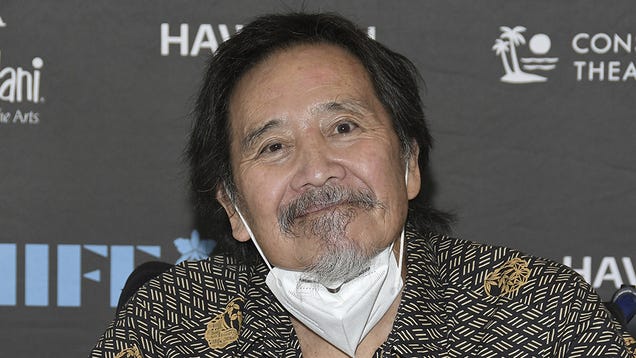
Filmmaker Albert Pyun passed away on Saturday in Las Vegas at the age of 69, reports Variety. The news was confirmed by his wife and producer Cynthia Curnan on Facebook, and comes years after he was diagnosed with multiple sclerosis and dementia.
A month after completing his takeover of Twitter, Elon Musk says new user signups are at an “all-time high.” On Saturday evening, the billionaire shared a slide deck that details the current state of Twitter and his vision for the platform. As of November 16th, Twitter was adding more than 2 million new users per day over the last seven days, according to one of the graphs Musk shared. He added daily signups are up 66 percent compared to the same seven-day period in 2021.
Musk said user active minutes were also at an all-time high, with Twitter’s userbase averaging nearly 8 billion active minutes per day over the last seven days as of November 15th – representing a 30 percent increase from the same period last year. He also used a graph to claim hate speech impressions recently decreased.
Even if the data Musk shared is accurate, what it means is very much up for discussion. For instance, the graph about hate speech presents, at best, an incomplete picture of the situation. For one, note that the small print states the data only covers tweets in English. Second, there’s evidence to suggest Twitter recently stopped enforcing its hateful conduct policy as it applies to targeted harassment of trans people.
Just as important is the data Musk decided not to share. Not a single graph offers insight into Twitter’s financials, yet according to multiple reports, Musk recently told employees the company was losing so much money that bankruptcy was "not out of the question.” A more recent report suggests Twitter has lost 50 of its top 100 advertisers since Musk took the platform over.
On early Sunday, Musk told Jordan Peterson he sees “a path to Twitter exceeding a billion monthly users in 12 to 18 months.” Meeting that goal will require Twitter to dramatically increase signups. Assuming the company continues to add 2 million users per week, that’s only 104 million new users by the end of one year. Twitter has approximately 450 million monthly active users as of 2022.
from Engadget is a web magazine with obsessive daily coverage of everything new in gadgets and consumer electronics https://ift.tt/PfYW3kd
via IFTTT https://ift.tt/ajw8kgC
Amongst the cinematic and television hits that made up the Marvel Cinematic Universe’s 2022 output, the megafranchise got into the holiday spirit with a pair of one-hour specials. The Guardians of the Galaxy headlined the recently released Christmas special, while Werewolf by Night kicked things off with one for…
You may recall that earlier in the year, news broke of a horror movie based on Winnie the Pooh, of all things. With the character having re-entered the public domain after Disney let the rights lapse, Pooh: Blood & Honey took the children’s character and made him a serial killer, at which point the internet freaked…
From the moment that people started getting nasty with Johannes Gutenberg's newfangled printing press, sexually explicit content has led the way towards wide-scale adoption of mass communication technologies. But with every advance in methodology has invariably come a backlash — a moral panic here, a book burning there, the constant uncut threat of mass gun violence — aiming to suppress that expression. Now, given the things I saw Googling "sexually explicit printing press," dear reader, I can assure you that their efforts will ultimately be in vain.
But it hasn't stopped social media corporations, advertisers, government regulators and the people you most dread seeing in your building's elevator from working to erase sexuality-related content from the world wide web. In the excerpt below from her most excellent new book, How Sex Changed the Internet and the Internet Changed Sex: An Unexpected History, Motherboard Senior Editor Samantha Cole discusses the how and why to Facebook, Instagram and Google's slow strangling of online sexual speech over the past 15 years.
Human and algorithmic censorship has completely changed the power structure of who gets to post what types of adult content online. This has played out as independent sex workers struggling to avoid getting kicked off of sites like Instagram or Twitter just for existing as people—while big companies like Brazzers, displaying full nudity, have no problem keeping their accounts up.
Despite Facebook’s origins as Mark Zuckerberg’s Hot-or-Not rating system for women on his Harvard campus, the social network’s policies on sexuality and nudity are incredibly strict. Over the years, it’s gone through several evolutions and overhauls, but in 2022 forbidden content includes (but isn’t limited to) “real nude adults,” “sexual intercourse” and a wide range of things that could imply intercourse “even when the contact is not directly visible,” or “presence of by-products of sexual activity.” Nudity in art is supposedly allowed, but artists and illustrators still fight against bans and rejected posts all the time.
That’s not to mention “sexual solicitation,” which Facebook will not tolerate. That includes any and all porn, discussions of states of sexual arousal, and anything that both asks or offers sex “directly or indirectly” and also includes sexual emojis like peaches and eggplants, sexual slang, and depictions or poses of sexual activity.
These rules also apply on Instagram, the photo-sharing app owned by Facebook. As the number one and two biggest social networks in the US, these dictate how much of the internet sees and interacts with sexual content.
In the earliest archived versions of Facebook’s terms of use, sex was never mentioned—but its member conduct guidelines did ban “any content that we deem to be harmful, threatening, abusive, harassing, vulgar, obscene, hateful, or racially, ethnically or otherwise objectionable.” This vagueness gives Facebook legal wiggle room to ban whatever it wants.
The platform took a more welcoming approach to sexual speech as recently as 2007, with Sexuality listed as one of the areas of interest users could choose from, and more than five hundred user-created groups for various discussions around the topic. But the platform’s early liberality with sex drew scrutiny. In 2007, then–New York attorney general Andrew Cuomo led a sting operation on Facebook where an investigator posed as teens and caught child predators.
As early as 2008, it started banning female breasts—specifically, nipples. The areola violated its policy on “obscene, pornographic or sexually explicit” material. In December 2008, a handful of women gathered outside the company’s Palo Alto office to breastfeed in front of the building in protest (it was a Saturday; no executives were working).
As of 2018, Facebook lumped sex work under banned content that depicts “sexual exploitation,” stating that all references and depictions of “sexual services” were forbidden, “includ[ing] prostitution, escort services, sexual massages, and filmed sexual activity.”
A lot of this banned content is health and wellness education.
In 2018, sexuality educator Dr. Timaree Schmit logged in to Facebook and checked her page for SEXx Interactive, which runs an annual sex ed conference she’d held the day before. A notification from Facebook appeared: She and several other admins for the page were banned from the entire platform for thirty days, and the page was taken down, because an “offending image” had violated the platform’s community standards. The image in question was the word SEXx in block letters on a red background.
The examples of this sort of thing are endless and not limited to Facebook. Google AdWords banned “graphic sexual acts with intent to arouse including sex acts such as masturbation” in 2014. Android keyboards’ predictive text banned anything remotely sexual, including the words “panty,” “braless,” “Tampax,” “lactation,” “preggers, “uterus,” and “STI” from its autocomplete dictionary. Chromecast and Google Play forbid porn. You can’t navigate to adult sites using Starbucks Wi-Fi. For a while in 2018, Google Drive seemed to be blocking users from downloading documents and files that contained adult content. The crowdfunding site Patreon forbids porn depicting real people, and in 2018 blamed its payment processor, Stripe, for not being sex-friendly. Much of this followed FOSTA/SESTA.
This is far from a complete list. There are countless stories like this, where sex educators, sex workers, artists, and journalists are censored or pushed off platforms completely for crossing these imaginary lines that are constantly moving.
Over the years, as these policies have evolved, they’ve been applied inconsistently and often with vague reasoning for the users themselves. There is one way platforms have been consistent, however: Images and content of Black and Indigenous women, as well as queer and trans people, sex workers, and fat women, experience the brunt of platform discrimination. This can lead to serious self-esteem issues, isolation, and in some cases, suicidal thoughts for people who are pushed off platforms or labeled “sexually explicit” because of their body shape or skin color.
“I’m just sick of feeling like something is wrong with my body. That it’s not OK to look how I do,” Anna Konstantopoulos, a fat Instagram influencer, said after her account was shut down and posts were deleted multiple times. Her photos in bikinis or lingerie were deleted by Instagram moderators, while other influencers’ posts stayed up and raked in the likes. “It starts to make you feel like crap about yourself.”
In spite of all of this, people project their full selves, or at least a version of themselves, onto Facebook accounts. Censorship of our sexual sides doesn’t stop people from living and working on the internet—unless that is your life and work.
from Engadget is a web magazine with obsessive daily coverage of everything new in gadgets and consumer electronics https://ift.tt/cJr9wAU
via IFTTT https://ift.tt/oBGc3kg
Fifteen years after the release of the iPhone, it’s easy to overlook the role early innovators like Palm played in popularizing the smartphone. By the time HP unceremoniously shut down the company in 2011, Palm had struggled for a few years to carve out a niche for itself among Apple and Google. But ask anyone who had a chance to use a Palm PDA in the late ‘90s or early 2000s and they’ll tell you how fondly they remember the hardware and software that made the company’s vision possible. Now, it’s easier than ever to see what made Palm OS so special back in its day.
This week, archivist Jason Scott uploaded a database of Palm OS apps to the Internet Archive. In all, there are about 560 programs to check out, including old favorites like DopeWars and SpaceTrader. Even if you don’t have any nostalgia for Palm, it’s well worth spending a few minutes with the collection to see how much – or, in some cases, little – things have changed since Palm OS was a dominant player in the market.
Hey, so, don't tell anyone, but I'm announcing PalmPilot emulation at Internet Archive for the holidays, probably next week. All the currently-working items need descriptions, so it's not quite ready. Don't tell anybody, OK? https://t.co/ye9z4iTPsxpic.twitter.com/0SNRVJw0Kp
For instance, there’s an entire section devoted to shareware and it’s interesting to see just how much some developers thought it was appropriate to pay for their software. Want to use the full version of StockCalc? Just send $15 by post to DDT Investments in Plaistow, New Hampshire.
In an interview with The Verge, Scott said it took about six months to get the CloudpilotEmu emulator to work with the Internet Archive. There’s still some work to be done. Specifically, some of the more obscure apps are missing descriptions and metadata. Scott also hopes to write instructions for each program. Still, short of buying an old Palm device off of eBay, this is the best way to experience a bygone computing era. That's because CloudpilotEmu allows you to navigate through Palm OS. You can even launch the database from your phone and there's full support for Palm's Graffiti handwriting recognition system. If you want to help Scott with the project, contact him on Twitter or Discord.
from Engadget is a web magazine with obsessive daily coverage of everything new in gadgets and consumer electronics https://ift.tt/9GO0TgQ
via IFTTT https://ift.tt/BkWUL02
When the original Knives Out released in 2019, it received such a strong, mostly positive reaction that it wasn’t a surprise when a follow up was eventually announced. Glass Onion, which recently began its one-week theatrical run before it goes to Netflix on December 23, is the first of two Knives Out sequels that…
Before Black Panther: Wakanda Forever released in theaters and became a juggernaut in the way most Marvel movies do, there was plenty of anticipation to see how the film would handle Namor the Sub-Mariner. Now that the film has come out, the character’s received a new surge of attention thanks to his portrayal by …
It doesn’t feel like that long ago that the idea of Diego Luna’s Rogue One character Cassian Andor getting a solo series felt strange. But over the past two months and change, Andor has proven itself to be a pretty great show. Not just “great for Star Wars,” but legitimately great in a way that could easily make you…
The Artemis 1 Orion crew vehicle has set a new record for a NASA flight. At approximately 8:40AM ET on Saturday, Orion flew farther than any spacecraft designed to carry human astronauts had ever before, surpassing the previous record set by Apollo 13 back in 1970. As of 10:17AM ET, Orion was approximately 249,666 miles ( from 401,798 kilometers) from Earth.
"Artemis I was designed to stress the systems of Orion and we settled on the distant retrograde orbit as a really good way to do that," said Jim Geffre, Orion spacecraft integration manager. “It just so happened that with that really large orbit, high altitude above the moon, we were able to pass the Apollo 13 record. But what was more important though, was pushing the boundaries of exploration and sending spacecraft farther than we had ever done before."
Mission Time: 10 days, 8 hrs, 27 min
Orion is 249,666 miles from Earth, 53,687 miles from the Moon, cruising at 2,054 miles per hour.
P: (94960, -206242, -113015)
V: (2045, 192, -45)
O: 287º, 140.6º, 135.7º
What's this? https://t.co/voR4yGgqXG#TrackArtemispic.twitter.com/w0uFgDqWaQ
Of all the missions that could have broken the record, it’s fitting that Artemis 1 was the one to do it. As Space.com points out, Apollo 13’s original flight plan didn’t call for a record-setting flight. It was only after a mid-mission explosion forced NASA to plot a new return course that Apollo 13’s Odyssey command module set the previous record at 248,655 miles (400,171 kilometers) from Earth.
With a limited oxygen supply on the Aquarius Lunar Module, NASA needed to get Apollo 13 back to Earth as quickly as possible. The agency eventually settled on a flight path that used the Moon’s gravity to slingshot Apollo 13 back to Earth. One of the NASA personnel who was critical to the safe return of astronauts Jim Lovell, Jack Swigert and Fred Haise was Arturo Campos. He wrote the emergency plan that gave the Command and Service Module enough power to make it back to Earth. Artemis 1 is carrying a “Moonikin” test dummy named after the late Arturo.
Earlier this week, Orion completed a flyby of the Moon. After the spacecraft completes half an orbit around the satellite, it will slingshot itself toward the Earth. NASA expects Orion to splash down off the coast of San Diego on December 11th.
from Engadget is a web magazine with obsessive daily coverage of everything new in gadgets and consumer electronics https://ift.tt/p2uaxHh
via IFTTT https://ift.tt/BkWUL02
Similar to what HBO Max did back in 2021, Netflix launched an ad-supported plan at the start of November. At a cheaper price, it’s the streamer’s way of bringing in more users to balance out its loss of subscribers from earlier in the year. That alone would be notable, given Netflix’s prior comments about bringing ads…
The Roomba s9+ has been around for a couple of years and it's probably overkill for most people. At $999, it's certainly not cheap, but it did earn a spot in our list of best robot vacuums. Right now, you can pick up the high-end machine for $220 less than usual by shopping through Wellbots and using the code ENG220 at checkout. A final price of $779 is the best we've seen on this smart home gadget, and while it's still an expensive device, it's a much easier to recommend when its on sale like this.
You probably don't need all of the bells and whistles that the s9+ provides, but they are some of the things that make it one of the best robot vacuums available today. It's the most attractive in iRobot's lineup, with a sleek design that can get into room corners more easily than other models, and a tall, slim clean base. It has 40x the suction power of a standard Roomba, making it a great option for households with pets and kids. It's "careful driver" feature uses a 3D sensor to detect objects so it can move around them to clean, and like all Roombas, it will automatically return to its charging base when it's low on power.
In our testing, we found the s9+ to be an incredibly capable cleaner, and while on the loud side, it's no more noisy than other robo-vacs in this price range. When emptying its bin into its clean base, it was actually not as loud as the Roomba j7, so it's less likely to scare your pets while doing so. The clean base does use proprietary bags from iRobot, though, so just keep in mind that you'll have to consistently buy those in order to make full use of the s9+. Thankfully, each bag can hold up to 60 days worth of debris.
The Roomba s9+ also connects to iRobot's mobile app, from which you can control the machine, set cleaning schedules and more. It's one of the easier robo-vac companion apps we'ved used, so even if you're gifting the s9+ to a loved on who is a novice, they should have no trouble getting the thing set up and using it regularly. If you're willing to splurge this holiday season, the s9+ is one of the best robo-vacs you can get for your money.
from Engadget is a web magazine with obsessive daily coverage of everything new in gadgets and consumer electronics https://ift.tt/JvW1GTd
via IFTTT https://ift.tt/BkWUL02
As a serial podcast listener, I can confirm what you all already know: Everyone has a podcast now. As we learned this year, that “everyone” includes the CIA, which hopes its show, The Langley Files, will make you forget some of the very bad things it’s done. (The title makes it sound a lot more interesting than it…
Around 2.8 million Americans suffer from treatment-resistant depression, and though research has shown that IV ketamine can significantly improve their quality of life, these ketamine treatments are expensive, and access to them is limited. Early in the covid-19 pandemic, the Drug Enforcement Agency loosened…
Stable Diffusion, the AI that can generate images from text in an astonishingly realistic way, has been updated with a bunch of new features. However, many users aren't happy, complaining that the new software can no longer generate pictures in the styles of specific artists or generate NSFW artworks, The Verge has reported.
Version 2 does introduce a number of new features. Key among those is a new text encoder called OpenCLIP that "greatly improves the quality of the generated images compared to earlier V1 releases," according to Stability AI, the company behind Stable Diffusion. It also includes a new NSFW filter from LAION designed to remove adult content.
Other features include a depth-to-image diffusion model that allows one to create transformations "that look radically different from the original but still preserve the coherence and depth from an image," according to Stability AI. In other words, if you create a new version of an image, objects will still correctly appear in front of or behind other objects. Finally, a text-guided inpainting model makes it easy to switch out parts of an image, keeping a cat's face while changing out its body, for example.
Stability AI
However, the update now makes it harder to create certain types of images like photorealistic images of celebrities, nude and pornographic output, and images that match the style of certain artists. Users have said that asking Stable Diffusion Version 2 to generate images in the style of Greg Rutkowski — an artist often copied for AI images — no longer works as it used to. "They have nerfed the model," said one Reddit user.
Stable Diffusion has been particularly popular for generating AI art because it's open source and can be built upon, while rivals like DALL-E are closed models. For example, the YouTube VFX site Corridor Crew showed off an add-on called Dreambooth that allowed them to generate images based on their own personal photos.
Stable Diffusion can copy artists like Rutkowski by training on their work, examining images and looking for patterns. Doing this is probably legal (though in a grey area), as we detailed in our explainer earlier this year. However, Stable Diffusion's license agreement bans people from using the model in a way that breaks any laws.
Despite that, Rutkowski and other artists have objected to the use. "I probably won’t be able to find my work out there because [the internet] will be flooded with AI art," Rutkowski told MIT Technology Review. "That’s concerning."
from Engadget is a web magazine with obsessive daily coverage of everything new in gadgets and consumer electronics https://ift.tt/MYloK4Z
via IFTTT https://ift.tt/UL1Fch9
Over the past years, Russian search and tech giant Yandex made an effort not to fall behind its Western counterparts and had developed its own smart devices, self-driving cars, as well as its own food delivery and ride-sharing services, among other products. According to The New York Times, though, the West's sanctions against its home country after the invasion of Ukraine has made it impossible to continue developing and improving its projects. That's why Yandex's parent firm, which is registered in Amsterdam, is reportedly looking to sell and sever ties with Russia.
Apparently, Yandex is planning to sell the emerging technologies it's working on to markets outside the country, since they require Western technologies and experts to reach their full potential. It's also looking to sell its established businesses, such as its internet browser, its food delivery and its ride-hailing apps. Yandex is planning to continue offering those products under its Russian subsidiary, which likely means it has to find buyers within the country.
Whether Yandex can actually break free from Russia is another matter altogether. The Times' sources said the company must secure the Kremlin's approval first to be able to transfer Russian-registered technologies outside the country. Also, it must get its shareholders onboard its restructuring plan before it could proceed. That said, the company does have a powerful supporter advocating for it: Alexei Kudrin, the country's former finance minister, whom it has tapped in an informal capacity to get Vladimir Putin's blessing. A Financial Times report says Kudrin is meeting with Putin this week to discuss Yandex's plan. If the Russian president approves, Kudrin is expected to leave his post as the chairman of Russia's Audit Chamber to take on a managerial role with the new Yandex.
from Engadget is a web magazine with obsessive daily coverage of everything new in gadgets and consumer electronics https://ift.tt/VuwHNkl
via IFTTT https://ift.tt/onLljHr
Twitter plans to launch its updated Verified program next Friday with manual authentication and different colored check marks for different types of users, Elon Musk has tweeted. "Gold check for companies, grey check for government, blue for individuals (celebrity or not) and all verified accounts will be manually authenticated before check activates," he said.
Musk previously stated that Twitter would "probably use [a] different color check for organizations than individuals." However, this is the first time he's revealed what those colors will likely be. It's not clear if all verified users including government and industry will have to pay Twitter Blue fee of $8 per month.
Sorry for the delay, we’re tentatively launching Verified on Friday next week.
Gold check for companies, grey check for government, blue for individuals (celebrity or not) and all verified accounts will be manually authenticated before check activates.
In a subsequent tweet, Musk added that "individuals can have secondary tiny logo showing they belong to an org if verified as such by that org." However, all individual users will have the same blue check mark "as [the] boundary of what constitutes 'notable' is otherwise too subjective," he said.
Musk originally launched his new verification program with the idea that anyone who joins Twitter Blue for $8 a month would get a blue checkmark. As many predicted, though, the system quickly became a goat rodeo due to account impersonation and was shut down after just 48 hours. In one instance, an Eli Lilly impersonator tweeted that "insulin is free now," forcing the company to apologize for the tweet. Another Eli Lilly impersonator then apologized for the apology.
Musk originally said that the revised Verified program would launch on November 29th, but his latest tweet puts the date at December 2nd.
from Engadget is a web magazine with obsessive daily coverage of everything new in gadgets and consumer electronics https://ift.tt/dNPrtxv
via IFTTT https://ift.tt/onLljHr