David Cronenberg’s next movie gets a release date, as does the latest adaptation of Salem’s Lot. Team Archie gets ready to face some trauma in new pictures from the latest Riverdale. Plus, The Flash sets itself up for the rest of season 8, and a new look at everything going to hell on Halo. To me, my spoilers!
Following multiple delays, 343 Industries hopes to deliver Halo Infinite’s co-op campaign sometime in August 2022, the studio said in a roadmap update released Friday. Campaign co-op was one of the features that didn’t makeInfinite’sDecember 8th release date.
343 Industries
At the time, 343 said it planned to roll out the mode alongside the game’s season two update approximately three months after launch. However, 343 first delayed the debut of season two to May 3rd and later said campaign co-op wouldn’t be available when the season kicked off.
The studio now says it’s targeting an August release date for network co-op, with split-screen co-op coming even later. That means you’ll have to wait to invite a friend over to play the game on a single TV. According to the roadmap 343 shared, couch co-op won’t be available until sometime during season three, which won’t begin until November 8th. What’s more, that’s a tentative plan, with a note on the roadmap indicating the exact release date of the feature is “TBD.”
If there’s a silver lining to the news, it’s that 343 is also targeting an August release date for a feature that allows you to replay campaign missions. Additionally, the studio expects to launch the Forge mode open beta sometime in September.
The delays are likely to irritate Infinite’s already frustrated playerbase further, but Joseph Staten, the game’s head of creative, stressed 343 is doing its best to deliver new features quickly while protecting the health of its team. "We know we need to deliver more content and more features more quickly," Staten said. "Staying true to priority zero means that sometimes we need to slow down in order to stay healthy and move faster later. But we’re also aggressively looking at ways to accelerate.”
from Engadget is a web magazine with obsessive daily coverage of everything new in gadgets and consumer electronics https://ift.tt/PxiMjhs
via IFTTT https://ift.tt/dx63krh
Square Enix’s Marvel’s Avengers has had a rocky outing since it first landed back in 2020. Though the single player campaign was well-regarded and its core combat was considered pretty solid, it hasn’t a had a good time being a co-op RPG you want to play again and again. Bringing in a handful of free DLC heroes has…
In 2010, Apple software engineer Gray Powell left a prototype iPhone 4 in a bar in Redwood City, California. In an era where nearly every device leaks before it’s officially announced, images of a new iPhone showing up online seem quaint. But at the time it was a big deal and the incident even came to involve US law enforcement. Now, more than a decade later, images of another highly anticipated device have made their way online in much the same way.
Android Central
On Saturday evening, Android Centralshared photos of Google’s long-rumored Pixel Watch. The outlet says it obtained the images you see throughout this post from someone who found the smartwatch at a restaurant in the US. The photos confirm the Pixel Watch will feature a circular face with minimal display bezels. If you look closely, you can see the wearable’s band attaches directly to its case, with a latch mechanism that looks proprietary to Google and reminiscent of the design employed by Fitbit on its Versa and Sense smartwatches (Google acquired the company in 2021).
The watch features a single button next to its crown and what looks like a microphone or altimeter port. On the back of the device, you can see an optical heartrate sensor. Unfortunately, the watch wouldn’t go beyond its boot screen so there are no photos of it running Wear OS 3.
Android Central
According to a report leaker Jon Prosser published in January, Google will announce the Pixel Watch on May 26th. The company recently filed to trademark the Pixel Watch name. Visit Android Central to see more photos of the leaked device.
Android Central
from Engadget is a web magazine with obsessive daily coverage of everything new in gadgets and consumer electronics https://ift.tt/I29Ntwx
via IFTTT https://ift.tt/ysrmHO8
It feels like it’s been forever since the release of The Mummy starring Tom Cruise. At the time, the movie was something of a big deal, both because it was a reboot of the (mostly) beloved Brendan Fraser films that lots of us grew up with, and also because it was infamously planned to kickstart a Dark Universe…
As with most every other aspect of modern society, computerization, augmentation and automation have hyper-accelerated the pace at which wars are prosecuted — and who better to help reshape the US military into a 21st century fighting force than an entire industry centered on moving fast and breaking things? In his latest book, War Virtually: The Quest to Automate Conflict, Militarize Data, and Predict the Future, professor and chair of the Anthropology Department at San José State University, Roberto J González examines the military's increasing reliance on remote weaponry and robotic systems are changing the way wars are waged. In the excerpt below, González investigates Big Tech's role in the Pentagon's high-tech transformations.
Ash Carter’s plan was simple but ambitious: to harness the best and brightest ideas from the tech industry for Pentagon use. Carter’s premise was that new commercial companies had surpassed the Defense Department’s ability to create cutting-edge technologies. The native Pennsylvanian, who had spent several years at Stanford University prior to his appointment as defense secretary, was deeply impressed with the innovative spirit of the Bay Area and its millionaire magnates. “They are inventing new technology, creating prosperity, connectivity, and freedom,” he said. “They feel they too are public servants, and they’d like to have somebody in Washington they can connect to.” Astonishingly, Carter was the first sitting defense secretary to visit Silicon Valley in more than twenty years.
The Pentagon has its own research and development agency, DARPA, but its projects tend to pursue objectives that are decades, not months, away. What the new defense secretary wanted was a nimble, streamlined office that could serve as a kind of broker, channeling tens or even hundreds of millions of dollars from the Defense Department’s massive budget toward up-and-coming firms developing technologies on the verge of completion. Ideally, DIUx would serve as a kind of liaison, negotiating the needs of grizzled four-star generals, the Pentagon’s civilian leaders, and hoodie-clad engineers and entrepreneurs. Within a year, DIUx opened branch offices in two other places with burgeoning tech sectors: Boston, Massachusetts, and Austin, Texas.
In the short term, Carter hoped that DIUx would build relationships with local start-ups, recruit top talent, get military reservists involved in projects, and streamline the Pentagon’s notoriously cumbersome procurement processes. “The key is to contract quickly — not to make these people fill out reams of paperwork,” he said. His long-term goals were even more ambitious: to take career military officers and assign them to work on futuristic projects in Silicon Valley for months at a time, to “expose them to new cultures and ideas they can take back to the Pentagon... [and] invite techies to spend time at Defense.”
In March 2016, Carter organized the Defense Innovation Board (DIB), an elite brain trust of civilians tasked with providing advice and recommendations to the Pentagon’s leadership. Carter appointed former Google CEO (and Alphabet board member) Eric Schmidt to chair the DIB, which includes current and former executives from Facebook, Google, and Instagram, among others.
Three years after Carter launched DIUx, it was renamed the Defense Innovation Unit (DIU), indicating that it was no longer experimental. This signaled the broad support the office had earned from Pentagon leaders. The Defense Department had lavished nearly $100 million on projects from forty-five companies, almost none of which were large defense contractors. Despite difficulties in the early stages — and speculation that the Trump administration might not support an initiative focused on regions that tended to skew toward the Democratic Party — DIUx was “a proven, valuable asset to the DoD,” in the words of Trump’s deputy defense secretary, Patrick Shanahan. “The organization itself is no longer an experiment,” he noted in an August 2018 memo, adding: “DIU remains vital to fostering innovation across the Department and transforming the way DoD builds a more lethal force.” Defense Secretary James “Mad Dog” Mattis visited Amazon’s Seattle headquarters and Google’s Palo Alto office in August 2017 and had nothing but praise for the tech industry. “I’m going out to see what we can pick up in DIUx,” he told reporters. In early 2018, the Trump administration requested a steep increase in DIU’s budget for fiscal year 2019, from $30 million to $71 million. For 2020, the administration requested $164 million, more than doubling the previous year’s request.
Q BRANCH
Although Pentagon officials portrayed DIUx as a groundbreaking organization, it was actually modeled after another firm established to serve the US Intelligence Community in a similar way. In the late 1990s, Ruth David, the CIA’s deputy director for science and technology, suggested that the agency needed to move in a radically new direction to ensure that it could capitalize on innovations being developed in the private sector, with a special focus on Silicon Valley firms. In 1999, under the leadership of its director, George Tenet, the CIA established a nonprofit legal entity called Peleus to fulfill this objective, with help from former Lockheed Martin CEO Norman Augustine. Soon after, the organization was renamed In-Q-Tel.
The first CEO, Gilman Louie, was an unconventional choice to head the enterprise. Louie had spent nearly twenty years as a video game developer who, among other things, created a popular series of Falcon F-16 flight simulators. At the time he agreed to join the new firm, he was chief creative officer for the toy company Hasbro. In a 2017 presentation at Stanford University, Louie claimed to have proposed that In-Q-Tel take the form of a venture capital fund. He also described how, at its core, the organization was created to solve “the big data problem”:
The problem they [CIA leaders] were trying to solve was: How to get technology companies who historically have never engaged with the federal government to actually provide technologies, particularly in the IT space, that the government can leverage. Because they were really afraid of what they called at that time the prospects of a “digital Pearl Harbor” Pearl Harbor
happened with every different part of the government having a piece of information but they couldn’t stitch it together to say, “Look, the attack at Pearl Harbor is imminent.” The White House had a piece of information, naval intelligence had a piece of information, ambassadors had a piece of information, the State Department had a piece of information, but they couldn’t put it all together [In] 1998, they began to realize that information was siloed across all these different intelligence agencies of which they could never stitch it together [F]undamentally what they were trying to solve was the big data problem. How do you stitch that together to get intelligence out of that data?
Louie served as In-Q-Tel’s chief executive for nearly seven years and played a crucial role in shaping the organization.
By channeling funds from intelligence agencies to nascent firms building technologies that might be useful for surveillance, intelligence gathering, data analysis, cyberwarfare, and cybersecurity, the CIA hoped to get an edge over its global rivals by using investment funds to co-opt creative engineers, hackers, scientists, and programmers. The Washington Post reported that “In-Q-Tel was engineered with a bundle of contradictions built in. It is independent of the CIA, yet answers wholly to it. It is a non- profit, yet its employees can profit, sometimes handsomely, from its work. It functions in public, but its products are strictly secret.” In 2005, the CIA pumped approximately $37 million into In-Q-Tel. By 2014, the organization’s funding had grown to nearly $94 million a year and it had made 325 investments with an astonishing range of technology firms, almost none of which were major defense contractors.
If In-Q-Tel sounds like something out of a James Bond movie, that’s because the organization was partly inspired by — and named after — Q Branch, a fictional research and development office of the British secret service, popularized in Ian Fleming’s spy novels and in the Hollywood blockbusters based on them, going back to the early 1960s. Ostensibly, both In-Q-Tel and DIUx were created to transfer emergent private-sector technologies into the US intelligence and military agencies, respectively. A somewhat different interpretation is that these organizations were launched “to capture technological innovations... [and] to capture new ideas.” From the perspective of the CIA these arrangements have been a “win-win,” but critics have described them as a boondoggle — lack of transparency, oversight, and streamlined procurement means that there is great potential for conflicts of interest. Other critics point to In-Q-Tel as a prime example of the militarization of the tech industry.
There’s an important difference between DIUx and In-Q-Tel. DIUx is part of the Defense Department and is therefore financially dependent on Pentagon funds. By contrast, In-Q-Tel is, in legal and financial terms, a distinct entity. When it invests in promising companies, In-Q-Tel also becomes part owner of those firms. In monetary and technological terms, it’s likely that the most profitable In-Q-Tel investment was funding for Keyhole, a San Francisco–based company that developed software capable of weaving together satellite images and aerial photos to create three-dimensional models of Earth’s surface. The program was capable of creating a virtual high-resolution map of the entire planet. In-Q-Tel provided funding in 2003, and within months, the US military was using the software to support American troops in Iraq.
Official sources never revealed how much In-Q-Tel invested in Keyhole. In 2004, Google purchased the start-up for an undisclosed amount and renamed it Google Earth. The acquisition was significant. Yasha Levine writes that the Keyhole-Google deal “marked the moment the company stopped being a purely consumer-facing internet company and began integrating with the US government [From Keyhole, Google] also acquired an In-Q-Tel executive named Rob Painter, who came with deep connections to the world of intelligence and military contracting.” By 2006 and 2007, Google was actively seeking government contracts “evenly spread among military, intelligence, and civilian agencies,” according to the Washington Post.
Apart from Google, several other large technology firms have acquired startups funded by In-Q-Tel, including IBM, which purchased the data storage company Cleversafe; Cisco Systems, which absorbed a conversational AI interface startup called MindMeld; Samsung, which snagged nanotechnology display firm QD Vision; and Amazon, which bought multiscreen video delivery company Elemental Technologies. While these investments have funded relatively mundane technologies, In-Q-Tel’s portfolio includes firms with futuristic projects such as Cyphy, which manufactures tethered drones that can fly reconnaissance missions for extended periods, thanks to a continuous power source; Atlas Wearables, which produces smart fitness trackers that closely monitor body movements and vital signs; Fuel3d, which sells a handheld device that instantly produces detailed three-dimensional scans of structures or other objects; and Sonitus, which has developed a wireless communication system, part of which fits inside the user’s mouth. If DIUx has placed its bets with robotics and AI companies, In-Q-Tel has been particularly interested in those creating surveillance technologies — geospatial satellite firms, advanced sensors, biometrics equipment, DNA analyzers, language translation devices, and cyber-defense systems.
More recently, In-Q-Tel has shifted toward firms specializing in data mining social media and other internet platforms. These include Dataminr, which streams Twitter data to spot trends and potential threats; Geofeedia, which collects geographically indexed social media messages related to breaking news events such as protests; PATHAR, a company specializing in social network analysis; and TransVoyant, a data integration firm that collates data from satellites, radar, drones, and other sensors. In-Q-Tel has also created Lab41, a Silicon Valley technology center specializing in big data analysis and machine learning.
from Engadget is a web magazine with obsessive daily coverage of everything new in gadgets and consumer electronics https://ift.tt/WnIAJha
via IFTTT https://ift.tt/fXJyIhn
Amazon’s live action adaptation of Robert Jordan’s Wheel of Time novels adaptation premiered late last year to a solid reception. With a second season already locked in, fans of the books are looking forward to what characters and story elements from the novels the show will bring in, and another of the show’s new…
Following a marathon 16-hour negotiation session, the European Union reached an agreement early Saturday to adopt the Digital Services Act. The legislation seeks to impose greater accountability on the world's tech giants by enforcing new obligations companies of all sizes must adhere to once the act becomes law in 2024. Like the Digital Markets Act before it, the DSA could have far-reaching implications, some of which could extend beyond Europe.
While the European Commission has yet to release the final text of the Digital Services Act, it did detail some of its provisions on Saturday. Most notably, the law bans ads that target individuals based on their religion, sexual orientation, ethnicity or political affiliation. Companies also cannot serve targeted ads to minors.
Another part of the law singles out recommendation algorithms. Online platforms like Facebook will need to be transparent about how those systems work to display content to users. They will also need to offer alternative systems "not based on profiling," meaning more platforms would need to offer chronological feeds. Additionally, some of the largest platforms today will be required to share "key" data to vetted researchers and NGOs so those groups can provide insights into "how online risks evolve."
Ta da! 16 hours, lots of sweets (but cookies still declined ;) We have a deal on the #DSA: The Digital Services Act will make sure that what is illegal offline is also seen & dealt with as illegal online - not as a slogan, as reality! And always protecting freedom of expression! pic.twitter.com/mUhU84Q9FS
"Today's agreement on the Digital Services Act is historic, both in terms of speed and of substance," said European Commission President Ursula von der Leyen. "It will ensure that the online environment remains a safe space, safeguarding freedom of expression and opportunities for digital businesses. It gives practical effect to the principle that what is illegal offline, should be illegal online."
Under the DSA, the EU will have the power to fine tech companies up to six percent of their global turnover for rule violations, with repeat infractions carrying the threat of a ban from the bloc. As The Guardian points out, in the case of a company like Meta, that would translate into a single potential fine of approximately $7 billion.
The DSA differentiates between tech companies of different sizes, with the most scrutiny reserved for platforms that have at least 45 million users in the EU. In that group are companies like Meta and Google. According to a recent report, those two, in addition to Apple, Amazon and Spotify, collectively spent more than €27 million lobbying EU policymakers last year to change the terms of the Digital Services Act and Digital Markets Act. The laws could inspire lawmakers in other countries, including the US, as they look to pass their own antitrust laws.
"We welcome the DSA's goals of making the internet even more safe, transparent and accountable, while ensuring that European users, creators and businesses continue to benefit from the open web," a Google spokesperson told Engadget. "As the law is finalized and implemented, the details will matter. We look forward to working with policymakers to get the remaining technical
from Engadget is a web magazine with obsessive daily coverage of everything new in gadgets and consumer electronics https://ift.tt/t6auk3W
via IFTTT https://ift.tt/zLGkwS8
It’s just two weeks until Doctor Strange in the Multiverse of Madness serves as Marvel’s next offering into alternate realities, which they’ve been working hard to make so hot right now. The concept is having a pretty banner year at the movies between this and Everything Everywhere All at Once. Up until recently, we…
An independent group of Amazon workers called Amazonians United is accusing the e-commerce giant of firing four workers in Queens because they "supported a labor organization." According to BuzzFeed News, the group filed charges with the National Labor Relations Board on April 14th, arguing that the company fired the workers for "protesting terms and conditions of employment." The group also said that Amazon made the move to "discourage union activities."
Workers at Amazon's warehouses in Long Island City and Woodsland staged a walkout back in March to demand a pay raise of $3 an hour and the reinstatement of their 20-minute rest breaks. A Motherboard report about the protest noted that the workers were earning around $15.75 to $17.25 an hour and that Amazon had shortened their rest breaks from 20 to 15 minutes. Workers at the Queens facilities also joined a petition that circulated in December demanding better inclement weather policy and the right to keep their phones with them in case of emergency.
This morning, in the first multi-state walkout in the US, over 60 workers in 3 delivery stations walked out. Amazonians United workers in ZYO1 and DBK1 in New York City and DMD9 in Maryland showed what solidarity looks like.
— Amazonians United New York City (@NYCAmazonians) March 16, 2022
As a labor organization, Amazonians United collectively fights for better policies that benefit workers without being an official union. It successfully fought for workplace policy changes and pay raises in the past. In this particular case, the National Labor Relations Board (NLRB) still has to review the group's complaint before it decides if it has any merit. Just a few days ago, the NLRB successfully convinced a judge to order Amazon to reinstate Staten Island warehouse worker Gerald Bryson. The judge sided with the labor board and agreed with its argument that the company fired Bryson in retaliation for participating in a COVID-19 safety protest back in 2020.
from Engadget is a web magazine with obsessive daily coverage of everything new in gadgets and consumer electronics https://ift.tt/fPqETZ7
via IFTTT https://ift.tt/zLGkwS8
In February, public health officials in the UK reported that three people there had recently contracted gonorrhea, the well-known sexually transmitted infection. What made the cases noteworthy is that they were caused by a highly resistant strain of the bacteria. This “super gonorrhea” threatens to be one of the first…
There's a big chance that Google's long-rumored smartwatch will be called the "Pixel Watch." The tech giant has filed paperwork with the United States Patent and Trademark Office to trademark "Pixel Watch," 9to5Google reports. In its application, Google wrote that the name is intended to "cover the categories of smartwatches," "wearable computers in the nature of smartwatches," as well as smartwatch cases, straps and bands.
The trademark application didn't contain additional details about the device. But based on previous rumors and rendering leaks, the company's first in-house-developed smartwatch will have a circular face with no bezel. It's expected to have a heart rate sensor and other features found in devices by Fitbit, which Google purchased in 2021, as well. The device will reportedly cost more than a Fitbit, though, and will be a veritable Apple Watch competitor. It's also expected to run Wear OS 3, the tech giant's upcoming wearable platform that will only make its way to a handful of current smartwatches.
Jon Prosser, who's known for leaking upcoming releases in tech, previously said that Google is planning to launch its first smartwatch on May 26th. That doesn't sound unlikely, since the date coincides with the tech giant's annual I/O conference that usually takes place in May. However, as 9to5Google points out, Google has to go through a few more regulatory hurdles before the device's launch. Since the device hasn't been spotted in listings at the Federal Communications Commission and the Bluetooth SIG yet, May 26th might be too soon for its unveiling.
Pixel Watch 👇
I’m hearing that Google is planning on launching it on Thursday, May 26th — over year since we leaked it.
This is the first we’ve seen a set date on the device behind the scenes.
from Engadget is a web magazine with obsessive daily coverage of everything new in gadgets and consumer electronics https://ift.tt/8PLy9HR
via IFTTT https://ift.tt/zLGkwS8
CNN+, the streaming service launched by the Cable News Network just three weeks ago, is shutting down on April 30th. The closure comes after reports that the high-profile project had reached just 10,000 daily users. It didn’t help that WarnerMedia is merging with Discovery with the explicit aim of consolidating their streaming services into one cohesive whole.
The service, which reportedly cost around $100 million to launch, will have survived for just 32 days, stealing Quibi’s title for most notorious and swift closure. CNN said at-risk employees will receive 90 days salary and benefits and get opportunities to move elsewhere within the Warner Bros. Discovery empire.
On one hand, it always seemed like a stretch to ask people to pay Netflix-level prices for even premium cable news. With the exception of blue-chip brands like NYT and WSJ, or the mega billionaire-backed Washington Post, paid-for journalism has been totally undermined. On the other hand, it’s a shame to see something bold and potentially paradigm-shifting “do a Quibi” so quickly.
Amazon will share its logistics power with others, for a price.
Amazon has launched Buy with Prime, a service that enables rival online retailers to leverage Prime’s speedy shipping. It means any e-commerce platform can add a Prime button to its page and make items available for next-or two-day delivery. The program will begin with sellers that already use Amazon’s fulfillment service before rolling out to merchants who have no presence on Amazon whatsoever. This is another neat way Amazon can both fold its competitors under its own umbrella but, given the SEC is investigating how Amazon uses the data it collects about third-party sellers, one that may deserve extra scrutiny.
What’s Elon been up to over the last 24 hours, you ask?
Well, in a fresh SEC filing, the billionaire has said he’s received backing to make his hostile-ish bid for Twitter. That includes $13 billion in debt financing from lenders like Morgan Stanley and a further $12.5 billion in loans leveraged against Musk’s Tesla shareholding. It’s thought the remainder of the cash will come from Musk himself, although we wouldn’t bet that even someone who loves posting as much as ol’ Elon would spend north of $21 billion to do so.
The Boring Company, meanwhile, has raised fresh funding to the tune of $675 million, valuing the company at $5.7 billion. That cash will go toward hiring more engineers who can build more of the company’s signature taxis-in-a-tunnel Loop projects. At the same time, the company said its second-generation tunnel boring machine can carve out up to a mile of tunnel a week. It also made the unbelievable claim that its third-generation hardware will be able to crunch up to seven miles of bedrock per day.
Trevor Jacob is a former Olympic snowboarder-turned-YouTuber who, in December 2021, published a well-shot video titled I Crashed My Plane. The beautifully shot clip, with multiple cameras set up on the pilot side wing and tail, sees the plane apparently stall out in mid air. Jacob then climbs out of the cabin and parachutes to the ground. Unfortunately for him, the FAA accused Jacob of intentionally crashing the plane for online clout and revoked his pilot's license. If Jacob doesn’t hand it back to officials, he’ll be liable for a daily fine of up to $1,644.
The FAA was also in the news yesterday for accidentally causing an emergency evacuation of Congress. FAA officials reportedly failed to notify the Capitol police and security services about a planned parachute demonstration by the US Army Golden Knights over Nationals Stadium. Nobody was hurt, and the Golden Knights followed proper procedure, avoiding restricted airspace and communicating with air traffic control at all times. But that didn’t stop House Speaker Nancy Pelosi from saying the FAA’s failure to communicate was “outrageous and inexcusable.”
from Engadget is a web magazine with obsessive daily coverage of everything new in gadgets and consumer electronics https://ift.tt/mHTZ2dN
via IFTTT https://ift.tt/cK5zuWh
If this were only a few years ago, I’d have trouble recommending a decent budget or mid-range Android phone. Recently, phone makers have paid particular attention to this segment of the market, launching sub-premium models that offer most of the benefits you get from their flagship counterparts.
A team of UK scientists has analyzed the complete genetic makeup of 12,000 tumors from NHS patients and discovered 58 new mutations that provide clues about their potential causes. The team, comprised of scientists from Cambridge University Hospitals and the University of Cambridge, used data from the 100,000 Genomes Project. That's a British initiative to sequence the whole genomes of patients with cancers and rare diseases.
Team leader Professor Serena Nik-Zainal said this is the largest study of its kind and that the vast amount of data her team worked with allowed them to detect patterns in the genetic alterations or "mutational signatures" found in the tumors. By comparing their results with other studies, they were able to confirm that 58 of the mutational signatures they found were previously unknown. Some of them are pretty common, while some are rare.
"The reason it is important to identify mutational signatures is because they are like fingerprints at a crime scene — they help to pinpoint cancer culprits," Nik-Zainal explained. Some signatures could show that past exposure to environmental causes such as smoking or UV light had triggered the cancer, while others could have treatment implications. They could, for instance, pinpoint genetic abnormalities that could be targeted by specific drugs.
Professor Matt Brown, chief scientific officer of Genomics England said: "Mutational signatures are an example of using the full potential of [whole genome sequencing]. We hope to use the mutational clues seen in this study and apply them back into our patient population, with the ultimate aim of improving diagnosis and management of cancer patients."
In addition to conducting DNA analysis and publishing its results in Science, the team also developed an algorithm called FitMS that will give clinicians easy access to the new information they discovered. FitMS looks for both common and rare signatures in the results of a patient's whole genome sequencing test. Doctors can use the algorithm to find out if their patients exhibit any of the newly discovered mutations for a more accurate diagnosis and for personalized treatments.
from Engadget is a web magazine with obsessive daily coverage of everything new in gadgets and consumer electronics https://ift.tt/kAgbZ41
via IFTTT https://ift.tt/HdjmTLq
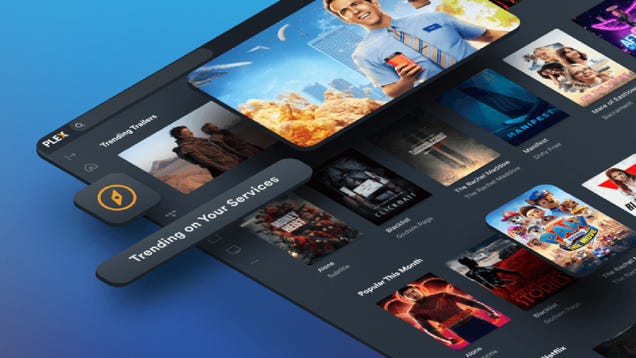
Plex is the latest platform with ambitions to become a central hub for all your video streaming needs: A new feature called Discovery brings services including Amazon Prime Video, Netflix, and Disney Plus together in a single interface. It might be enough for you to spend more time in Plex, or perhaps to give it a go…
Fossil fuel companies have known about climate change since 1966, and for almost as long, they’ve been buying TV, radio and newspaper ads trying to make sure you don’t. Decades later, lies about climate change haven’t disappeared; they’ve just gonedigital.
The White House is sending the government of Ukraine a new type of drone developed by the U.S. Air Force that’s never been used in the battlefield before, according to Pentagon Press Secretary John Kirby in a press conference Thursday.