Taking a screenshot comes in handy for multiple reasons, which is why it’s so easy to do on several devices, including Macs. When it comes to saving what's on your display, the answer lies in your keyboard. All you need to remember are a few keyboard shortcuts and you’ll be able to take a screenshot on Mac easily — and there are even ways to save only portions of your display and screen record, too. Here are all of the ways to take a screenshot on a MacBook or Mac desktop.
How to take a screenshot of your entire screen
If you just want a screenshot of your entire screen, just press: Command (⌘), Shift and 3. By default, that image will appear on your desktop for easy access.
Photo by Julia Mercado / Engadget
How to capture a portion of your screen
If you want to save a portion of your screen, hit Command + Shift + 4. A crosshair cursor will appear and you can select which part of the screen you want to capture within the gray box.
If you hold the Spacebar after selecting a portion of the window, then you can move your cursor to choose what part of the screen you want to capture.
To take a screenshot of an entire window, select Command + Shift + 4, hover over the window in question and then tap the Spacebar. A camera icon will appear and the window will turn gray to show it’s selected. Click on the screen and you will get an image of the window you chose. (Select option (⌥) in order to get rid of any border edges.)
How to customize your screenshot experience
If you can’t remember the keys to screenshot an entire window or a certain portion, Macs have an even easier way to screenshot. Press Command + Shift + 5 to bring up the toolbar (or simply open the screenshot tool from Spotlight).
Photo by Julia Mercado / Engadget
This will give you several options, such as taking screenshots of videos and even recording the screen. For a more customized experience, click on Options in order to set a timer for your screenshot and select the folder in which you want to save the image or video. This toolbar also allows you to do the basics like take a screenshot of the entire screen or just a specific window.
A bonus for Touch Bar MacBooks
Photo by Julia Mercado / Engadget
MacBooks with a Touch Bar have the ability to screenshot the bar itself: hit Command + Shift + 6 to do so.
This article originally appeared on Engadget at https://ift.tt/581nt7b
from Engadget is a web magazine with obsessive daily coverage of everything new in gadgets and consumer electronics https://ift.tt/581nt7b
via IFTTT https://ift.tt/dWQlbS9
The race for song of the summer is seeing a dark horse candidate overtake what we thought were frontrunners. The latecomer is a Eurodance banger called “Planet of the Bass” from memer and pop genius DJ Crazy Times with vocals from elusive chanteuse Biljana Electronica.
Here’s a series of words that’ll send any sane person sighing themselves into oblivion, sorry in advance. Elon Musk has announced he may need to postpone his potential brawl with Mark Zuckerberg over a medical issue. The Xitter owner Xeeted he needs to get an MRI of his neck and upper back, which may lead to surgery before any date is set in stone.
Plenty of folks are hinting Musk’s medical issue may be as conveniently timed as Frasier Crane’s clarinet lesson. And this wouldn’t be the first time Musk has talked a good game and then spent the next few months doing his best to avoid following through. After all, that’s how he wound up owning Xitter in the first place – and look how well that’s gone.
I don’t know what’s worse: That billionaire CEOs are making lame jokes about punch-fighting one another or that some people are taking this stuff seriously. Or that this weird mix of idiotic bravura and unrestrained id means, in this increasingly dumb world, there’s a tiny but real chance it might actually go ahead.
– Dan Cooper
You can get these reports delivered daily, direct to your inbox.Subscribe right here!
The pair should obviously resolve their dispute with a cage match.
YouTube star MrBeast teamed up with Virtual Dining Concepts (VDC), a ghost kitchen operator, to produce MrBeast-branded burgers. But customers quickly started saying the food was inedible, which prompted MrBeast (Jimmy Donaldson) to sue the company. Now, VDC has filed a countersuit, saying Donaldson has materially damaged its reputation and needs $100 million or more in compensation.
It’s another useful tool baked into the search bar.
There are plenty of hidden features baked into Google Search that lets you solve tricky problems in a hurry. Now, the company has parked itself on Grammarly’s lawn by adding a machine learning-powered grammar checker into its search bar. All you need to do is type “Grammar Check” before a rough sentence and it’ll offer a correction if it thinks one is required.
It’s time the government took education data security seriously.
Colorado’s Department of Higher Education (CDHE) has started notifying students of a potential data leak after a ransomware attack struck in June. Officials believe the attack exposed vital personal information, including names and social security numbers. Worse, the attack exposed data across several programs, from public schools to adult education schemes, going back 16 years. Education agencies have become an easy target for hackers, with nearly 200 attacks taking place since 2021.
There’s no question the PlayStation 5 is great, but even its most ardent fans admit its thermals are a problem. At the Evo 2023 esports tournament, attendees reported issues with their USB accessories, including connectors coming away full of melted plastic from the PS5’s rear. The console may not be entirely at fault here, given the variable nature of most USB accessories and the unusually high temperatures these events can reach. But it does serve as a reminder to keep your console in a cool, well-ventilated area – and if you don’t already have one, you can grab a disc-based PS5 for $449 right now.
This article originally appeared on Engadget at https://ift.tt/sRZlnPp
from Engadget is a web magazine with obsessive daily coverage of everything new in gadgets and consumer electronics https://ift.tt/sRZlnPp
via IFTTT https://ift.tt/6jsi9K5
The back-to-school season has a different feel now than in the pre-pandemic days. Today, hybrid learning is a given for many students, and having a reliable computer is table stakes for even grade schoolers, not just high school and college students.
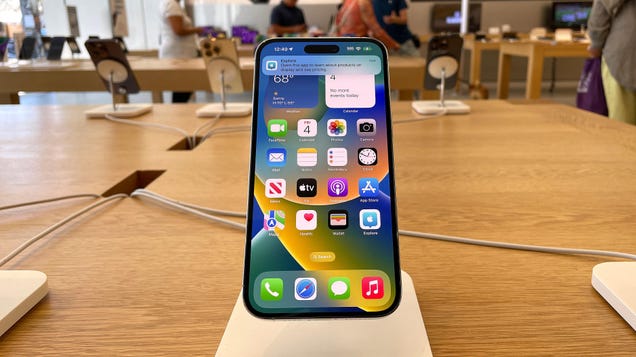
After years of dominating the cell phone market, one thing has become clear to Apple: Things on the smartphone front might be slowing down. The tech corporation has acknowledged a dip in sales in the U.S. ahead of the release of the iPhone 15.
Sure, we’re all busy playing Baldur’s Gate, but if you have a minute to look up from the screen, we’re here to tell you about what’s coming up on...well, your other screen, probably. Check out the trailer for Marvel’s I Am Groot and keep your eyes out for the Korean film Devils, hopefully coming to a big screen near…
Last year, WhatsApp released a series of new updates to make sending voice messages an overall better experience, and now it's bringing the whole group in on it. The messaging app has released a beta version of voice chats — a feature that creates an ongoing group audio conversation, reports WABetaInfo. The first sign of voice chats came earlier this year under the name audio chats but didn't provide much other info than its mere existence.
WABetaInfo
Though it sounds similar, this update isn't exactly the same as starting a group call, giving a much more Discord-like feel than when you typically give your friends a ring. Anyone with the update should see a waveform symbol in the upper right corner of their group chat. Pressing the icon starts a group voice chat and will say voice chat opened with a microphone to its left and a red X to its right. Everyone else in the group will receive a push notification, the same as any message, instead of their phone ringing. They will see a banner at the top of the chat box letting them know how many people are chatting now and giving them the option to connect.
Voice chats are protected by end-to-end encryption just like any other messages sent and also shut off if no one has been active in it for an hour. WhatsApp voice chat only appears to be available in beta for Android users right now but will allegedly appear for more people in the coming days.
This article originally appeared on Engadget at https://ift.tt/SoDHQPK
from Engadget is a web magazine with obsessive daily coverage of everything new in gadgets and consumer electronics https://ift.tt/SoDHQPK
via IFTTT https://ift.tt/kd3D5xS
Since 2005's Elantris,Brandon Sanderson has gradually risen in prominence as one of the biggest (and busiest) fantasy authors working today. And like other authors of similar status, Sanderson’s reach is gradually expanding outside of books over to other industries such as games. Though he’s stepped into the video…
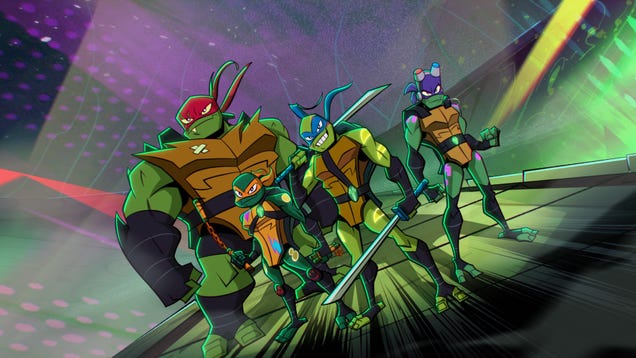
Paramount’s Teenage Mutant Ninja Turtles: Mutant Mayhem is the first movie version of the comic book characters since the two live-action films nearly a decade ago. The Heroes in a Half Shell have had an off-and-on relationship with movies, but Mutant Mayhem is shaping up to be one of the better received incarnations.…
2023 is a big year for superhero movies, as it’s when many of them from years past are hitting big milestones. Along with the MCU overall, the originalIron Man turned 15 this year, and it’s not the only one—The Incredible Hulk, which released months later, is similarly a decade and a half old. But unlike Tony Stark,…
America didn't get around to really addressing child labor until the late '30s when Roosevelts New Deal took hold and the Public Contracts Act raised the minimum age to 16. Before then, kids could often look forward to spending the majorities of their days doing some of the most dangerous and delicate work required on the factory floor. It's something today's kids can look forward to as well.
InHands of Time: A Watchmaker's History, venerated watchmaker Rebecca Struthers explores how the practice and technology of timekeeping has shaped and molded the modern world through her examination of history's most acclaimed timepieces. In the excerpt below, however, we take a look at 18th- and 19th-century Britain where timekeeping was used as a means of social coercion in keeping both adult and child workers pliant and productive.
Although Puritanism had disappeared from the mainstream in Europe by the time of the Industrial Revolution, industrialists, too, preached redemption through hard work — lest the Devil find work for idle hands to do. Now, though, the goal was productivity as much as redemption, although the two were often conveniently conflated. To those used to working by the clock, the provincial workers’ way of time appeared lazy and disorganized and became increasingly associated with unchristian, slovenly ways. Instead ‘time thrift’ was promoted as a virtue, and even as a source of health. In 1757, the Irish statesman Edmund Burke argued that it was ‘excessive rest and relaxation [that] can be fatal producing melancholy, dejection, despair, and often self-murder’ while hard work was ‘necessary to health of body and mind’.
Historian E.P. Thompson, in his famous essay ‘Time, Work-Discipline and Industrial Capitalism’, poetically described the role of the watch in eighteenth-century Britain as ‘the small instrument which now regulated the rhythms of industrial life’. It’s a description that, as a watchmaker, I particularly enjoy, as I’m often ‘regulating’ the watches I work on — adjusting the active hairspring length to get the watch running at the right rate — so they can regulate us in our daily lives. For the managerial classes, however, their watches dictated not just their own lives but also those of their employees.
In 1850 James Myles, a factory worker from Dundee, wrote a detailed account of his life working in a spinning mill. James had lived in the countryside before relocating to Dundee with his mother and siblings after his father was sentenced to seven years’ transportation to the colonies for murder. James was just seven years old when he managed to get a factory job, a great relief to his mother as the family were already starving. He describes stepping into ‘the dust, the din, the work, the hissing and roaring of one person to another’. At a nearby mill the working day ran for seventeen to nineteen hours and mealtimes were almost dispensed with in order to eke the very most out of their workers’ productivity, ‘Women were employed to boil potatoes and carry them in baskets to the different flats; and the children had to swallow a potato hastily … On dinners cooked and eaten as I have described, they had to subsist till half past nine, and frequently ten at night.’ In order to get workers to the factory on time, foremen sent men round to wake them up. Myles describes how ‘balmy sleep had scarcely closed their urchin eyelids, and steeped their infant souls in blessed forgetfulness, when the thumping of the watchmen’s staff on the door would rouse them from repose, and the words “Get up; it’s four o’clock,” reminded them they were factory children, the unprotected victims of monotonous slavery.’
Human alarm clocks, or ‘knocker-uppers’, became a common sight in industrial cities.* If you weren’t in possession of a clock with an alarm (an expensive complication at the time), you could pay your neighborhood knocker-upper a small fee to tap on your bedroom windows with a long stick, or even a pea shooter, at the agreed time. Knocker-uppers tried to concentrate as many clients within a short walking distance as they could, but were also careful not to knock too hard in case they woke up their customer’s neighbors for free. Their services became more in demand as factories increasingly relied on shift work, expecting people to work irregular hours.
Once in the workplace, access to time was often deliberately restricted and could be manipulated by the employer. By removing all visible clocks other than those controlled by the factory, the only person who knew what time the workers had started and how long they’d been going was the factory master. Shaving time off lunch and designated breaks and extending the working day for a few minutes here and there was easily done. As watches started to become more affordable, those who were able to buy them posed an unwelcome challenge to the factory master’s authority.
An account from a mill worker in the mid-nineteenth century describes how: ‘We worked as long as we could see in the summer time, and I could not say what hour it was when we stopped. There was nobody but the master and the master’s son who had a watch, and we did not know the time. There was one man who had a watch … It was taken from him and given into the master’s custody because he had told the men the time of day …’
James Myles tells a similar story: ‘In reality there were no regular hours: masters and managers did with us as they liked. The clocks at factories were often put forward in the morning and back at night, and instead of being instruments for the measurement of time, they were used as cloaks for cheatery and oppression. Though it is known among the hands, all were afraid to speak, and a workman then was afraid to carry a watch, as it was no uncommon event to dismiss anyone who presumed to know too much about the science of Horology.’
Time was a form of social control. Making people start work at the crack of dawn, or even earlier, was seen as an effective way to prevent working-class misbehavior and help them to become productive members of society. As one industrialist explained, ‘The necessity of early rising would reduce the poor to a necessity of going to Bed bedtime; and thereby prevent the Danger of Midnight revels.’ And getting the poor used to temporal control couldn’t start soon enough. Even children’s anarchic sense of the present should be tamed and fitted to schedule. In 1770 English cleric William Temple had advocated that all poor children should be sent from the age of four to workhouses, where they would also receive two hours of schooling a day. He believed that there was:
considerable use in their being, somehow or other, constantly employed for at least twelve hours a day, whether [these four-year-olds] earn their living or not; for by these means, we hope that the rising generation will be so habituated to constant employment that it would at length prove agreeable and entertaining to them ...
Because we all know how entertaining most four-year-olds would find ten hours of hard labor followed by another two of schooling. In 1772, in an essay distributed as a pamphlet entitled A View of Real Grievances, an anonymous author added that this training in the ‘habit of industry’ would ensure that, by the time a child was just six or seven, they would be ‘habituated, not to say naturalized to Labour and Fatigue.’ For those readers with young children looking for further tips, the author offered examples of the work most suited to children of ‘their age and strength’, chief being agriculture or service at sea. Appropriate tasks to occupy them include digging, plowing, hedging, chopping wood and carrying heavy things. What could go wrong with giving a six-year-old an ax or sending them off to join the navy?
The watch industry had its own branch of exploitative child labour in the form of what is known as the Christchurch Fusee Chain Gang. When the Napoleonic Wars caused problems with the supply of fusee chains, most of which came from Switzerland, an entrepreneurial clockmaker from the south coast of England, called Robert Harvey Cox, saw an opportunity. Making fusee chains isn’t complicated, but it is exceedingly fiddly. The chains, similar in design to a bicycle chain, are not much thicker than a horse’s hair, and are made up of links that are each stamped by hand and then riveted together. To make a section of chain the length of a fingertip requires seventy-fi ve or more individual links and rivets; a complete fusee chain can be the length of your hand. One book on watchmaking calls it ‘the worst job in the world’. Cox, however, saw it as perfect labor for the little hands of children and, when the Christchurch and Bournemouth Union Workhouse opened in 1764 down the road from him to provide accommodation for the town’s poor, he knew where to go looking. At its peak, Cox’s factory employed around forty to fifty children, some as young as nine, under the pretext of preventing them from being a financial burden. Their wages, sometimes less than a shilling a week (around £3 today), were paid directly to their workhouse. Days were long and, although they appear to have had some kind of magnification to use, the work could cause headaches and permanent damage to their eyesight. Cox’s factory was followed by others, and Christchurch, this otherwise obscure market town on the south coast, would go on to become Britain’s leading manufacturer of fusee chains right up until the outbreak of the First World War in 1914.
The damage industrial working attitudes to time caused to poor working communities was very real. The combination of long hours of hard labor, in often dangerous and heavily polluted environments, with disease and malnutrition caused by abject poverty, was toxic. Life expectancy in some of the most intensive manufacturing areas of Britain was incredibly low. An 1841 census of the Black Country parish of Dudley in the West Midlands found that the average was just sixteen years and seven months.
This article originally appeared on Engadget at https://ift.tt/8eV5KRq
from Engadget is a web magazine with obsessive daily coverage of everything new in gadgets and consumer electronics https://ift.tt/8eV5KRq
via IFTTT https://ift.tt/gZ35F2q
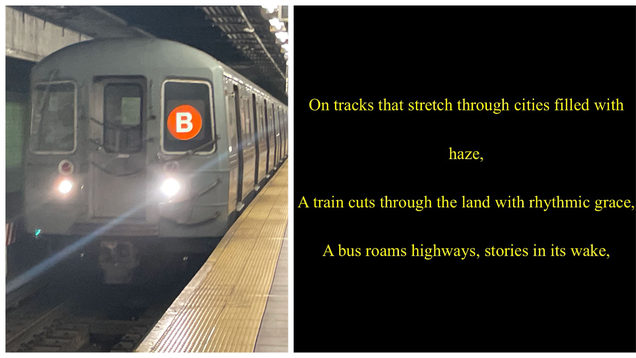
By now, just about everyone has seen the digital art and prose of generative AI models like Midjounrey and ChatGPT. In a reversal of the text-to-image format of Midjourney, a New York-based technologist and artist has released a new app that flips those concepts on their head, having AI models conjure up poems based…
Kaiju stories often live and die not just on the monster itself, but whoever’s fighting against (or with) it. Whether it’s the military, other monsters, or giant robots, part of the fun can be seeing what’s able to go blow-for-blow with a massive beast that shoots fire out of its eyes or some such.
One of the artists working on Dungeons & Dragons’ newest book—Bigby Presents: Glory of the Giants!, has stated that they used AI to help generate “certain details or polish and editing” in a recent post on X, on the site formerly known as Twitter. Ilya Shkipin, who drew the art in question, has deleted his posts, but…
Warner Bros.’ plans for its DC movies have shifted enough times that even Mystique would tell the company to chill, and last year’s Black Adam only served to further complicate things. Prior to release, its claim to fame was that Dwayne Johnson would finally play a comic book superhero (that he had an iron grip on for…
Viewers might see a new option in YouTube's dropdown resolution menu on the web if they're paying for the video hosting platform's Premium subscription service. According to The Verge, YouTube's 1080p playback option with "enhanced bitrate" is now available on desktop around the world. It's located above the ordinary 1080p option in the menu, and clicking on it will prompt users to pay for Premium if they're not currently a subscriber.
YouTube started testing 1080p Premium earlier this year, describing it as a "version of 1080p which provides more information per pixel that results in a higher quality viewing experience." The higher bitrate, which is used as a measurement for the amount of video data transferred within a certain timeframe, it provides could give viewers a better quality without having to watch in higher resolution. Yes, 4K is available for some videos, but that means having to stream a larger file that not everyone's connection can handle and could eat up a significant portion of some people's data allowance.
The service also rolled out enhanced 1080p on iOS a few months ago, but now more people will have access to it. That said, YouTube recently raised the prices for a Premium subscription from $12 a month to $14 and from $120 a year to $140. It does eliminate ads from the viewing experience, though, and it comes with features other than enhanced 1080p, including offline viewing and background playback.
This article originally appeared on Engadget at https://ift.tt/u17SdnP
from Engadget is a web magazine with obsessive daily coverage of everything new in gadgets and consumer electronics https://ift.tt/u17SdnP
via IFTTT https://ift.tt/mRKZ7bN
Christopher Nolan’s new movie Oppenheimer, eponymously named after the creator of the atomic bomb, has renewed public interest in America’s dark history with nuclear weapons. Nolan’s movie focuses primarily on the “Trinity” test—the first test of an nuclear bomb to occur in the U.S. But for years after Trinity, the…
Threads users will soon get one of the most requested features for the text-based social network: A web version. Meta chief Mark Zuckerberg has announced on the app that in the next few weeks, Threads is getting both a web version people can use to access the service on desktop, as well as a proper search function.
While it's possible to view Threads posts on desktop at the moment, clicking on the reply, repost, like and send buttons merely brings up a QR code that links to the app. Similarly, Threads' search function is currently limited. As 9to5Mac notes, it can only surface other accounts and can't be used to look for particular posts.
Meta pushed Threads out the door at an opportune time, when X users were reeling from major changes to the platform formerly known as Twitter. It became available shortly after X restricted the number of posts users can see on the website/app due to "extreme levels of data scraping [and] system manipulation." Non-paying users were the most affected and were initially limited to seeing 600 posts a day.
People flocked to Threads after it came out, and it easily reached 100 million users in under a week. However, Meta released Threads without a bunch of features people have come to expect from a social network like it. The company's higher-ups promised that the Threads team was working on those features, and over the past couple of weeks, it released a chronological feed and built-in translations. Threads' engagement has plummeted from that blockbuster first week, but the new features coming out could entice those early adopters to take a peek and become active users.
This article originally appeared on Engadget at https://ift.tt/T0DLqYN
from Engadget is a web magazine with obsessive daily coverage of everything new in gadgets and consumer electronics https://ift.tt/T0DLqYN
via IFTTT https://ift.tt/mRKZ7bN
QuakeCon is returning to an in-person event on August 10th, and id Software might have a re-release to mark the occasion. Historically reliable leaker billbil-kun claims id will unveil a remastered version of Quake II when QuakeCon kicks off next week. Details of the upgrade aren't available, but the classic sequel would make its way to PC, PS4, PS5, Xbox One, Xbox Series X/S and Switch. The title would be available through Microsoft's Game Pass on launch.
An enhanced version of Quake from 2021 might provide some clues as to what to expect. That remaster added support for widescreen resolutions as high as 4K, new character models and upgraded visual effects like dynamic lighting, depth of field and antialiasing. The refresh also bundled every official expansion while adding a new campaign created by Wolfenstein: The New Order developer MachineGames.
This won't be the same as Quake II RTX, provided the rumor is accurate. The 2019 tweak was meant to showcase NVIDIA's newer computer GPUs with ray-traced lighting and improved textures, but didn't include truly new content or hardware-agnostic visual improvements.
Quake II was originally released in 1997 and represented major strides forward in technology and gameplay over its predecessor. It introduced a semi-open world, objective-based gameplay and visual effects upgrades like colored lighting. The very first release was heavily focused on the single-player mode (competitive online play even took place on single-player maps), but it quickly became a go-to game for multiplayer thanks to updates and third-party upgrades like ThreeWave's Capture the Flag.
An introduction won't be surprising.given that a Quake II Remastered game went through South Korea's game rating authority in June. Billbil-kun also saw documents for North American (ESRB) and European (PEGI) ratings. As it stands, id, Bethesda and Microsoft have incentives to keep producing Quake remasters — they keep the first-person shooter in the limelight and make it playable on modern platforms without resorting to unofficial modifications and ports.
This article originally appeared on Engadget at https://ift.tt/S9HiPwn
from Engadget is a web magazine with obsessive daily coverage of everything new in gadgets and consumer electronics https://ift.tt/S9HiPwn
via IFTTT https://ift.tt/AIaZD67
Final Destination’s Jeffrey Reddick says the sixth film is ready to enter production—as soon as the SAG-AFTRA strike comes to an end. Dracula strikes in even more footage from Last Voyage of the Demeter. Plus, you’re not ready for the first details about Riverdale’s final episode. To me, my spoilers!
Security breaches rose by a shocking 156% globally from the first quarter of 2023 to quarter two, according to a report published by VPN service SurfShark on Tuesday. As hacking and security leaks become more prevalent so too does the rate at which the breaches occur.
TikTok is undergoing massive changes for users in the European Union in order to meet the August 28th deadline the region's authorities gave companies to comply with the Digital Services Act (DSA). Perhaps the biggest change users will encounter is the ability to decide whether or not to let algorithms power their For You page (FYP). "Soon," the service announced, users in the region will be able to switch off personalization. If they do, then their FYP will be populated with popular videos within their location and from around the world instead of content tailored to them.
When they search for any subject in particular, the results will also be comprised of popular videos in their region and content in their preferred language. They can still head to their Following and Friends feeds to see posts by people they follow, but both will now show a chronological timeline instead of one based on their profile. Under the DSA, "providers of very large online platforms," of which TikTok is included, are required to to ensure that users can "enjoy alternative options which are not based on profiling" as part of their "recommender systems." That means they have to offer an option that presents their content to users in a way that doesn't use their personal data.
As TechCrunch notes, it'll be an enormous shift for TikTok, seeing as most of its success is credited to the algorithm that powers its For You Page. Its scrollable format filled with videos targeting specific users is what makes the app so addicting.
In addition to introducing an alternative FYP, TikTok is rolling out an additional reporting option for European users for content they believe shouldn't be allowed on the platform. If the service decides that it doesn't violate its general guidelines upon review, a new dedicated team of moderators will then take a look at it to see if it violates laws in the region. TikTok can then restrict access to the reported video within that country or region only.
The social network will also start giving users in Europe more details about its content moderation decisions, such as why posts with false information aren't eligible for recommendation. Finally, it said that it will no longer serve personalized advertising to users in Europe ages 13 to 17 based on their activities.
This article originally appeared on Engadget at https://ift.tt/KETohgI
from Engadget is a web magazine with obsessive daily coverage of everything new in gadgets and consumer electronics https://ift.tt/KETohgI
via IFTTT https://ift.tt/AIaZD67
Security researchers believe they have found a hardware exploit to unlock upgrades to a Tesla that normally require plenty of extra cash. By messing with the voltage of the infotainment system, they were able to inject their code, bypassing its normal security. That enabled them to access personal data, including GPS tracking and call logs, as well as the car’s encryption key. That, the researchers claim, could be the key to unlocking paywalled features, like the mode known as Full Self-Driving, which you presently have to pay extra to use.
That’s not the only slice of bad news on Tesla’s breakfast plate today; it also stands accused of fraud. A recent Reuters expose alleges the car company was far too generous with its range estimates, and that it had quietly set up a team to stymie range-related complaints. In the wake of that report, three Californians have proposed a class action lawsuit accusing Tesla of false advertising. If successful, the lawsuit will cover every Tesla owner in the state, which wouldn’t be as much of a problem if California hadn’t taken the EV company to its heart.
– Daniel Cooper
You can get these reports delivered daily, direct to your inbox.Subscribe right here!
The Steam Deck’s blend of power, portability and price gave new life to PC gaming handhelds, traditionally a niche within a niche. The latest kid on the block is Ayaneo’s 2S, which has just spent the last few weeks in James Trew’s firm grip while he put it through its paces. It may be more expensive than its nearest competitors, but the improved features more than make up for it. You’ll have to read the full review to learn all about the changes, but it might be time to tweak what you’re asking for on your birthday list.
Baldur’s Gate III will arrive on the PlayStation 5 on September 6, but there’s no word yet on when the title will hit the Xbox. That’s because developers Larian Studios are struggling to make the new game work for both the (powerful) Series X and (not so powerful) Series S. Until it can, the game will remain a PS5 exclusive, with developers blaming Microsoft’s insistence on feature parity for the two consoles. But I think it’s pretty gratifying that Microsoft is looking out for gamers who might not have the cash to spend big on a flagship system.
The Musk-ization of Twitter might have sparked a revolution.
X/Twitter’s implosion has created a surge of interest in alternative platforms less easily destroyed on a billionaire’s whim. Mastodon is the standard bearer for the fediverse, a decentralized network of independent servers that embrace the early web’s DIY ethos. But even Threads, Meta’s not-quite Twitter-killer, has pledged to leverage the fediverse’s open protocols. If you want to learn more, read Karissa Bell’s excellent deep dive into decentralization, federation and why you should care about this sort of thing.
18.51 million copies of Tears of the Kingdom have been sold since May.
Nintendo knows a thing or two about creating an experience you’ll enjoy enough to pay top dollar for. It’s reporting record profits in its first quarter on the back of both The Super Mario Bros. Movie and The Legend of Zelda: Tears of the Kingdom. The former is the first movie this year to break the one billion mark, while Tears of the Kingdom has sold a whopping 18.5 million copies since it launched in May.
It comes after several creators reported massive drops in income.
Patreon says it has fixed an issue that caused several high-profile creators to report massive drops in income. It appears a billing address being moved to Dublin caused a large number of transactions to be flagged as fraudulent. The company told Engadget it was working with its payment processing partners to resolve the issue and believes the currently broken patron accounts will be restored in due course.
This article originally appeared on Engadget at https://ift.tt/1UADZB2
from Engadget is a web magazine with obsessive daily coverage of everything new in gadgets and consumer electronics https://ift.tt/1UADZB2
via IFTTT https://ift.tt/n8Hug0A
George Romero’s final Living Dead script is now in development. Get another good look at the latest cinematic take on Godzilla. Harley Quinn’s producers remain uncertain about the future of the show. Plus, a musical look at today’s episode of Star Trek: Strange New Worlds. Spoilers, away!
The following article contains spoilers for “Subspace Rhapsody.”
At some point in the ‘90s, it became law that all genre shows with a certain flexibility in their premise must do a musical episode. Xena, Ally McBeal, Buffy, Psych, Grey’s Anatomy and Scrubs have all done one, as has Supernatural, Once Upon a Time, 7th Heaven, Supergirl and The Flash. Now, it’s Strange New Worlds’ turn to make its characters spontaneously burst into song as it drops “Subspace Rhapsody” as the penultimate episode of its second season.
It’s clear from the start that Strange New Worlds was well-suited to do a musical given how broad its range is. In the last four weeks alone, we’ve had goofy comedy served up back to back with serious meditations on empathy and redemption. This is the first live action Trek of the streaming era to remember the franchise gets better when it allows itself to be goofy. The only surprise is that this is coming so early on its run; this is just the nineteenth episode of the series overall.
Musical episodes serve several purposes: It allows the cast to show off their hidden talents and lets the production crew indulge their latent musical theater nerd. They’re also, in many cases, a useful narrative crucible, forcing characters to reveal secrets they’d otherwise never let out. It’s an old trick to use the primary colors of a rousing number to drop something deep and dark on an audience. This comes in handy given the number of running storylines in the back of each episode, which get resolved more or less all in one go.
Michael Gibson/Paramount+
Uhura’s opening narration informs us the Enterprise has discovered a large subspace fissure. Spock believes it could be used to speed up communication over long distances, but despite several tries, he and Uhura can’t make it work. Not until Pelia suggests they test the system using music, so Uhura fires up Anything Goes and sends it into the ether. Before you can say that’s-a-good-macguffin, a large subspace wave hits the ship and sends everyone singing.
As this is happening, Pike and Batel – who I can’t believe Pike didn’t dump after arresting and prosecuting his first officer – argue about holiday destinations. Chapel has received word she’s been accepted for a prestigious fellowship with a high-profile academic. She’ll be away for a while but declines to share her news with Spock after the fraying of their relationship last week. And, to further complicate matters, James T. Kirk is back on board to shadow Una in preparation for his own promotion. But when they start spouting technobabble as lyrics and feeling the urge to dance, we’re straight into an acapella rendition of the theme tune.
I’ve pointed out, too frequently this year, the confidence Strange New Worlds has in its own execution. This is the second time in three weeks that it’s not just screwed with its format but also its packaging in the form of its opening credits. It’s evidence of a show that knows it has the patience from its audience to play around with its formatting.
Urged on by Pike, stuck firmly in his eyebrow-raising sick-of-this-malarkey mode, the team find they’re trapped in a state of quantum uncertainty. They’re in a universe that follows the rules of a musical, so when emotions are high, people are likely to burst into song. That’s bad for La’an, who is struggling to contain her feelings with her alternate-history beau on board, especially since she’s prohibited from talking about it. Pike, too, starts to confess his misgivings about the holiday he and Captain Batel have been planning. La’an gets a solo about being emotionally shut off from the rest of the crew, followed soon after with a duet with Una talking about why it’s good to open up.
The improbability field starts to expand, encompassing more starships in the area and reaching Klingon territory. They soon dispatch a cruiser to shut it down, but the Enterprise crew discover that shooting the fissure will release enough energy to wipe out the quadrant. Uhura posits that, if they’re in a musical, their behavior might have to follow the tropes of the genre. Armed with a tricorder, she drags Spock to the bar where he bumps into Chapel, who then dumps him with a full-cast song-and-dance number about the importance of her career. He responds by singing his own solo in engineering in which he talks about his abandonment of logic and reason for love, a mistake he won’t make again.
La’an, who has spent more and more time with Kirk, decides to open up a little bit only to find her advances rebuffed. Not because he doesn’t feel similarly, but because he’s in an on-again, off-again relationship with a scientist called Carol. And that Carol is currently pregnant with Kirk’s child, who we might not get to see again until Kirk looks a lot more like William Shatner. (This episode has more than a few moments where it’s consciously drawing attention to its “evolution” into The Original Series.)
Spock’s judgment may be clouded but Uhura, whose awareness of musical tropes has been key all episode, spots the solution. In order to pop the uncertainty field, the whole crew needs to do a big full-cast finale, but not before Uhura gets her own solo. At Pike’s urging, Uhura gets on the ship’s PA and inspires the whole crew – complete with dancing redshirts and balletic starship dances to produce a showstopper climax. We even get a blast of the Original Series’ theme to underpin their victory, while Spock goes off to smooth things over with the Klingons and get over his split with another round of heavy drinking.
Much as the ending is ostensibly happy, with everyone learning the lesson to be more honest and authentic with each other, there’s trouble on the horizon. Batel has to cancel her holiday with Pike, she’s being sent on a top secret mission which, I’m sure, is our lead in to the finale. Spock’s nursing his grief, and the rest of his supersized emotions, while La’an has to deal with the ramifications of her not-quite-requited love.
Michael Gibson/Paramount+
It’s almost pointless to try and judge a musical episode by the standards of its peers given how different it is from the norm. The script, credited to Dana Horgan and Bill Wolkoff, efficiently and effectively works in the musical universe concept without a lot of setup. Demott Downs’ direction blends the closed nature of Strange New Worlds’ standing sets with the necessary scope a musical demands. And the songs, from Letters to Cleo’s Kay Hanley and Tom Polce, are perfectly fine. Musical lovers will have a greater appetite for enjoying each track on a loop, but as a casual enjoyer of the artform, I’m not sure how many would enter my regular Spotify rotation.
Obviously, much of the dramatic weight of the episode hangs on the shoulders of the cast members who can sing. Christina Chong, Jess Bush, Rebecca Romijn, Ethan Peck and Celia Rose Gooding all get showpiece numbers and boy, can they all sing. But that’s not to shade the names not on that list, especially those who are getting by with the help of autotune. It’s hard enough to sing and dance even if you’ve got years of experience behind you, let alone if you’re dropped into the deep end in an acting job. Now, onward to the finale!
This article originally appeared on Engadget at https://ift.tt/kzYjrUp
from Engadget is a web magazine with obsessive daily coverage of everything new in gadgets and consumer electronics https://ift.tt/kzYjrUp
via IFTTT https://ift.tt/eZgHlNA
Richard Branson’s space tourism venture is set to launch its second commercial trip to suborbital heights in less than two weeks but the company is not too optimistic about the revenue generated by its private orbital tours.
Elon Musk and X, the site formerly known as Twitter, are in more legal trouble. The Agence France-Presse (AFP) is suing X for not engaging in discussions about payment to the French publisher in exchange for its articles appearing on the platform. In 2019, France passed neighboring rights legislation, extending copyright law to content produced by news publishers, such as text and videos, for two years after release. The law requires any sites that share this work to negotiate with the publishers about remuneration instead of sharing it without compensation for its creators.
This is bizarre. They want us to pay *them* for traffic to their site where they make advertising revenue and we don’t!?
In its press release, the AFP stated that it has "expressed its concerns over the clear refusal from Twitter (recently rebranded as 'X') to enter into discussions regarding the implementation of neighbouring rights for the press. These rights were established to enable news agencies and publishers to be remunerated by digital platforms which retain most of the monetary value generated by the distribution of news content."
X isn't the first tech company AFP has gone up against. In 2020, France's competition authority ordered Google to enter negotiations with publishers, and, while it reached an agreement in early 2021, the company was fined €500 million ($546 million) later that year for not reaching a fair agreement. In that case, part of the argument was that Google owns 90 percent of the search market, leaving them in a position where they could abuse their power if an equitable deal wasn't reached. Twitter's influence in this area of the internet isn't nearly as strong, so we'll have to wait and see if it will face the same fight.
This article originally appeared on Engadget at https://ift.tt/xZ8YXnq
from Engadget is a web magazine with obsessive daily coverage of everything new in gadgets and consumer electronics https://ift.tt/xZ8YXnq
via IFTTT https://ift.tt/TfWAG13
No matter the level of success a tech company has seen for certain products, at least one device always fails to meet expectations after launch. Amazon experienced this for its quickly discontinued Fire phone, and Meta is seeing it for everything from disinterest in the Metaverse to, reportedly, Ray-Ban Stories, its smart sunglasses. According to an internal Meta document viewed by The Wall Street Journal, less than ten percent of people with Ray-Ban Stories regularly use the product.
Ray-Ban sold about 300,000 of the glasses between their launch in September 2021 and February 2023 — when Meta conducted the report. At that time, there were only 27,000 monthly active users, with the company citing issues such as poor connectivity and issues with battery life. Yes, these people already bought the sunglasses, so that's something for the companies, but the low retention doesn't exactly instill confidence in continual sales. Meta's Reality Labs division, which the Ray-Ban partnership falls under, isn't doing well either, with an almost $8 million loss over the first half of 2023.
However, Meta is set to release a new generation of Ray-Ban Stories in either the fall or spring. Apparently, the new glasses will have improved battery life and cameras and be available in more than the current three sunglass models. While the first generation is available for $299, there's no word yet on how the next version of Ray-Ban Stories will be priced.
This article originally appeared on Engadget at https://ift.tt/o1rqBmt
from Engadget is a web magazine with obsessive daily coverage of everything new in gadgets and consumer electronics https://ift.tt/o1rqBmt
via IFTTT https://ift.tt/TfWAG13
Nobody has been trimming the hedges of Google and Apple’s walled gardens. I should know. I’ve straddled the hedgerows separating the iOS and Android ecosystems and had my nethers pricked by some oddly-placed thorns.
China might put further limits on kids' smartphone use. The Cyberspace Administration of China (CAC) has proposed draft rules that would cap the phone time of children under 18 to a maximum of two hours per day. That's only for 16- and 17-year-olds, too. Youth between eight and 15 would be limited to one hour per day, while those under eight would have 40 minutes.
The draft would also bar any use between 10PM and 6AM. Phones would need to have an easy-to-access mode that lets parents restrict what kids see and permit internet providers to show age-appropriate content. Children under three would be limited to songs and other forms of audio, while those 12 and up can see educational and news material. There would be exceptions for regulated educational content and emergency services.
As with previous measures, the proposal is meant to curb addictive behaviour in children. The Chinese government is concerned prolonged use of mobile devices, games and services may be detrimental to kids' development. The country already limits young people to three hours of online video game time per week, and then only on weekends and public holidays.
The draft is still open to public consultation and isn't guaranteed to pass. There are also questions about implementation. CNBCnotes it isn't clear whether hardware manufacturers or operating system developers are responsible for implementing the kids mode. While Apple would have to change the iPhone's parental controls in China regardless of this distinction, involving the OS developer might require that Google make changes, not just vendors like Oppo or Xiaomi.
The rules would also have a significant effect for Chinese app developers like ByteDance (responsible for TikTok and its China-native counterpart Douyin) and Tencent (the maker of WeChat and many games). They may have to design apps and tailor content around these time limits.
This article originally appeared on Engadget at https://ift.tt/YsuMZJf
from Engadget is a web magazine with obsessive daily coverage of everything new in gadgets and consumer electronics https://ift.tt/YsuMZJf
via IFTTT https://ift.tt/dpyBfVY
Twitter—which Elon Musk has desperately tried to convince users is now called “X”—wants users to display their $8 a month blue checkmark prominently on their page. Unfortunately for those who pay up, that checkmark has become a kind of Scarlet Letter analog that many app denizens use to denote a Musk bootlicker, or…
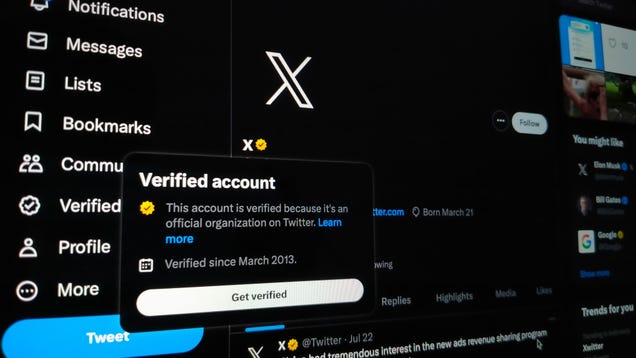
One of the main selling points for Twitter Blue — now "X Blue" — when the service was first launched was that anybody on the platform willing to pay for it can get the once-coveted blue checkmark. Over the past months, though, subscribers have been getting shamed for paying $8 a month or $84 a year for the service. Now as TechCrunch has noticed, the company has updated its support page for X Blue with a new feature for members: The ability to hide the verified checkmark on their account.
Under the "Profile customization" section in account settings, subscribers will now find a new "Hide your blue checkmark" option that they can tick. By activating the feature, the badge will no longer show up on their profiles and next to their usernames on posts. However, the company warned that it could still show up in some places and that some features may not be available to them while their checkmark is hidden. It didn't say which features will become inaccessible, but Twitter has rolled out a number of changes made specifically for paying users since Elon Musk took over.
It has increased paid users' post limit to 25,000 characters and is even working on new tools to publish long-form content. The website has also expanded their video limit to 3 hours. Meanwhile, the social network has become less and less attractive for free users. It announced in July that it will limit the number of DMs non-paying users can send in an effort to limit spam, and it previously put a strict cap on how many tweets a day a user can see due to "extreme levels of data scraping." While the restriction was temporary, unverified accounts were initially limited to 600 posts daily.
App developer Alessandro Paluzzi first spotted the capability to hide checkmarks in March. Based on the screenshots Paluzzi shared, the verification process will remain the same, with users being required to submit a government ID to authenticate their identities. It now simply won't be obvious at first glance that someone's paying for X Blue.
This article originally appeared on Engadget at https://ift.tt/9PHMkzL
from Engadget is a web magazine with obsessive daily coverage of everything new in gadgets and consumer electronics https://ift.tt/9PHMkzL
via IFTTT https://ift.tt/dpyBfVY
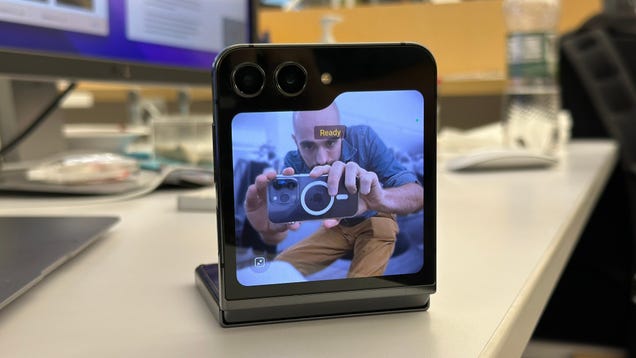
Of Samsung’s latest foldable mobile offerings unveiled at its latest Unpacked event, the most dramatic changes we’ve seen come via the Galaxy Z Flip 5. Not only do we finally have a fully flat silhouette and a redesigned hinge, but Samsung has caught on that people like more screens, so it stuck a larger display on…
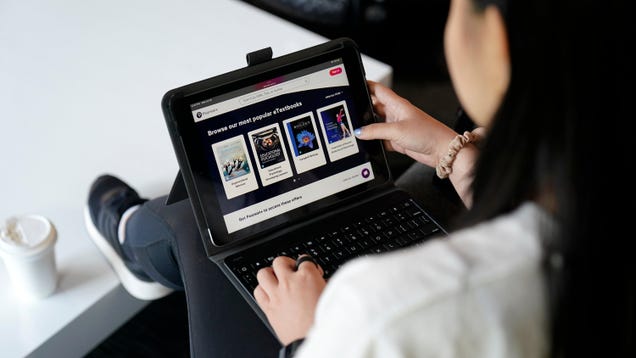
Pearson, one of the top five textbook makers in the world, is leaping into the world of AI with the same speed and subtlety as a cinderblock-sized primer tumbling to the floor. The company said it plans to offer a new kind of study buddy AI chatbot they promise will be “free from the noise and corruption of web-based…
The next internet video summary you see might not have been written by a human. YouTube is testing AI-generated video summaries that appear on search and watch pages. The text is meant to provide a "quick overview" of a clip to help you decide if it's worth watching. The company is quick to stress that these don't replace creators' own video descriptions.
The test will only be visible with a "limited number" of English-language videos, and only for some viewers. YouTube hasn't said which countries, platforms or video types will get the AI-produced summaries. We've asked the company for comment and will let you know if we hear back.
YouTube has given users a few preview features in recent weeks, as Android Policeexplains. Premium subscribers could lock the screen during playback to prevent accidental commands. You've also had the option to turn Shorts comments into entirely new short-form clips.
The experiment comes nearly three years after YouTube started testing AI-produced video chapters, but it's part of a larger generative AI push at Google. The tech giant has introduced its Bard chatbot and is using the technology to produce everything from spreadsheet templates to whole news articles, if not always for public consumption.
The YouTube summary feature may be one of the more logical extensions, however. The service says over 500 hours of content are uploaded every minute — it would be impossible for humans to keep up. The question is whether or not the AI summaries are accurate enough. Google has warned that generative systems like Bard may be prone to inaccuracies and misinformation, and it's not yet clear how well the YouTube experiment works in practice.
This article originally appeared on Engadget at https://ift.tt/cIVLYzg
from Engadget is a web magazine with obsessive daily coverage of everything new in gadgets and consumer electronics https://ift.tt/cIVLYzg
via IFTTT https://ift.tt/yRDsJ5G
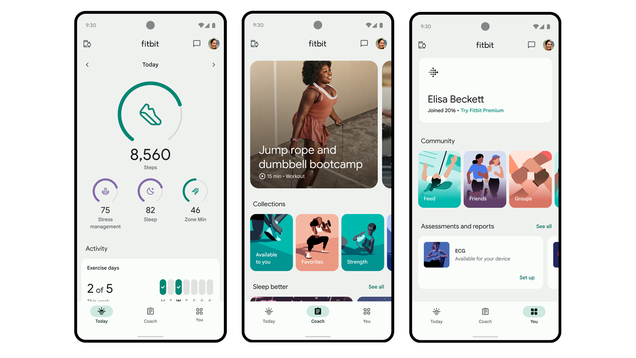
Fitbit has announced it’s redesigning the mobile app from the ground up. The app will focus squarely on a new “personalized and customizable” Fitbit experience, which will debut later this year. If you’re itching with anticipation and absolutely can’t wait to see what’s next (I can’t), you can sign up to be a part of…
The ongoing race to expand generative AI technology is reaching digital assistants — one of many people's first introductions to an AI companion. Such is the case with Google, which is working on a revamp for its Assistant that will include generative AI-powered technology, according in an internal email obtained by Axios.
Google Assistant's vice president Peeyush Ranjan and product director, Duke Dukellis, explained their rationale to staffers, stating: "As a team, we need to focus on delivering high-quality, critical product experiences for our users. We've also seen the profound potential of generative AI to transform people's lives and see a huge opportunity to explore what a supercharged Assistant, powered by the latest LLM technology, would look like."
Notably, the email revealed that Google is already working on doing this for mobile devices. There's no timeline set for when Google will integrate this technology into its smart home devices or, for that matter, exactly what these new updates will look like. The company might utilize Bard, its AI chatbot, to converse with Assistant users or try something completely original.
Whatever Google employees are working on, it's causing some internal reconfiguration, such as combining the Surfaces and Services teams into one. The company is also letting go of a "small" number of employees but didn't disclose the exact amount.
This article originally appeared on Engadget at https://ift.tt/GPxYcTM
from Engadget is a web magazine with obsessive daily coverage of everything new in gadgets and consumer electronics https://ift.tt/GPxYcTM
via IFTTT https://ift.tt/yRDsJ5G
German semiconductor maker Infineon Technologies announced it’s making printed circuit boards (PCBs) that dissolve in water. Sourced from UK startup Jiva Materials, the plant-based Soluboard could provide a new way for the tech industry to reduce electronic waste.
Jiva’s biodegradable PCB is made of natural fibers and a halogen-free polymer with a much lower carbon footprint. A team at the University of Washington College of Engineering and Microsoft Research created a mouse using a Soluboard PCB as its core. The researchers found the Soluboard dissolved in hot water in under six minutes. The process also makes retrieving the valuable metals attached to it easier. “After [it dissolves], we’re left with the chips and circuit traces, which we can filter out,” said UW assistant professor Vikram Iyer, who worked on the mouse project.
It’s early days for the technology. And maybe I’m a Debby-downer (and clumsy), but it could increase the drama of me spilling coffee on my laptop.
– Mat Smith
You can get these reports delivered daily direct to your inbox.Subscribe right here!
Last spring, Amazon launched its live audio-streaming platform, Amp. The pitch was reinventing radio with “an infinite dial of shows.” With no need to buy songs or flirt with the DMCA, users could make a playlist, go live, talk between tracks, follow the chat and even invite callers. It’s finally available on Android.
Unlike Clubhouse, which enjoyed an early surge of popularity, Amp has largely gone under the radar since launch. “The thing we're maniacally focused on every day is making sure that the product is right before stepping out in bigger and bigger fashion,” said Amp co-founder, Matt Sandler. Can it grow?
8BitDo announced a new mechanical keyboard inspired by Nintendo’s NES and Famicom consoles from the 1980s. The $100 Retro Mechanical Keyboard works in wired / wireless modes, supports custom key mapping and includes two giant red buttons, because why not? Pre-orders are open now, with the accessory costing $100, and should begin shipping on August 10th.
It accused the Center for Countering Digital Hate of a ‘scare campaign.’
X Corp (aka Twitter) has filed a lawsuit against the Center for Countering Digital Hate (CCDH). It claimed the anti-hate group is illegally "scraping" its servers and cherry-picking hateful posts as part of "a scare campaign to drive away advertisers," according to documents filed in San Francisco federal court. The Center published a research article in June asserting X allowed explicitly racist and homophobic posts despite policies to the contrary, even after they'd been reported. However, X responded that the CCDH used poor methodology and failed to study all 500 million posts on the service each day.
This article originally appeared on Engadget at https://ift.tt/Uq61YWy
from Engadget is a web magazine with obsessive daily coverage of everything new in gadgets and consumer electronics https://ift.tt/Uq61YWy
via IFTTT https://ift.tt/3EJ1uos