Vivo S9 could be the next device in the Vivo’s V series lineup. While the Vivo S series is not popular as the V series in India, it is quite popular in China and the device is tipped to launch in China next month.
According to a Weibo post from a user named Arsenal, the Vivo S9 will launch in China on March 6. The Vivo S7 will likely be the successor to the Vivo S7. According to the tipster, the Vivo S9 will be the first phone with the new MediaTek Dimensity 1100 processor. A few days back, a Vivo device with “V2072A” model number was spotted on the Google Play Console with the same chipset. Here is what we know about the device as provided by the tipster and Google Play database.
In terms of the screen, the Vivo S9 will sport a 6.4-inch display and rumours suggests it will be a Full HD+ screen with 1080 x 2400 pixels resolution. The display will offer 480ppi pixel density. As for the optics, the Google Play listing had an image which showcased the dual selfie cameras and according to the Weibo post, the device will flaunt a 44MP ultra-wide dual selfie cameras. There is no word on the rear camera specs yet.
The key highlights of the upcoming Vivo smartphone the brand new processor from MediaTek. The Vivo S9 is likely to be the first phone to be powered by the MediaTek Dimensity 1100 processor. This is an octa-core 5G chipset built on a 6nm process. It is an eight-core CPU with four Arm Cortex-A78 cores operating at up to 2.6GHz and four Arm Cortex-A55 efficiency cores. The nine-core Arm Mali-G77 GPU will take care of graphics. It also has the same HyperEngine 3.0 gaming suite.
The Google Play listings also suggest the device will feature 12GB of RAM. Further, the device is running on Android 11 OS on top of Vivo’s Fun Touch OS skin. The phone is expected to launch on March 6 in China but, there is no confirmation on the launch date yet.
Now after more than one-and-a-half months, things are still in the limbo. Sources connected to the company and the developments say that it is left to Apple, which had put Wistron on notice after the riots at its facility, to give the go-ahead for the Taiwanese company to resume operations.
Apple, it is learnt, will give the green signal only if it is clear that Wistron has adhered to all the prescribed protocols and norms for labour management.
Wistron, in a bid to speed up the process, has held talks with Karnataka officials to convey its earnestness and get an all-clear from the government using which it hopes to get clearance from Apple.
Media reports say the Karnataka government has held talks with top executives of Wistron and six staffing firms. The latter are an important cog in the wheel as the labour supplied by these companies were upset with salary and unpaid wages and resorted to violence at the 44-acre facility at Narasapura, 60kms from Bengaluru.
Karnataka government spoke to the six staffing companies --- Quess, Randstad, Adecco, Needs, Innov Source and Creative Engineers --- and sought to know whether their misgivings had been assuaged by Wistron.
The government has made it clear that it was ready to do all that it can to see Wistron resumes operations at the earliest.
Staffing firms seem satisfied
As of now, police verification of contract employees is on. It is a time-consuming process. Once it is done, Karnataka government will check whether Wistron has settled the dues of employees. It will also find out whether the re-hiring protocol is being followed.
With the process fast-tracked, Wistron is now looking up to Apple to get down its team to India and clear the way for the plant's re-opening.
Earlier, the findings of an Apple audit in the wake of violence at the Wistron plant showed violations of its ‘Supplier Code of Conduct’.
Our main objective is to make sure all the workers are treated with dignity and respect, and fully compensated promptly, Apple had said at that time. The plant employed around 12,000 people.
The staffing firms, for their part, seem satisfied now. "We have sorted out the problem in a calm way and thankfully there was no legal action against Quess. It's behind us now," said Suraj Moraje, CEO of Quess Corp, one of the staffing firms. There is now a clear understanding of how to work going forward, he added.
For the record, following the violence at the Wistron facility at Narasapura, the iPhone 12 mini production that should have commenced by now has been delayed.
Want to know about the latest happenings in tech? Follow TechRadar India on Twitter, Facebookand Instagram!
from TechRadar - All the latest technology news https://ift.tt/39MLJC9
via IFTTT https://ift.tt/eA8V8J
Despite earlier rumors of Huawei possibly spinning off its consumer business, the company is still pushing ahead with a new flagship phone — a foldable one, even — later this month. According to Huawei’s official Weibo account, the Chinese brand’s ne...
from Engadget https://ift.tt/39FWg1C
via IFTTT https://ift.tt/2YDTa83
EA released its quarterly earnings today, and raised its outlook for the full year based on the results. It pointed to titles that back up its live service focus, including Apex Legends, which had 30 percent growth in players, year over year.The game...
from Engadget https://ift.tt/3arrfh7
via IFTTT https://ift.tt/2MMzn3G
Realme UI 2.0 is now available for half a dozen Realme smartphones in India. The Android 11 preview was first made available for Realme X50 Pro in India back in September. Now, the Realme UI 2.0 early access (beta) is available for Realme X3, Realme X3 SuperZoom, Realme X2, Realme 6, Realme C12, and Realme C15.
The Realme UI 2.0 is based on Android 11 and brings system-wide changes and optimizations. With early access to these phones, Realme inviting users to test and use the latest features. The stable version of the same should roll out once the beta program is successful. However, the company has not announced the exact date yet.
The Realme UI 2.0 update based on Android 11 for the aforementioned phones will be rolled out to users who fills an application in the form of Google forms for requesting the update. The update is going to be available for a limited set of users initially. The application for the same is currently open and the update will be sent out in batches. In order to receive the Android 11 update, you should be running the latest stable version.
Realme X3, Realme X3 Super Zoom, Realme X2, Realme 6, Realme C15, and Realme C12 users can head to the respective links and follow the instructions. To be eligible for the latest version, the phone should not be rooted and as always it is recommended to take a full data backup.
Once this is done, you can head to Settings > Software Update > Tap on the settings icon in the top right corner > Trial Version > Apply Now > Submit your details and finish the quiz. Realme also says there might be an unpredictable impact on your phone and effect on daily use so, it is not recommended to install the update on your primary phone.
If you want to go back to Android 10 later on, you will have to manually install it which also erase your data completely.
What’s new in Android 11?
The pillars of the Android 11 are Conversation, Content capture, Predictive tools, Accessibility, Device control, and Privacy and security. The security feature includes mostly includes app permissions. You will be able to offer apps one-time permissions that only apply while the app is running in the foreground. This also means that apps can no longer have access to your location, microphone, or camera in the background.
You also get chat bubbles for all the conversations, just like you get with Messenger. The media controls now sit in the notifications shade and will support multiple streams at once by swiping. The notifications from messaging apps will be grouped into a conversations section that will appear above and separate from other notifications. This can make it easier to keep up with ongoing conversations.
And, there is a new power button menu will offer quick controls over smart home devices without needing to launch individual apps. This can be accessed by long-pressing the power button.
Robot vacuum cleaners can be incredibly expensive gadgets, but a new, affordable option from Ecovacs has just arrived on Australian shores, and it will clean your floors for just AU$399 – that’s less than half the price of most rivals.
The Deebot U2 has joined the Ecovacs range as its new entry-level option, and it’s a dual-function droid with vacuuming and mopping capabilities.
Ecovacs promises it has strong suction power, with a standard mode for everyday use, while the Max+ mode is said to deliver a deeper clean by boosting suction power up to 2.5 times.
When it comes to wiping down hard floors, you’ll need to manually attach the mopping plate and fill the water reservoir – this will then switch the device to mopping mode.
There’s a smart navigation system onboard, which Ecovacs says works on hard floors to determine its best cleaning path, while anti-collision sensors and bumpers are said to protect furniture from damage.
It uses the EcovacsHome app, which is compatible with Amazon Alexa and Google Assistant, and is the same app used to control the brand’s more expensive models, such as the Deebot Ozmo T8.
The app allows you to schedule cleaning times and control cleaning modes such as edge and spot cleaning for those areas that need a little extra attention.
Ecovacs has kept the cost down by removing some of its more premium features, such as advanced mapping, but you do have the option of getting some of this tech for an additional fee.
A magnetic boundary stripe can be purchased separately, and it allows you to block off certain rooms or areas of your home where you don’t want the droid to venture to.
Ecovacs promises its new robot vacuum has a battery life of up to 110 minutes, and it will automatically dock into its charger when it’s running out of juice. By comparison, the much more expensive T8 has a battery life of up to three hours, though it retails for a huge AU$1,299.
If you can 3D-print a gun... if you can 3D-print a home... then brother, you might as well pull up a chair and 3D-print yourself some meat while you’re at it, because these masses aren’t going to feed themselves.
Just a few short hours after Apple officially released its 11.2 update for macOS Big Sur – which notably offers fixes for Bluetooth issues on new M1 MacBooks – the tech giant has already begun rolling out the first beta version of its next update, macOS 11.3.
While there are a fair few features being added with the Big Sur 11.3 update, one of the standouts is the improved support for running iPhone and iPad apps on the new MacBooks that feature the M1 chipset.
Specific changes include iPad apps being larger on-screen than before, and the addition of a new preference section for both iPhone and iPad apps. The latter will allow users to customize a set of keyboard shortcut alternatives to the touch interface that these apps were designed for, such as dragging, swiping and so on.
Some other notable features include built-in support for next-gen gaming console controllers – both Xbox Series X and PlayStation 5 – which is something that'll also be arriving on iPhones with the upcoming iOS 14.5 release.
Other refinements to Apple's suite of apps are also on the way, including updates to Apple Music, Safari, Reminders, and Apple News.
The Reminders app will be getting a much-needed sorting feature, allowing users to list their reminders by priority, due date, creation date, or title. Apple Music and Apple News will feature some UI tweaks to make existing functions more accessible.
Safari will get a host of personalization features for its home page, allowing users to arrange its different sections to their liking (such as Siri suggestions, reading lists and favorites).
As mentioned, macOS 11.3 has only begun rolling out in beta, so the full public release is still a little ways off, but for those frustrated by how the M1 Macs handle iOS apps, know that there's relief in sight.
Disney Plus is set to receive hundreds of additional TV shows and movies later this month with the arrival of Star, a mandatory new section within the service which offers more adult-oriented content.
While Star will be a section within the existing Disney Plus app, it is essentially its own streaming service, meaning there will be a price increase for all subscribers starting from February 23, 2021.
The cost of a monthly Disney Plus subscription will rise from AU$8.99 to AU$11.99, while the service's yearly subscription will increase from AU$89.99 to AU$119.99.
The inclusion of Star means that in addition to the family-friendly fare that's currently available to stream on Disney Plus, you'll also get access to more grown-up content from the likes of Hulu, ABC, Disney Television Studios, FX, Touchstone, Searchlight Pictures, 20th Century Studios and 20th Television.
Older favourites like Sons of Anarchy, The X-Files and 24 will sit alongside newer shows like Solar Opposites, from creator Justin Roiland (Rick and Morty) and Big Sky, a new police procedural from David E. Kelley (The Practice, Ally McBeal).
You'll also get a wide range of movies aimed at adults – Disney Plus subscribers will finally get the access to Marvel's more violent films, including Deadpool and Logan, and you can also expect classic films like Aliens, Braveheart, Terminator 2: Judgment Day, Die Hard and even Starship Troopers to be made available to stream.
Thankfully, those who've already purchased a yearly subscription to Disney Plus will not see a price increase until it's time to renew, at which point the new price point will come into effect.
Of course, there is a way for everyone else to keep the current Disney Plus subscription price for another year – monthly subscribers and new customers have one last chance to save AU$30 on a yearly subscription by signing up before February 23, 2021.
To secure another 12 months of Disney Plus at AU$89.99, simply click on the deal below. Don't wait too long, though – this opportunity will vanish on February 23, 2021.
Despite being nearly synonymous with PDFs, Adobe’s Acrobat software hasn’t kept pace with the advancements we’ve seen the company’s competitors make to their online apps. In recent years, you’ve had to turn to the Acrobat desktop app if you wanted to...
from Engadget https://ift.tt/3ar4dqF
via IFTTT https://ift.tt/3cIvGqu
In an effort to make it easier to work with PDFs online, Adobe has developed a new solution called Acrobat web that allows users to tackle a number of PDF tasks right from their browsers.
With Acrobat web, users can complete a number of different actions such as converting a file to a PDF, converting PDFs to other file types, protecting a PDF, splitting a PDF into two, merging multiple PDFs together and even e-signing online without having to download additional software.
Using Acrobat web is simple as well as users can just drag and drop files from their computers to edit or convert them into PDFs.
To get started you'll need to sign in with an Adobe ID which can be created for free on the company's site. However, those who need more specific PDF tools such as editing text and images, redacting or OCRing, can upgrade to an Acrobat subscription which also gives you access to mobile and desktop apps in addition to Acrobat web.
PDF.new
Last summer Adobe teamed up with Google to create and launch a number of simple Acrobat shortcuts for the search giant's .new domain.
After seeing more than 10m clicks in just a few months though, Adobe has now created several additional Acrobat shortcuts which can be typed into the address bar of your browser. These include PDF.new, Sign.new, CompressPDF.new, ConvertPDF.new and WordtoPDF.new.
As both individuals and businesses continue to use PDFs while working from home, the launch of Acrobat web and the addition of several new Acrobat shortcuts will likely help boost productivity as users will no longer need to go to their search engine to figure out how to convert files into Adobe's PDF format.
We've also rounded up all the gear you'll need to work from home successfully
from TechRadar - All the latest technology news https://ift.tt/3atCBkL
via IFTTT https://ift.tt/eA8V8J
Two of China’s most visible tech companies are going to court. On Tuesday, TikTok owner ByteDance sued Tencent, according to Bloomberg. ByteDance claims Tencent broke the country’s antitrust laws by blocking people from accessing content from Douyin...
from Engadget https://ift.tt/3rdTo20
via IFTTT https://ift.tt/36Djpjn
Telstra has announced it will no longer offer its sports-dedicated Live Pass app, and instead has inked a long-term partnership to replace it with sports streaming service Kayo.
The new deal with Kayo will bring over 50 sports live and on demand to Telstra’s service, including the AFL and NRL, for an additional fee. Telstra’s previous AFL and NRL apps streamed games on demand, but matches were not available to watch live.
If you’ve previously used Telstra’s Live Pass, the telco is offering you a huge discount on a basic subscription to Kayo Sports. The monthly subscription would usually set you back AU$25 a month, but Telstra is knocking a massive AU$20 off each month for the first 12 months.
That will get eligible customers a Kayo subscription for just AU$5 a month over an entire year, which is a massive saving of AU$240 in total.
Telstra customers who haven’t used the provider’s own streaming app can still get a discount on Kayo, and will pay AU$15 a month (instead of the usual AU$25) for their first 12 months connected to the service.
With this discount offer, Telstra may be hoping to tempt some sport-loving Optus customers away. Optus Sport is a football streaming service which lets users stream the Premier League, Champions League and others.
Telstra says that customers won’t be limited to watching Kayo on their mobile phone, with Telstra’s CEO, Andy Penn, stating it will be available “across all platforms, all devices”.
Kayo’s basic subscription allows you to live stream sport on up to two screens at once, while a premium subscription tier ups that to three simultaneous streams. Kayo is also designed to cater to the die-hard sports fan, with a feature-rich platform that's not seen on any other streaming service. Read our in-depth review of Kayo Sports to find out more.
To be eligible for Telstra’s ripper AU$20 discount on Kayo, users must have redeemed a Telstra AFL or NRL Live Pass service before December 22, 2020, and still use the same Telstra account used to redeem it. If that’s you, sign up through Telstra here.
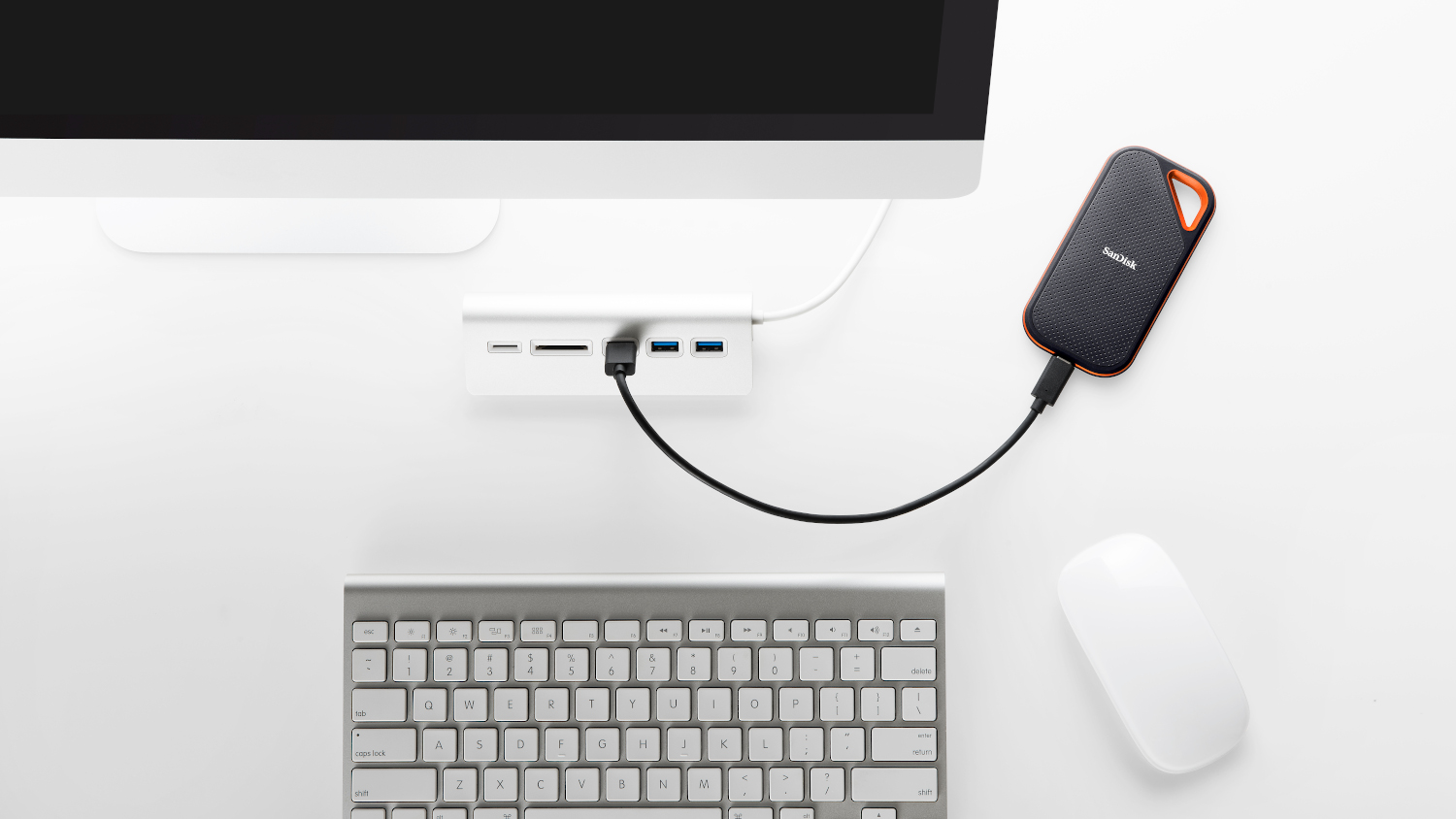
Storage drives have gotten a whole lot better over the past few years. Gone are the days when you couldn’t run software from them or move them around too much during use. These days, we have solid-state drives -- and the SanDisk Extreme Pro® Portable SSD takes solid state storage to the next level.
There are a number of things that make the SanDisk Extreme Pro Portable SSD such a great drive, but perhaps at the top of that list is the fact that it’s lightning fast. In fact, the SanDisk Extreme Pro portable drives leverage Western Digital’s NVMe technology to increase transfer speeds, and with these drives, you’ll get up to a massive 2000MB/s*, fully taking advantage of the USB 3.2 Gen 2x2 interface. That should be more than fast enough to transfer your files with ease, or even run games or your operating system directly from the drive.
You could have plenty of data to transfer too. SanDisk Extreme Pro drives come in a few different storage amounts, with options including 1TB, 2TB, and all the way up to 4TB*! Safe to say, whether you need a drive for basic file storage, storing your games, or for your creative projects, there should be something for your needs.
(Image credit: Western Digital)
SanDisk Extreme Pro drives go beyond offering a great spec sheet. These drives are built for on-the-go use, and feature a rugged design with a strong aluminum body to protect the drive’s core. That aluminum body is even coated with rubber for high impact resistance, and to give the drive an IP55 rating for water and dust resistance**.
Given the combination of rubber and aluminum, you might assume that SanDisk Extreme Pro drives are big and chunky, but nothing could be further from the truth. Extreme Pro drives are incredibly small and can easily fit in your pocket.
No matter what your situation, SanDisk Extreme Pro Portable SSD should work for you. The drives support PCs and Macs, so they should work right out of the box. The cable in the box is a USB-C cable, which is perfect for newer computers, but in case you don’t have a newer computer just yet, they also come with a USB-C to USB-A adapter.
*Up to stated speed. Based on internal testing; performance may vary depending on host device, usage conditions, drive capacity, and other factors. 1MB = one million bytes. As used for storage capacity, 1TB = one trillion bytes. Actual user capacity less.
**Based on internal testing. IPEC 60529 IP 55: Tested to withstand water flow (30 kPa) at 3 min.; limited dust contact does not interfere with operation. Must be clean and dry before use.
from TechRadar - All the latest technology news https://ift.tt/3too2rc
via IFTTT https://ift.tt/3tw9aaC
A new rumor suggests the forthcoming iPhone 13 series will get improved ultra-wide and telephoto cameras, but only for the high-end iPhone 13 Pro and Pro Max versions.
These aren’t huge upgrades: the ultra-wide cameras could get better apertures, from f/2.4 in the iPhone 12 Pro and iPhone 12 Pro Max to f/1.8 in the iPhone 13 Pro/Pro Max, according to a Barclays analyst’s investor note seen by MacRumors.
This should mean better low-light performance, which had already been improved in last year’s iPhones which added night mode capability to ultra-wide cameras. Curiously, the aperture upgrades reportedly aren’t coming to the lower-end iPhone 13 or the iPhone 13 mini (assuming one is coming), only the pricier models.
This reaffirms a previous prediction by noted Apple analyst Ming-Chi Kuo, who made the prediction about an ultra-wide camera with f/1.8 aperture upgrade and noted that the iPhone 14 coming in 2022 would likely pack the same.
The Barclays note also mentioned that the iPhone 13 Pro could get the Pro Max’s better telephoto camera, improving the 12 Pro’s f/2.0, 52mm focal length equivalent camera to the f/2.2, 65mm focal length equivalent camera that the iPhone 12 Pro Max had.
In simpler terms, this would increase the phone’s telephoto clarity, going from 2x optical zoom to 2.5x optical zoom.
This new Barclays note exemplifies all we’ve heard before about the iPhone 13: its improvements sound largely incremental.
Whether it’s a smaller notch and better cameras, Wi-Fi 6E, LiDar across its entire line, most of its additions are welcome but not exciting; heck, its most drastic potential upgrades – in-screen touch sensors and 120Hz refresh rate screens – came to Android phones years ago.
On the other hand, the iPhone 12 line was expected to improve incrementally, too, though the actual upgrades were substantial in total: a ‘mini’ version, camera hardware upgrades, a new raw photo format, and the MagSafe system for wireless charging and attaching accessories. So it’s anyone’s guess if we’re going to see more dramatic features hinted at, and eventually unveiled, in the iPhone 13 line.
Recent years have brought record-breaking wildfires, hurricanes, and other natural disasters supercharged by climate change. But even to our jaded modern eyes, the weather that befell Bristol in Western England at the turn of 17th century is pretty shocking.
Every year sees a number of new ransomware gangs emerge and take a swing at becoming the most prolific operators in the digital underworld. Well, 2021 officially has its first new high-profile ransomware operation and they are definitely assholes.
Tech behemoth Google today launched a Startup School, which will offer a series of free, hands-on virtual courses for startup founders and their teams across Asia Pacific.
Combining business goals with metrics to run data-driven companies, the program hopes to equip leaders with the tools and skills to advance and scale their startups.
The trainings, which run two to three times per week, will introduce startups to Google's diverse tools, including Google Ads, Google Analytics, and Google Cloud.
Founders will learn how to use these tools to support their businesses and join trainings on digital marketing and business strategy led by Googlers, entrepreneurs, and industry leaders from around the world.
"We’ve provided training programs for startups for years, but last year was the first time we fully went digital," said Michael Kim Head of Google for Startups, APAC in a blogpost.
"Startup School expands on that experience. With this new program, we hope to arm startups to help them tackle the major issues of our region," he added.
The course is for founders and startup employees who want to learn more about how using Google's tools can help grow their businesses.
The interactive sessions will cover a range of topics, from digital marketing and product knowledge to business strategy.
Google will host one training per week for the next 12 weeks, with the first one happening this Thursday. Participants can choose from a variety of topics, and register for the courses that will best support their goals.
Google, for example, will tell participants on how to make the best out of Google Analytics. Google will tell startups on how to make data-driven decisions to improve their online products and deliver better results. "Google Analytics offers startups a window into visitor behavior to improve user experience, marketing campaigns, and support long-term growth," it said.
For companies looking to leverage the power of hyperscale data to boost their applications, Google Cloud can help, it added.
The size of these sessions is capped so all participants get an opportunity to ask questions and interact with the instructor.
Want to know about the latest happenings in tech? Follow TechRadar India on Twitter, Facebookand Instagram!
from TechRadar - All the latest technology news https://ift.tt/2L9HAyq
via IFTTT https://ift.tt/eA8V8J
A content delivery network (CDN) works to accelerate almost any website by caching its files in servers around the world. Whether your visitors come from Europe, North America, Asia or anywhere else, content is automatically served from the nearest location for the fastest possible speeds.
If you're new to the technology then it might seem intimidating, and there's no doubt that prices can be high, but don't let that put you off. A CDN is not just for massive corporations. You can set up the simplest services in less than five minutes, and if you choose your plan wisely, it might not cost you anything at all.
Whatever your website, from a simple blog to a sprawling site for a big business, we've picked out some of the best services around to help point you in the right direction. If you find anything that looks interesting, give it a try – you can explore many of these CDNs for free, without handing over payment details or signing up for any contract.
A feature-packed CDN with one of the best free plans around
Capable free plan
Lots of features
Great performance
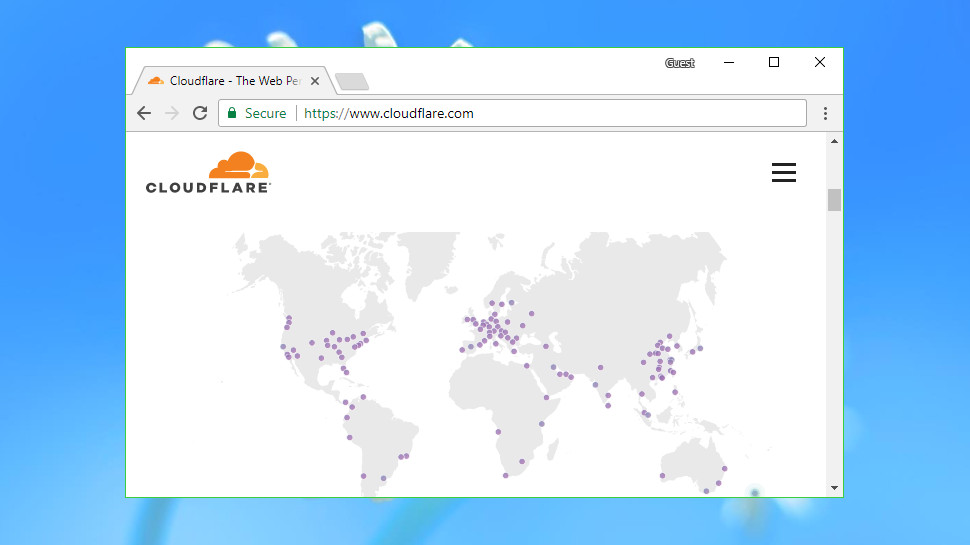
Cloudflare is a hugely popular American content delivery service that combines novice-friendly ease of use with expert-level features and functionality.
Setup is simple, with no need to edit your code. Just update your DNS nameservers to use Cloudflare and the service kicks in automatically, caching content and serving it to visitors from their nearest location.
But there's much, much more. Web filtering can block bots, limit content spam, keep you safe from hackers or detect and mitigate DDoS attacks. Smart image optimizations can reduce image file sizes by up to 35%, further improving speeds. There's wide support for standards like IPv6, HTTP/2 and SPDY, clever page rules to help you manipulate traffic, and a REST API allows developers to take full control of what the service is doing. Also, Flan Scan, a lightweight network vulnerability scanner is thrown in the mix too.
Cloudflare's free plan allows you to see what the service can do, without making any commitments. It's very usable, with unlimited bandwidth and no annoying restrictions to try and force you to upgrade.
Upgrading to the Pro plan costs a reasonable $20 (£16) a month, and adds the image optimization rules, extra configurability, and improved support.
Whatever you choose, Cloudflare delivers great performance. As we write, the benchmarking site CDNPerf ranks Cloudflare in top ten for worldwide HTTP request response times out of a field of 20 top CDNs.
A highly configurable heavyweight of the CDN world
Delivers fast speeds
Hugely configurable
Can be tricky to set up
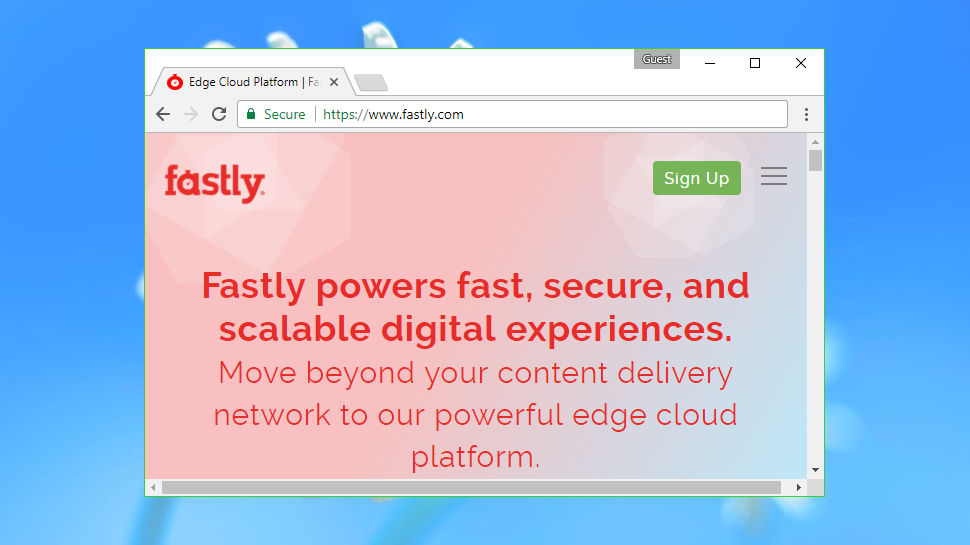
Fastly provides CDN tricks for some really big organizations, including the likes of Spotify and Reddit, and the firm lives up to its name, delivering impressively fast performance levels. Going by the rough guideline of CDNPerf’s rankings, it’s the second fastest CDN for the UK, and worldwide speeds are mostly good, too.
Perhaps Fastly’s strongest point, however, is just how configurable the service is. For example, there’s diverse support for different types of video caching, and tons of low-level controls for those who want to get stuck into the likes of manipulating HTTP headers to customize how content is served. For convenience, you can log in to multiple Fastly customer accounts with a single set of credentials.
Of course, some know-how is required to set up everything, and novices to the CDN world will doubtless be confused by all the options on offer. But for those who need this level of flexibility and configurability, it’s priceless to have.
Speaking of the price, Fastly operates a pay-as-you-go model with a minimum charge of $50 (£37) per month. In addition, you can test up to $50 of traffic for free.
A great value service with low traffic prices and free SSL
Very low prices
Easy setup
Performance isn’t the best
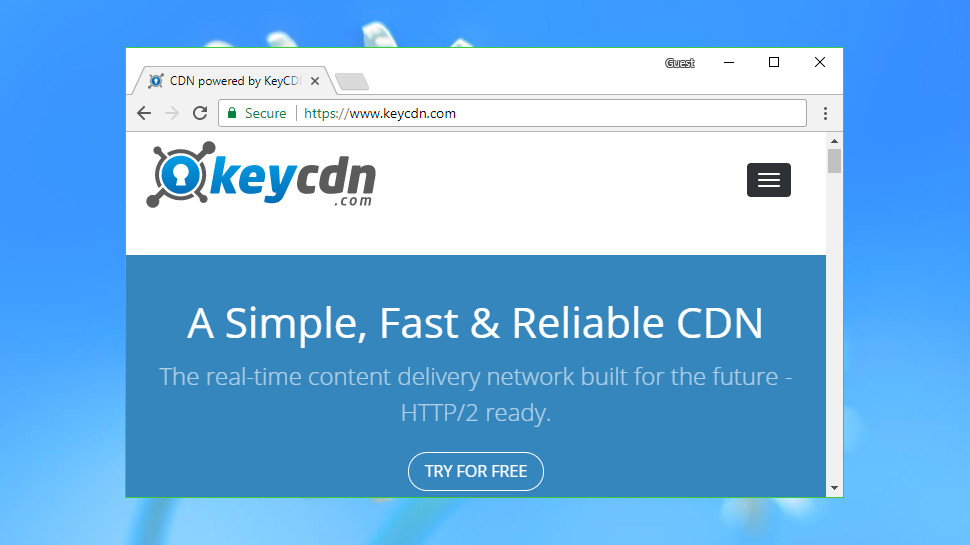
KeyCDN is an easy-to-use budget CDN that might be a good pick for first-time users.
Getting started couldn't be much simpler. Sign up with your email address and you get an immediate 25GB to play with, no payment details required. A well-designed web dashboard enables creating your first zone with the minimum of clicks, and there are guides to help you integrate the service with WordPress and other apps.
In addition, KeyCDN fully supports IPv6.
More experienced users will appreciate options like Origin Shield – this allows you to specify a KeyCDN server to be the source for updates rather than the origin, reducing your server load. You're able to manipulate headers, cache or strip cookies, or set up a custom robots.txt. Once the service is running, a capable set of reporting tools enable watching CDN performance in near real-time. Some additional features are available as well, like Block Referrer that blacklists the domains that are hotlinking content or Image Processing, which is great for image optimization.
KeyCDN's standout feature has to be its low prices. Bandwidth charges start at $0.04 (£0.032) per GB, less than half the price you'll pay with some of the high-end competition. The minimum usage is a tiny $4 (£3.2) per month and the minimum payment is $49 (£38). The company doesn't even try to cash in on the extras, for example offering shared SSL and custom Let's encrypt SSL certificates for free.
Perhaps unsurprisingly, these low prices don't get you leading-edge performance, but there's still plenty of power here and you do get a lot for your money.
A user-friendly CDN with some advanced security features
Easy to set up
Powerful security features
Lacks locations outside Europe and US
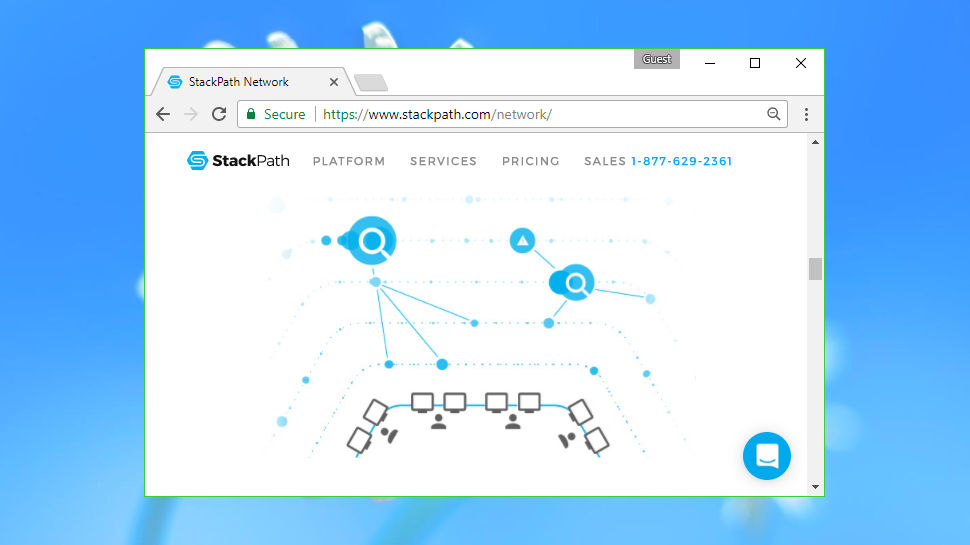
This CDN provider focuses mainly on the West, with 14 points of presence (PoPs) in North America, and nine in Europe. There are only five PoPs in Asia, and two in Australia and South America (Brazil).
StackPath is user-friendly, complete with a straightforward web console to manage your settings, and if you do get stuck, there’s extremely efficient technical support available via either live chat or phone.
Performance seems good in the US and UK, and indeed Europe, but further afield you may see things tail off a bit, which is hardly a surprise given StackPath’s aforementioned focus on Western nations.
Another strength here comes on the security front, with this CDN giving users free shared SSL (or the option to use your own SSL certificate, if you prefer). There’s also anti-DDoS technology, a capable Web Application Firewall, and EdgeRules, a powerful tool that lets you customize the behavior of StackPath's CDN at different phases of the CDN request.
All in all, this is a tempting offering with a baseline plan that charges $10 (£7.9) for up to 1TB of bandwidth per month.
One of the oldest and most popular providers, Akamai offers a great CDN service and according to the company they serve up to 30% of all internet traffic. Being one of the oldest providers their server coverage is impressive with around 275,000 servers in over 135 countries. Akamai also provides great 24/7 customer support which is to be expected from someone this long in the business.
Setting up might be a bit problematic for newbies though. This doesn’t mean newbies can't do it or that they would have much trouble, it’s just that the whole service is more leaned toward advanced users, generally speaking.
Akamai has a good number of features and the performance is quite impressive, among the best in fact. For instance, at the time of writing, the benchmarking site CDNPerf ranks Akamai among the ten fastest services worldwide.
Pricing is a bit tricky, as there is no definitive information to be found on their website, so this means you’ll have to contact them directly to get the exact quota. Thankfully, they are easy to contact and you can do it by live chat, email or phone.
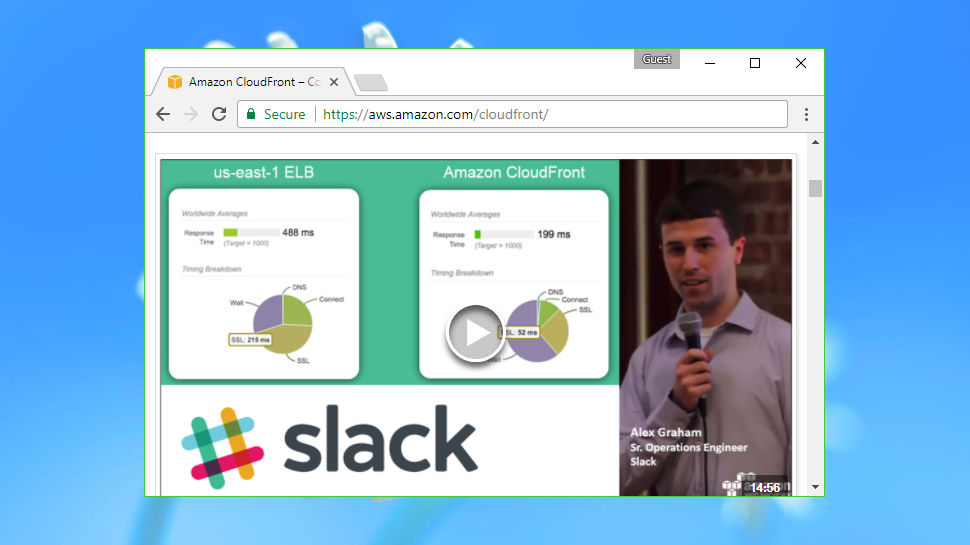
Amazon CloudFront is the CDN facet of AWS (Amazon Web Services), so it’s certainly part of a heavyweight operation. And indeed CloudFront offers a raft of advanced features as you might expect, and you can customize all manner of things such as enabling automatic GZip compression for better speeds.
Another strength here is the in-depth analytics on tap, showing you details of your visitors’ device type, OS and so forth. There’s also the handy ability to set up alerts, meaning you can be warned when data transfer usage goes above a certain level.
The downside to all the options on offer is that relative novices to the CDN world may find CloudFront’s control panel a little intimidating, at least initially.
The other slight sticking points are that calculating pricing can be a rather tricky matter, and if you aren’t an experienced user familiar with CDN basics, tech support isn’t free – if you need help, you’ll have to fork out for it. Prices vary depending on region, but the good news is there’s a free tier (which gives you 50GB of data per month for one year).
Performance levels are fairly average, too, but there’s no denying the power and configurability that Amazon offers to the slightly more tech-savvy user.
A customizable CDN for those who need Microsoft integration
Diverse spread of locations
Better than average performance
Not very user-friendly
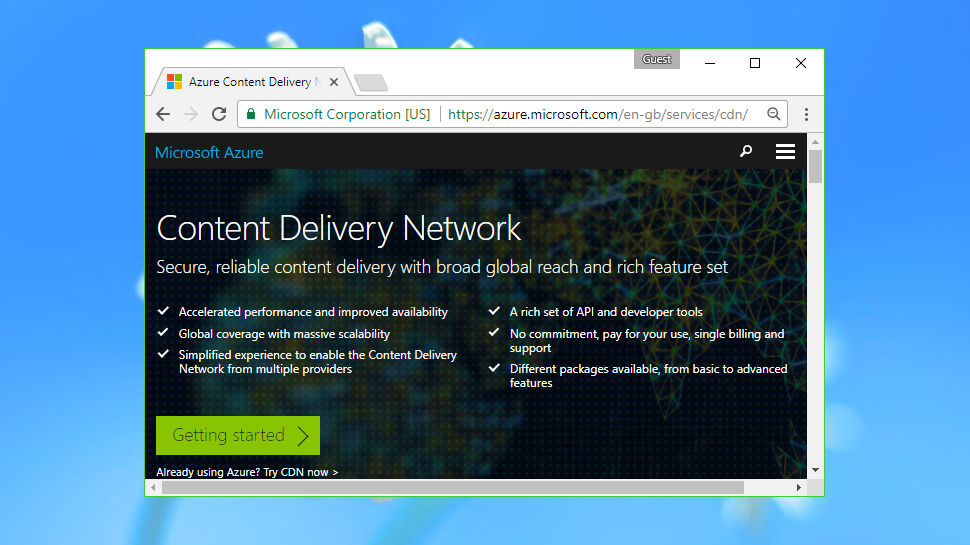
As you’re doubtless aware, Microsoft Azure is a big old stack of integrated cloud tools for building and managing applications and services, with a wide range of coverage including a CDN offering, which is what we’re focusing on here, naturally. Note that this doesn’t use Microsoft’s own edge servers, but rather three plans that use other CDN networks: Standard Akamai, Standard Verizon, and Premium Verizon.
We fully discuss these various plans in our review of Microsoft’s CDN service, linked below, but suffice it to say that in terms of pricing – which can be somewhat confusing to work out – this isn’t the cheapest offering around. Still, those who want integration with other Microsoft technologies and services may well find the price worth paying.
You get a web dashboard that is absolutely crammed with features, although as ever, this means it’s not particularly easy to use for beginners (and the setup process is pretty involved, too). Performance levels are impressive, and at the time of writing, according to CDNPerf, Azure CDN is the fifth fastest content delivery network in the US and third worldwide.
This has to be a tempting prospect if you’re using other Azure services, or if you’re a developer who will appreciate the likes of .NET or PowerShell management features. You can create a free account and get started with 12 months of free services.
Another easy-to-use service with some temptingly low prices
Nicely priced
Free Let’s Encrypt SSL certificate
Not many advanced settings
Performance isn’t great
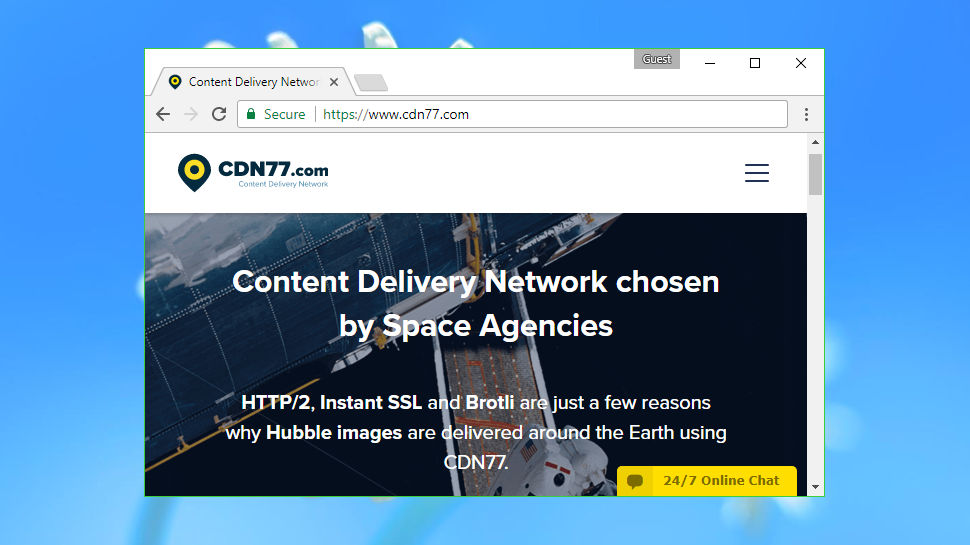
CDN77 is a big-name player in the content delivery game, with some heavyweight clients signed up including the European Space Agency. It has an expansive CDN network with over 30 data centers across the globe, with many of those in Europe and the US, but there are also locations in South America, Asia and one in Australia.
The web console interface is very streamlined and keeps any jargon to a minimum, making it suitably user-friendly for novices to the CDN world. The flipside of this is that there aren’t a huge amount of options, although you can do some tweaking of various settings.
In terms of performance, CDN77 is solid enough, and it ranks as a lower-to-mid pack player that’s unlikely to disappoint, but certainly isn’t the fastest CDN network we found when reviewing these various services.
You get a free Let's Encrypt SSL certificate, and CDN77 is pretty good value for money overall in terms of its per-GB pricing, although it’s not the cheapest outfit we’ve highlighted here. Pricing starts at $0.045 per GB of data for US and European locations, with Asia and Latin America being more expensive. If you want to test the waters, there’s a 14-day risk-free trial, and you don’t need to supply any payment details for this.
If you need a powerful CDN, look no further than Leaseweb, an enterprise-level operation which is still suitable for regular business users – just about.
Regardless if you want a multi-CDN or a private CDN, you'll need to contact Leaseweb for exact pricing, although don't expect it to be cheap. The good news is that even with a ‘basic’ subscription, you get all the same security and CDN features as the heavyweight enterprise plans.
That includes a smartly designed console for overseeing your CDN needs, complete with an extensive raft of potential settings and tweaks, featuring many options you don’t get with your average service (like the ability to set the cache-control header, or determine how long to cache 404 responses).
There’s also an in-depth statistics section which displays graphs and charts showing many interesting stats, such as visitor and traffic breakdowns, cache performance and the top file types which are seeing action.
The one somewhat bleak spot is Leaseweb’s performance, which seems somewhat off the pace going by CDNPerf’s findings, although it’s difficult to gauge exactly what results you’ll get in practice. Users who want a powerful range of features in their CDN could give the 30-day trial a go to find out.
A content delivery network (CDN) is a globally distributed network of Points of Presence (PoP) designed to provide faster and reliable content delivery to users. Whether we know it or not, every one of us interacts with CDNs daily; when reading articles on news sites, shopping online, watching Netflix, or scrolling through social media feeds. CDN is the helper behind your seamless experience. It helps minimize loading time, costs, delivery latency, and operational complexity by physically reducing the distance between content providers and users worldwide.
How does CDN work?
For example, when a user in the US wants to load a website hosted in China, the user will need to send a request to the origin in China, and then the origin will send content from China to the U.S. However, it takes a longer time to load the content and might hamper the user experience. This is when CDN comes in. CDN keeps a copy of content at its own PoPs around the world. Based on users’ location, CDN serves the content to users from nearby PoPs whenever possible.
What are the benefits of using CDN?
1.Faster load time: Instead of sending requests to the origin and waiting for it to respond, the user will receive content from the CDN PoP nearby to reduce the latency.
2. Higher scalability: CDN can serve 40-200 Tbps at the peak of the traffic. It can provide an always-on experience globally, even under unpredictable situations such as malicious attacks or origin failure.
3. Lower bandwidth costs: Through caching and request optimizations, CDN helps content providers significantly reduce delivery costs since most traffic no longer egress from the origin.
4. Better security: CDN acts as a proxy in front of the origin server, which adds an extra layer to security by hiding the origin's real IP.
Why is CDN essential in this pandemic?
Because of COVID-19, most people are on digital platforms more frequently for working, attending online classes, watching live streaming, gaming, etc. Due to the enormous traffic, the entire digital pipeline is becoming more sensitive to latency and security.
CDN can help deliver content in a fast, secured, and seamless way ensuring a consistent and optimized user experience worldwide.
This week the Super Bowl dominates the weekend TV schedule, but before we get there we have a few other option. Spike Lee’s Do The Right Thing is available on Ultra HD Blu-ray, while for gamers Control Ultimate Edition upgrades the experience for new...
from Engadget https://ift.tt/3pHEj8u
via IFTTT https://ift.tt/39Ctejq
The Sony PlayStation 5 has finally been launched in India. It did take more than two months since the global launch but the console is finally 'available' in India. And by available we mean technically, since you will be hard pressed to find a unit to buy anywhere.
The Sony PS5 went for pre-orders in India on January 12 after long drawn out drama that saw Sony not even owning the PS5 trademark and the battle that followed to the BIS filing and the certification procedure.
Sony customers that placed online pre-orders seem to have the consoles delivered while others are set to get it by the end of the week. Orders on Shop at Sony Center now have the nearest Sony Centers listed for the customers that purchased the consoles as well.
When the stocks that Sony allotted for pre-orders in India instantly sold out, Sony announced that it was surprised and more stocks would follow soon. It said, "PS5 has met with unprecedented enthusiasm by PlayStation fans in India, resulting in a stockout during the pre-order period. Keeping the current situation in mind, we kindly urge all customers to keep their health and safety first and refrain from visiting any retail store to pre-order a PS5. Please stay in touch with retailers for the next pre-order phase."
Those that could not grab one, were hopeful of getting it during a second round of pre-orders. But reports came in that there won't be a second round of pre-orders of the PS5 in India. Sony apparently said in a new statement, "We are not planning pre-order for PS5 before 2nd February. Please stay in touch with retailers for future pre-order updates."
According to an IGN report, several Sony Centers have confirmed that Sony has not shared any plans for restocks in India with them. And this makes it unlikely that the other retailers would be any better off. Hence all prospective customers can do is wait for word from Sony and keep an eye on the retailers who are selling the console.
The Poco M3 is the company’s latest affordable budget smartphone in the M series. It made its global debut on November 24 and was launched in India today (February 2). The Indian variant of the Poco M3 comes with slightly better specs and is also priced more aggressively compared to the global market.
The Poco M3 is the third M series device from the brand after the Poco M2 and Poco M2 Pro affordable devices. The Poco M3 will be the successor to the Poco M2 which has sold over 1 million units since it was launched in 2020 which is less than four months to clock 1 million number.
As always, the Poco M3 teaser will be available on Flipkart. The Poco M3 has got its major update in terms of RAM and storage. The Poco M3 in India will come with 6GB RAM as a standard and comes in two storage variants - 64GB(UFS 2.1) and 128GB with UFS 2.2 standard.
The Poco M3 is priced at Rs 10,999 for the base variant with 64GB storage and Rs 11,999 for 128GB storage. Colour options include Cool Blue, Power Black and Poco Yellow. It will be available on Flipkart starting February 9 at 12 pm
Here is what the Poco M3 brings to the table:
Poco M3: Design
(Image credit: Poco)
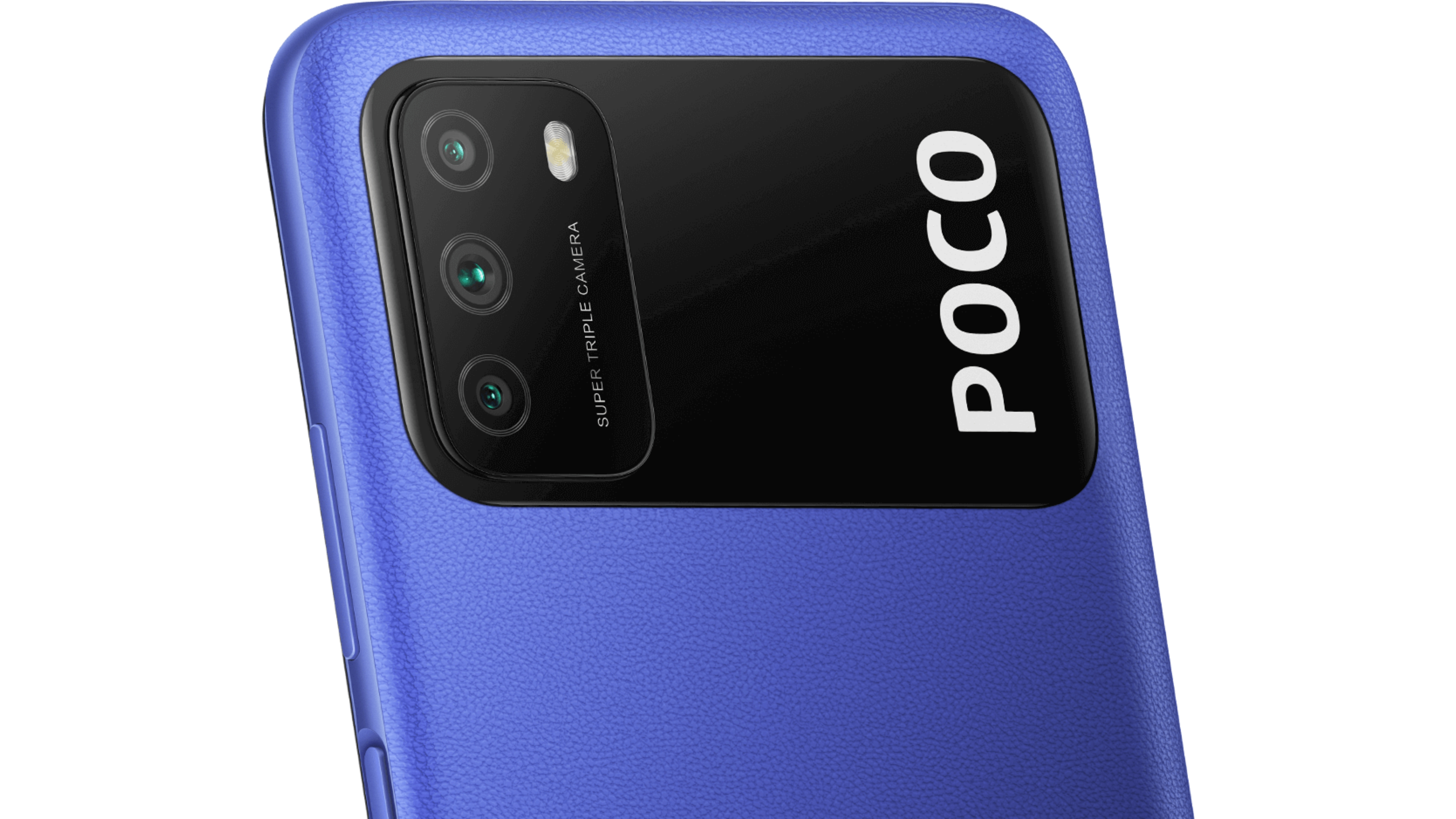
First things one will notice with a smartphone is the design. To the rear, you get a unique dual-tone finish with a rectangular block which sports the triple camera module and Poco branding. This design in particular looks similar to the recently announced OnePlus 8T Cyberpunk 2077 edition. The Poco M3back panel comes with the top one-third consisting of a black glass “visor” which houses the cameras and a bold-coloured plastic back all-around with a faux leather finish.
The Poco M3 features a smooth curved back with a textured finish. This is also an anti-fingerprint design and will offer better in-hand feel and grip. The device is available in three colour options - Poco Yellow, Cool Blue, and Power Black.
Poco M3: Display
(Image credit: Poco)
Next up, the display on the Poco M3 which hasn’t changed much from the forerunner. You get the same 6.53-inch Full HD+ dot drop display or dew-drop display. It has a resolution of 2340 × 1080 pixels with 19.5:9 aspect ratio, 90.34% screen-to-body ratio, 70% NTSC colour gamut. A layer of Gorilla Glass 5 sits on top of the display.
Furthermore, it is also TÜV Rheinland certified for low-light consumption and Widevine L1 certified to stream HD content on apps like Netflix and Amazon Prime Video. The display supports colour temperature adjustment, standard mode, reading mode 2.0, sunlight mode. A screen protector will come pre-applied on the phone.
Poco M3: Performance
(Image credit: Poco)
Under the hood, the Poco M3 is powered by a Qualcomm chipset. The device has the Snapdragon 662 SoC in the heart. It is an octa-core chipset built on an 11nm fabrication process which runs at a max frequency of 2.05GHz and has a third-gen AI engine. Gaming and graphics performance will be taken care of by Adreno 610 GPU.
The Indian variant comes in two variants - 6GB of LPDDR4X RAM with 64GB USF 2.1 storage and 6GB LPDDR4X RAM + 128GB UFS 2.2 storage. There is also a dedicated microSD card slot which takes up to 512GB. For context, the global version of the Poco M3 is available in 4GB + 64GB UFS 2.1 storage and 4GB + 128GB USF 2.2 option.
Poco M3: Camera
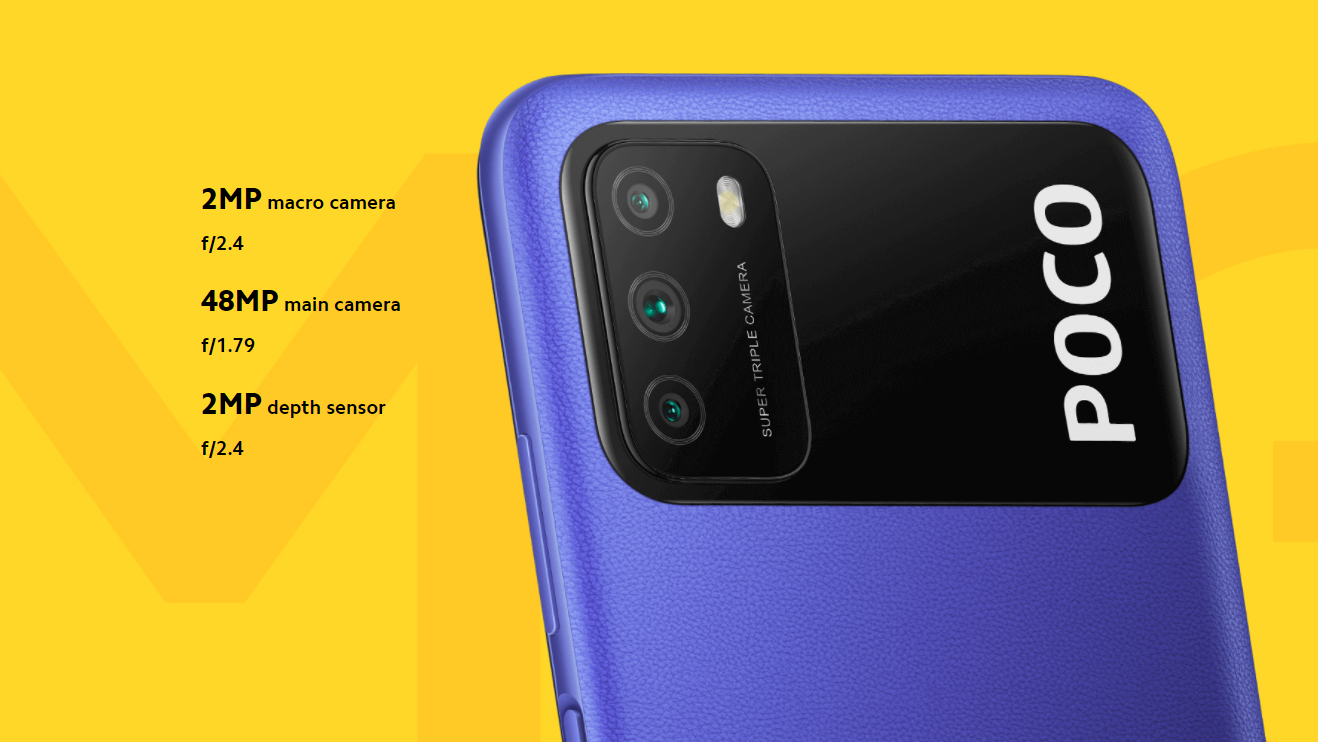
Coming to the cameras, the Poco M3 gets a big improvement in terms of megapixels. It flaunts a triple rear camera stack. There is a 48MP primary sensor with a 1/2" sensor size, f/1.79 aperture, autofocus, etc. This is followed by a 2MP macro lens and a 2MP depth sensor both with f/2.2 aperture. There is a dual-LED flash for the low-light scenario.
(Image credit: Poco)
The camera features include document mode, night mode, AI scene detection, AI beautify, portrait mode, movie frame, Panorama, Raw mode. For videos, you can shoot up to Full HD and slow-mo up to 120fps.
Selfies are handled by an 8MP shooter which is located inside the dew-drop notch. It has an f/2,05 aperture. Some of the features include movie frame, AI beautify, filters, palm shutter, AI portrait mode, short video mode, and panorama selfie.
Poco M3: Battery
(Image credit: Poco)
The Poco M3 packs in the biggest battery on a Poco phone yet with a 6000mAh unit. For context, the Poco M2 sports a 5000mAh battery. While the Poco M2 supports 10W fast charging, the Poco M3 goes further ahead and will offer you 18W fast charging. The phone also supports USB-C reverse charging as well
Poco says the device can last up to 40 hours for continuous calling or up to 196 hours of music listening or 17 hours of video. The company also claims that the Poco M3’s battery can last up to 2.5 years without major degradation which is about 1000 charge cycles. This is said to last 25% longer than other smartphones.
Everything else
(Image credit: Poco)
Apart from the aforementioned specs, the Poco M3 runs on MIUI 12 based on Android 10 with no ads or bloatware. For security, the handset sports a side-mounted fingerprint scanner and also AI face unlock support. For audio, the device packs in dual speakers with Hi-Res audio certification.
Furthermore, the Poco M3 packs in IR blaster, 3.5mm headphone jack, FM radio, dedicated microSD card slot, dual-band Wi-Fi support, dual SIM, and Bluetooth 5.0. For navigation, there is GPS/ A-GPS / GLONASS / Beidou / Galileo and lastly, sensors onboard included Proximity, Ambient light sensor, Accelerometer, Electronic compass, and Vibration motor.
The budget-friendly Poco M3 launched in India today, adding to the company’s formidable portfolio which propelled it to the third spot in the online smartphone market.
While the Poco M3 made its debut in Europe in November 2020, the Indian variant comes with better specifications without increasing the price by a lot. It is also the first device from the brand to sport a large logo on the brand – a trend that is becoming increasingly common these days. A similar design will be seen on the upcoming Realme X7 Pro that launches later this week.
ICICI Bank credit card holders will get an additional Rs 1,000 off for the first sale.
The Poco M3 starts at Rs 10,999 in India for the base variant with 64GB of UFS 2.1 storage and goes up to Rs 11,999 for 128GB of UFS 2.2 storage. Colour options include Cool Blue, Power Black and Poco Yellow. It will be available on Flipkart starting February 9 at 12 pm.
Poco M3 specifications
Processor: Snapdragon 662
RAM: 6GB
Storage: 64GB (UFS 2.1) / 128GB (UFS 2.2)
Display: 6.53-inch LCD
Software: MIUI 12, Android 10
Camera: 48MP + 2MP macro + 2MP depth
Selfie camera: 8MP
Audio: Dual stereo speakers, headphone jack
Battery: 6,000mAh
Charging: 18W fast charging (USB Type-C)
Security: Fingerprint scanner (side-mounted)
Weight: 197 grams
Image 1 of 2
(Image credit: 91mobiles)
Image 2 of 2
(Image credit: Poco)
The Poco M3 is based on the same platform as the Redmi 9 Power and shares most of its specs. It is powered by the Snapdragon 662 chipset and comes with 6GB of LPDDR4X RAM in India. It is an octa-core chipset built on an 11nm fabrication process which runs at a max frequency of 2.05GHz and has a third-gen AI engine.
The key difference comes with the design, as the Poco M3 opts for a unique back panel with the top one-third consisting of a black glass “visor” which houses the cameras and a bold-coloured plastic back all-around with a faux leather finish.
There are three on the back: a 48MP f/1.79 primary camera, a 2MP macro shooter and a 2MP depth sensor. On the front is an 8MP selfie shooter, which resides in a dot notch. Shooting modes include night mode, portraits, Google lens, movie frame, etc.
The display on the Poco M3 spans 6.53-inches and has a resolution of 2,340 x 1,080, resulting in an aspect ratio of 19.5:9 and a screen-to-body ratio of 90.34%. There’s also Gorilla Glass 3 protection on top. Out of the box, it is also Widevine L1 certified for HD video streaming on OTT platforms. A screen protector will come pre-applied on the phone.
The phone houses a large 6,000mAh battery and supports 18W fast charging over the USB Type-C port, with the adapter included in the box. Other features include expandable storage, a side-mounted fingerprint scanner and an infrared blaster. There are also dual stereo speakers, which is a rare feature at this price, along with a 3.5mm headphone jack.
The Poco M3 runs on Poco Launcher 2.0 based on MIUI 12 atop Android 10. There will be no system ads or pesky notifications.