Sunday, August 2, 2020

Best simulation games 2020: the most immersive simulators you can play right now

If you’re looking for the best simulation games available right now then you’re in the right place. After all, who hasn’t wanted to experience the feeling of driving a train, flying an aircraft or even fixing a car, all from the comfort of your armchair? Fortunately for you, the selection of simulator titles on the market right now has never been greater. 

In a world of high-octane shooters, battle royales and fantasy RPGs, simulation games remain universally beloved. They can offer a level of detail and immersion that can't be matched, and there's nothing more soothing for the soul than popping a podcast on and setting off on an epic road trip across Europe.

And the best part? What was once a very PC-centric genre is now truly open to all. So whether you play on PC, PS4 or Xbox One, there’s a simulation game out there for you.

Ready to immerse yourself? Let's dive into our list of the best simulation games available right now. 

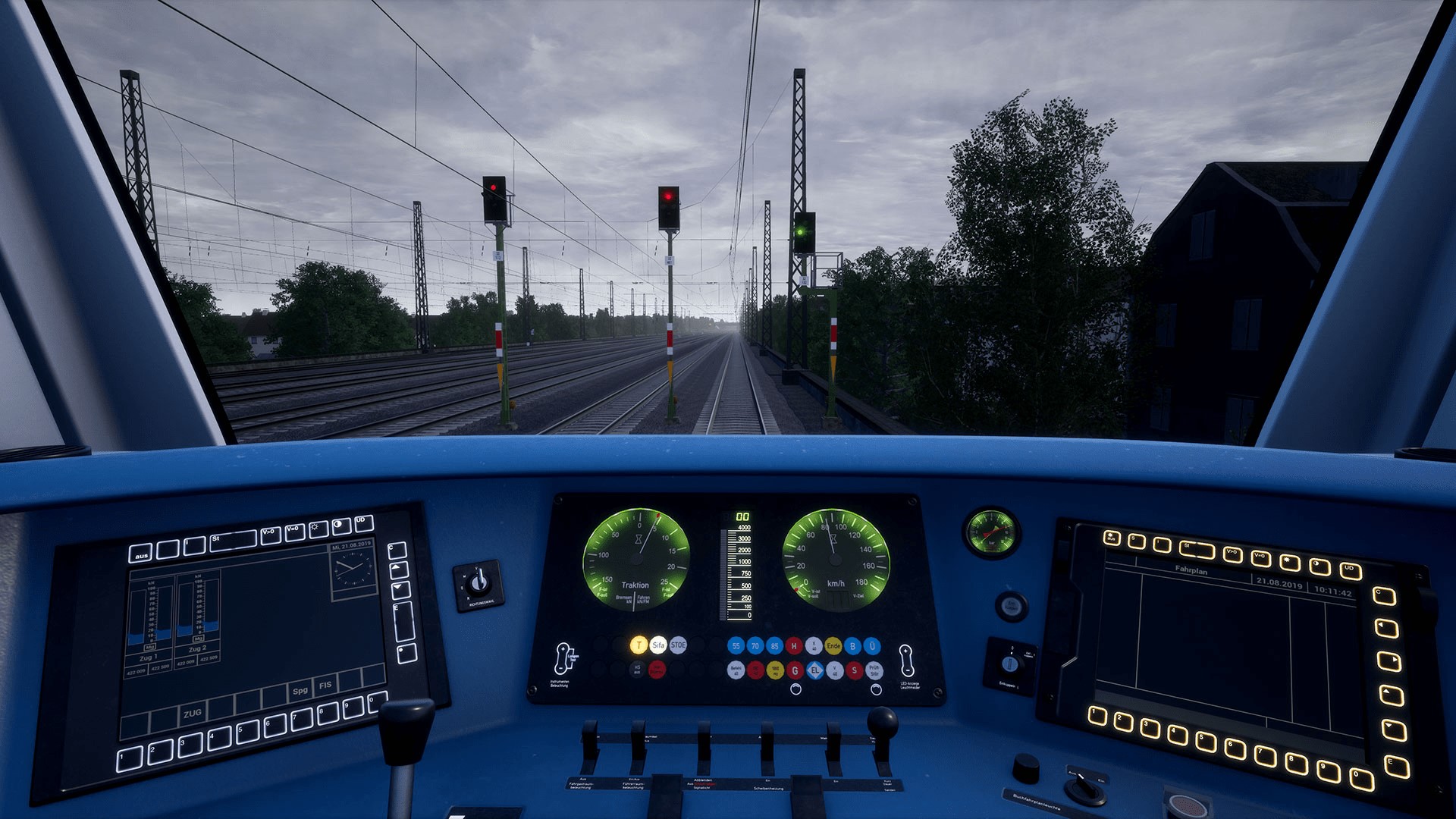
Train Sim World

Train Sim World

(Image credit: Dovetail Games)

Train Sim World is perfect for those looking for a relaxing and engaging simulation experience - as well as full-on train nerds.

Released in 2018 by Dovetail Games, the makers of the long-running Train Simulator series on PC, Train Sim World is a train-driving sim which is very accommodating for beginners, yet can be made more challenging for veteran players. 

Couple that with additional content being added over time, as well as a free-roaming mode where you can explore the routes on foot and ride AI-controlled trains as a passenger, and Train Sim World quickly becomes a charming and evocative experience that you can easily sink hours of playing time into.

Oh, and look out for the sequel that's set to drop in August, featuring the Bakerloo Line in London. All the fun of the Tube with none of the overcrowding? Sign us up.

X-Plane 11

X-Plane 11

(Image credit: Laminar Research)

Driving trains is one thing, but how about flying planes? Step right this way and get ready for takeoff. 

The original X-Plane released back in 1995 and was a highly advanced tool to help train pilots before they took to the skies for real. That's the level of realism we're dealing with in X-Plane 11, released in 2017 on PC. Using an aerodynamic model based on blade element theory, this game features some of the most realistic flight physics and aerodynamics ever seen in games. 

With huge swathes of the world modelled in game, as well as a huge roster of aircraft to take the controls of, X-Plane 11 is the perfect reason to dust off your joystick and have a lot of fun.

Farming Simulator 19

Farming Simulator 19

(Image credit: Google)

Yes, really. A game revolving around harvesting crops and managing your farm is one of the most popular simulator titles on the market - and rightfully so.

Turns out there are few things better for relieving stress – and giving you immense levels of satisfaction – than trundling around the fields of your farm in your combine harvester, quite literally reaping what you sow. This game is also equal parts management as well as simulation – your farm has to turn a profit, after all! - and there's a huge selection of tractors, vehicles and equipment to acquire as your farming empire expands. And of course, there's livestock to look after, including cows, sheep and even horses.

And you don't even need to get your fingers dirty in the process. The dream!

Assetto Corsa

Assetto Corsa

(Image credit: Kunos Simulazioni)

Since its release in 2014, Assetto Corsa has combined a great core game engine, ultra-realistic driving physics, a great variety of content and a modding community capable of adding everything from lawnmower racing to free-roaming maps of the Tokyo expressway into the game. 

The best way to view Assetto Corsa is as a blank canvas with limitless potential. Want a super-immersive racing experience? AC has that. Highway cruising? Mods can provide that with ease. Thanks to a strong community, AC is probably the most realistic and in-depth drifting sim on the market right now.

For the hardcore sim drivers, AC continues to be the benchmark.

Gran Turismo Sport

Gran Turismo Sport

(Image credit: Polyphony Digital)

For those wanting a fun and realistic driving experience that's accessible for all skill levels, look no further than Gran Turismo Sport. 

Polyphony Digital's legendary franchise took a very different direction with GT Sport when it first released in 2017, looking to combine the online matchmaking and realistic driving physics of more hardcore sims with an accessible platform for all skill levels. The game is super fun to play on a controller as well as a wheel, and constant support and free content updates has kept the game consistently fresh.

No other sim racing title has the 'pick-up-and-play' factor of GT Sport; unlike a title like AC, you don't need a fancy sim racing rig to have fun. Just grab a controller, and dive straight into a race against either human or AI opponents in a matter of minutes. 

And typically for a Gran Turismo game, it looks utterly gorgeous. What more could you want?

BeamNG.Drive

BeamNG.drive

(Image credit: BeamNG)

What if you just want to drive vehicles, rather than race them? Well dear reader, here's your answer: BeamNG.Drive.

First released in 2015, BeamNG.Drive features a revolutionary soft-body physics engine, enabling hyper-realistic levels of handling and damage. In fact, so realistic are these physics, that BeamNG.Drive has reportedly been used in the film industry to test out action sequences and stunts before doing them for real on set. Now that is a serious endorsement.

Additionally, a recent tie-up with Automation enables players to design and build their own cars in Automation, then export them over to BeamNG.Drive to drive them for real in that game – how cool is that?

For the ultra-realistic driving sim you never knew you needed, BeamNG.Drive is the one. 

Car Mechanic Simulator 2018

Car Mechanic Simulator 2018

(Image credit: PlayWay S.A.)

Then again, what if you didn't actually want to drive a car, but rather get under the hood and tinker with it? That's where Car Mechanic Simulator 2018 comes in.

Red Dot Games' spanner-them-up first released in 2017, and revolves around running your own auto repair shop. Starting from humble beginnings and evolving your workshop into an automotive maintenance behemoth, the main appeal of Car Mechanic Simulator is its incredible levels of detail for the inner workings of a car. Strip down and rebuild engines, swap wheels, change brakes and transmissions, repair rusty bodywork, you name it, this game has it. 

The player can also acquire project cars from the Barn Find and Junkyard modules, for those true Gas Monkey Garage vibes. The satisfaction of transforming that rust-bucket you found in a shed into a mean machine is absolutely unmatched.

And the best part? 100% less grease and manual labour than doing it for real. Win-win.

Kerbal Space Program

Kerbal Space Program

(Image credit: Private Division)

For when the world is not enough, there's Kerbal Space Program.

First launching into orbit in 2015, Kerbal Space Program is a space flight simulator like no other. Don't be fooled by the adorable Kerbals you control; the spacecraft you construct and operate are all as ultra-realistic as possible, and operate in an orbital physics engine that simulates interplanetary travel to head-crushing levels of depth. This is one game where you can genuinely say that yes, it actually is rocket science.

And don't just take our word for it; the game has received attention and praise from some of the world's leading scientists and space exploration bodies, including NASA, the European Space Agency, and SpaceX. 

Be warned, the learning curve is almost as steep as the trajectory of your rocket as it launches into space. But that just makes every success, from making it into orbit to actually landing on another planet, that much more rewarding.

Euro Truck Simulator 2 

Euro Truck Simulator 2

(Image credit: SCS Software)

Driving around Europe in a lorry for hours at a time delivering assorted cargo? Where's the fun in that? Prepared to be surprised. 

We all love an epic roadtrip, right? Stick the radio on and let the hours tick by as you cruise the open roads and journey to new locations. Euro Truck Simulator 2 provides all of that, while also adding the tension of delivering your goods on time and in one piece, and managing your haulage firm and delivery contracts back at HQ. There's just enough to keep you focused on the road ahead, while also allowing you to relax and catch up on those podcasts you've been meaning to listen to. And with a map spanning huge parts of Europe, there's gonna be some pretty long journeys ahead. 

And did we mention there's also an American Truck Simulator? Yeah, it's about time you got in your hauler and hit the open road.


from TechRadar - All the latest technology news https://ift.tt/2CidKDF
via IFTTT https://ift.tt/2ODkT3P


Xiaomi Mi 11: what we want to see

It's been a while now since the Xiaomi Mi 10 and Mi 10 Pro launched, and the company has moved on from the two flagships to put out other phones like the Black Shark 3, Redmi Note 9S and Poco F2 Pro

But while Xiaomi has moved on from its early-2020 flagship line, we haven't - we've been using the devices pretty regularly since we got our hands on them, and it's got us excited for future Mi phones the company might put out.

We're expecting that later in the year we'll see the Xiaomi Mi Note 11 to follow last year's fantastic Mi Note 10, a handset with a mid-range price but plenty of top features that not all premium phones even have.

After that, we should see the Xiaomi Mi 11 in early 2021 - that will probably be the company's main device (well, collection of devices, if there's a Lite and Pro model as well) for the year, with some of its top hardware and software.

We haven't heard anything about the Xiaomi Mi 11 yet, but going forward we'd expect to start hearing things as we get closer to the launch. We don't even know the price or launch date yet, but we can make educated guesses which you'll find below, along with any rumors once we start hearing them.

Before we hear more about the Xiaomi MI 11, though, we've come up with a wish list of features and specs we'd like to see in the phone, which you'll also find below.

We gave both the Mi 10 and Mi 10 Pro four stars, so Xiaomi has got some room for improvement, especially given the Mi Note 10 got four and a half (and was very, very close to five). Maybe if Xiaomi bears some of this feedback in mind it could make a five-star phone.

Cut to the chase

  • What is it? Xiaomi's next premium smartphone
  • When is it out? Likely early to mid-2021
  • How much will it cost? May start at around £799 / AU$1,699 (roughly $1,040)

Xiaomi Mi 11 release date and price

Xiaomi Mi 10

Xiaomi Mi 10 (Image credit: TechRadar)

We don't know the Xiaomi Mi 11 launch date - we'd expect even Xiaomi doesn't know that for sure just yet - but we can take a guess.

The Xiaomi Mi 10 and Mi 9 before it were both launched in February of their respective years, so we'll likely see that pattern repeat for the Mi 11. Those are China launches though, with a global unveiling at a later date, so we might need to wait a month or so beyond that to hear price and release date news.

The Xiaomi Mi 10's global launch was in late March, for context.

We don't know a Xiaomi Mi 11 price yet, and it's hard to guess, because the Mi 9 and Mi 10 were so different in that regard - the former was mid-range but with the Mi 10 line it seemed the company wanted to push into more premium territories.

The Xiaomi Mi 10 cost £799 / AU$1,699 (roughly $1,040), and the Mi 10 Pro cost AU$1,999 (roughly $1,290, £1,030), so we'll likely see high prices for the next phones unless Xiaomi reverts to its Mi 9 pricing (as that phone started at roughly half the Mi 10 Pro's cost).

What we want to see

Here are some things we want to see in the Xiaomi Mi 11 and Mi 11 Pro, to make the devices more tempting to buy.

1. A lower price

As we've said, there was a huge price difference between the Xiaomi Mi 9 and Mi 10 models - the latter are pretty pricey phones, and they don't always outclass similarly-priced competitors. Xiaomi is known for offering phones with top specs at mid-ranged prices, and the Mi 10 series missed that sales pitch with their high prices.

We'd like to see the Xiaomi Mi 11 line return to the mid-range price point - the cost doesn't have to go as low as the Mi Note 10, which we'd call 'low-mid-range', but to be really tempting the Mi 11 phones need to be cheaper than the Mi 10 range.

If Xiaomi was convinced it needed the Mi 11 devices to be as pricey as the Mi 10s, we'd at least like to see the phones justify that high price a little better.

Xiaomi Mi 10

Xiaomi Mi 10 (Image credit: TechRadar)

2. Better cameras in the standard model

While the Xiaomi Mi 10 Pro was a camera powerhouse, the standard Mi 10 wasn't as much - it had no telephoto camera for zoomed shots, and rather weak depth-sensing and macro snappers that didn't improve the photography much.

The Mi 10 Pro has two sensors with telephoto lenses, which is just plain greedy when its lesser sibling has none.

We'd like to see the Xiaomi Mi 11 have at least one telephoto lens - it doesn't necessarily need two, as the Pro model needs some way of being better, but being able to zoom in is fast becoming a standard camera feature.

The weak depth-sensing and macro snappers also need to be removed or improved - we see plenty of smartphones with these lenses joined with 2MP sensors, and they rarely improve photography much. Either they should be bumped up to 5MP or higher, as we've seen these can be effective on other handsets, or just removed to save some money.

3. MIUI improvements

Something we complain about in every Xiaomi phone review (that we're getting very sick of criticizing) is MIUI, the Android fork used in Xiaomi phones.

MIUI has a bloatware problem, as it comes with a huge number of pre-installed apps that you'll likely spend a good half hour deleting when you first set up your phone.

There's also an annoying feature wherein the operating system automatically scans new apps you install for malware - but it yanks you out of whatever you're doing to tell you this happened. We're fans of secure devices, but we don't want to be pulled out of meetings, games, and other functions to know an app is safe.

Xiaomi really needs to fix these big MIUI problems before we find the interface as easy to use as any of the other Android forks used by phone manufacturers.

Xiaomi Mi 10 Pro

Xiaomi Mi 10 Pro (Image credit: Future)

4. A 120Hz screen

The Xiaomi Mi 10 phones have 90Hz screens, which means the display refreshes 90 times per second. This makes motion look smooth, more so than the 60Hz which is standard on smartphones, but quite a few devices also use the smoother 120Hz.

We'd like to see the Xiaomi Mi 11 range utilize 120Hz screens, which would make scrolling through menus, flicking through your Twitter feed, and playing certain games more enjoyable. 

5. Speakers in a different position

While the Xiaomi Mi 10 phones have great speakers which are better than the speakers on most other phones, they're also in an awkward position. We constantly accidentally cover them up when trying to watch movies or play games.

We'd like to see Xiaomi move these slightly on the Mi 11, so they aren't so easy to cover with the palm of a hand. This would make it much easier to enjoy media on the phone without accidentally muffling it all.


from TechRadar - All the latest technology news https://ift.tt/3k01KYi
via IFTTT https://ift.tt/33jpaSo

Tekken 7 is Just $12 on the PS4, and Also Noctis is There For Some Reason

Tekken 7 (PS4) | $12 | Amazon

Read more...


from Gizmodo https://ift.tt/3fsInDW
via IFTTT https://ift.tt/2DaATrW

Huawei MediaPad T8 set to launch in India soon

Android Tablets are still a thing in 2020. Though most brands have shelved their tablet plans, Huawei is one of the few companies that are still actively making large screened portable devices. 

The leading Chinese smartphone maker has teased the launch of a new tablet in India. Though the crossword type puzzle posted on Twitter clearly gives away that Huawei is getting ready to launch the MediaPad T8 in the country.

While Huawei has not revealed the launch date yet, it is expected that the company may announce the launch day in a couple of days. In fact, it may debut around the upcoming Prime Day sale on Amazon.

 Huawei MatePad T8 specifications and price 

The Huawei MediaPad T8 was launched in Europe in May this year and comes in a metal body. This 8-inch tablet comes with LCD display with an HD+ resolution (1280*800) and 189ppi. It is powered by an octa-core MediaTek processor coupled with an IMG GE8320 650 GPU.

It comes with 2GB of RAM coupled with 16 or 32 GB of storage. It further supports memory expansion up to 512 GB of storage via a microSD card. Talking about the optics, the MediaPad T8 comes with a rear-mounted 5-megapixel autofocus2 sensor with f/2.2 aperture. While on the front it has a 2-megapixel selfie shooter with f/2.4 aperture.

The Huawei MediaPad T8 draws power from a 5100 mAh battery with 5W fast charging and runs on EMUI 10.1 on top of Android 10 OS. The tablet weighs approximately 310 grams and measures 199.7 x 121.1 x 8.55 mm. For connectivity, it comes with Wi-Fi 802.11 ac, Bluetooth 5.0, MicroUSB 2.0, USB OTG and 3.5 mm audio jack.

The HuaweiMatePad T8 was launched in Deepsea Blue colour and is priced at 500 Romanian Lieu which roughly translates to Rs. 10,000


from TechRadar - All the latest technology news https://ift.tt/2EI0xoq
via IFTTT https://ift.tt/eA8V8J

The Pixel 5a is already getting a mention in Android's source code

While we eagerly await the arrival of the Pixel 4a – rumored to be arriving on Monday, August 3 – the Pixel 5a follow-up is already getting a mention inside the Android Open Source Project (AOSP) that Google's mobile OS is built on.

As spotted by 9to5Google, code added to the AOSP mentions the Pixel 5a, the first hint we've had that Google is indeed going to continue its mid-range phone series in 2021 – though we wouldn't take it as outright confirmation just yet.

That the Pixel 5a is being mentioned before the Pixel 4a has even appeared indicates just how late the latter phone is arriving. It's 15 months since the impressive Pixel 3a made its debut at the Google IO 2019 event.

Of course there have been extenuating circumstances this year that make the delay in the Pixel 4a launch very understandable. As for what impact this is all going to have on the release date for the Pixel 5a, it's still far too early to tell.

Pixel perfect?

The Pixel 5a code mention doesn't tell us anything of note about the phone, except that it's in development and that it'll arrive with Android 11 on board – that suggests a launch about this time next year, before Android 12 is officially out.

The AOSP update also mentions two other phones we've been hearing about recently: the Pixel 4a 5G and the Pixel 5. Both these handsets could break cover later in the year, around October time, but nothing is certain at this stage.

We might be wrong, but we're only expecting one Pixel 4a to show up next week. The 5G variant that's been rumored is more likely to arrive in a few months' time, and may be more like the Pixel 5 than the Pixel 4a in terms of specs (if not in the design).

All should be revealed in the remaining months of 2020, but considering how well received the Pixel 3a was and how appealing the Pixel 4a could potentially be, we're pleased to hear that a Pixel 5a is on the roadmap for Google's smartphone launches next year.


from TechRadar - All the latest technology news https://ift.tt/3fpcnjM
via IFTTT https://ift.tt/eA8V8J

Every new Star Wars movie and Disney Plus TV show we know about

While The Rise of Skywalker marked a polarizing end to the nine-movie Star Wars series, the franchise will never end. In fact, even as The Rise of Skywalker closed out the saga with a disappointing final showdown between Palpatine and Rey on a mysterious Sith planet that was never adequately explained, better Star Wars things were already happening elsewhere. 

The Mandalorian, for example, showed us an exciting future where Star Wars TV shows can be like '90s adventure series, except with a galaxy-sized budget. Jedi Fallen Order suggested that we might even get a few great new games as the movies took a hiatus. 

Really, though, that was just the start of the franchise's life after Episode 9. 

According to a recent tweet by Kessel Run Transmissions host Corey Van Dyke, Disney Plus has nine Star Wars projects in various stages of production. These include series we know about, like Obi-Wan and The Mandalorian, but if this rumor is correct, it presumably includes some projects that are still a secret. 

While Lucasfilm's attention will be fixed on the small screen for the time being, three Star Wars theatrical movies are also scheduled for release over the next decade. There's a lot coming up, then.

Below, we've rounded up every Star Wars movie or TV show we currently know about (that's four live-action TV shows, one animated series and three movies), and also examined some other rumors of what might be in the works at Lucasfilm. 

The Mandalorian season 2

(Image credit: Disney / Lucasfilm)

The obvious big thing in Star Wars, and the most imminent. The Mandalorian season 2 arrives in October on Disney Plus, and will expand upon the first season's Darksaber-shaped teaser. We're expecting this one to have a heavy focus on Mando trying to seek out Baby Yoda's homeworld, but all sorts of wild (but credible) reports point towards high-profile guest appearances from existing Star Wars characters like Boba Fett and The Clone Wars' Ahsoka Tano. 

We'll wait and see on those, but this will probably be the biggest streaming event of the year. Season 3 of The Mandalorian is also reportedly in the works. 

Obi-Wan Kenobi

Hello there!

Hello there! (Image credit: LucasFilm)

Directed by Deborah Chow, who made The Mandalorian's third episode – the one where all the Mandalorians turn up at the end to help save Baby Yoda – this long-awaited as-yet-untitled series sees Ewan McGregor reprise his role as the Jedi Master, more than 15 years after he last played him in Revenge of the Sith. It's set between Episode 3 and Episode 4, with John Wick 3's Joby Harrold working on the script. Filming is meant to begin in early 2021, and the cast hasn't been announced yet.

Cassian Andor

(Image credit: Lucasfilm)

A prequel to Rogue One: A Star Wars Story, this so-far untitled series will see Diego Luna reprise his role as the Rebel soldier. The show is set five years before Rogue One (because, you know, he died in that movie), and it'll likely feature Alan Tudyk reprising his role as military droid K2SO, the film's best character. Confirmed as part of the cast are Genevieve O’Reilly, who played Mon Mothma in Rogue One, and the actors Stellan Skarsgard, Denise Gough and Kyle Soller.

Far more interesting is the wealth of writing talent behind the show. Tony Gilroy, reportedly instrumental in pulling Rogue One together, is writer, director and showrunner on the series. He's joined by brother Dan Gilroy, director of the fantastic Jake Gyllenhaal movie Nightcrawler, House of Cards creator Beau Willimon and Stephen Schiff, head writer on acclaimed series The Americans. That's a lot of talent for a prequel Star Wars series.

Filming was supposed to begin this year, but it's unclear whether the pandemic has affected those plans.

The Bad Batch

(Image credit: Lucasfilm/Disney)

This recently-announced animated series is about the pack of superpowered Clone troopers who were the subject of a popular arc in the last season of The Clone Wars. It's coming to Disney Plus in 2021, and will be set after Order 66, seeing this group of soldiers take on odd jobs as they figure out their place in the galaxy. 

Taika Waititi's Star Wars movie

Waititi on the set of The Mandalorian.

Waititi on the set of The Mandalorian. (Image credit: Disney Plus/Lucasfilm)

Three Star Wars movies are scheduled by Disney as it stands: they're releasing in December 2023, 2025 and 2027 respectively. It's largely expect that the first one will be directed by Taika Waititi (Thor: Ragnarok), who was confirmed to be working on an untitled Star Wars movie on May 4, 2020. Krysty Wilson-Cairns, who wrote 1917's screenplay, is co-writing the film with Waititi. 

Nothing else is known about the movie, though Waititi's participation has led to some to speculate that this is the Star Wars project that'll be produced by Marvel Studios' head Kevin Feige. 

Untitled Disney Plus series from Russian Doll's co-creator

In addition to Waititi's film, Lucasfilm announced on the same day that the co-creator of Netflix's excellent Russian Doll, Leslye Headland, will be creator of a new, as-yet-untitled Star Wars TV series. That means you've got four live-action series to look forward to on Disney Plus – as soon as they get around to filming them, anyway.

Untitled Star Wars movie from JD Dillard

Revealed in a THR report back in February, director JD Dillard is being lined up to direct another Star Wars movie, this time scripted by Agents of SHIELD writer Matt Owens. The report said it wasn't decided whether the movie was intended for Disney Plus or theatrical release.

Possible: The Mandalorian spin-offs

Back in February 2020, Disney's Bob Iger mentioned: "the possibility of infusing [The Mandalorian] with more characters and taking those characters in their own direction in terms of series." 

Could that have anything to do with the rumored cameos for The Mandalorian season 2? We'll have to wait and see, but it sounds like Disney can't get enough of the series.

Rumored: Doctor Aphra

(Image credit: Lucasfilm/Marvel)

Last year, Inverse published a piece that suggested Lucasfilm and Marvel could already be filming a series based on the comic-originated character Doctor Aphra. She's a morally dubious but very well-liked figure who was introduced in the Darth Vader comic (we interviewed her creator, Kieron Gillen, here).

The existence of such a series would require the whole casting, writing and directing process to have occurred in total secret without anybody knowing about it. Considering how much we know about The Mandalorian season 2 before it's even aired, it seems unlikely that this show could've filmed in total secrecy. 

We don't believe this is true, then, but we do think it's pretty likely Disney and Lucasfilm will want to bring Doctor Aphra into live action eventually. She's probably the most prominent non-live action Star Wars character around right now. 

Rumored: Rebels CG sequel series

The Bad Batch was one of two animated series discussed by Star Wars tipster Jordan Maison, one of which is expected to be a sequel to the existing CG series Rebels. Kessel Run Transmissions confirmed a Rebels sequel is in the works, too. 

If you're tuned into the strange cottage industry of Star Wars leaks and rumors, you've probably seen a tweet or two doing the rounds in recent weeks that says Donald Glover will be reprising his role of Lando Calrissian from Solo: A Star Wars Story. This was another one from Kessel Run Transmissions – here's the source. We'd love this one to be true, given that Glover was the highlight of Solo, but we'd wait for something official before getting too excited. 


from TechRadar - All the latest technology news https://ift.tt/2Pjxp98
via IFTTT https://ift.tt/2Peflgz

Baidu completes its computer for self-driving cars

Baidu is on the cusp of making self-driving cars more practical. The Chinese tech giant has revealed that its Apollo Computing Unit, billed as the “world’s first production-ready” autonomous driving computer, is ready for use on the streets. It’s an...

from Engadget RSS Feed https://ift.tt/33fNtkk
via IFTTT https://ift.tt/2XenFRR

This miniature desktop PC fits into a pocket and delivers decent performance

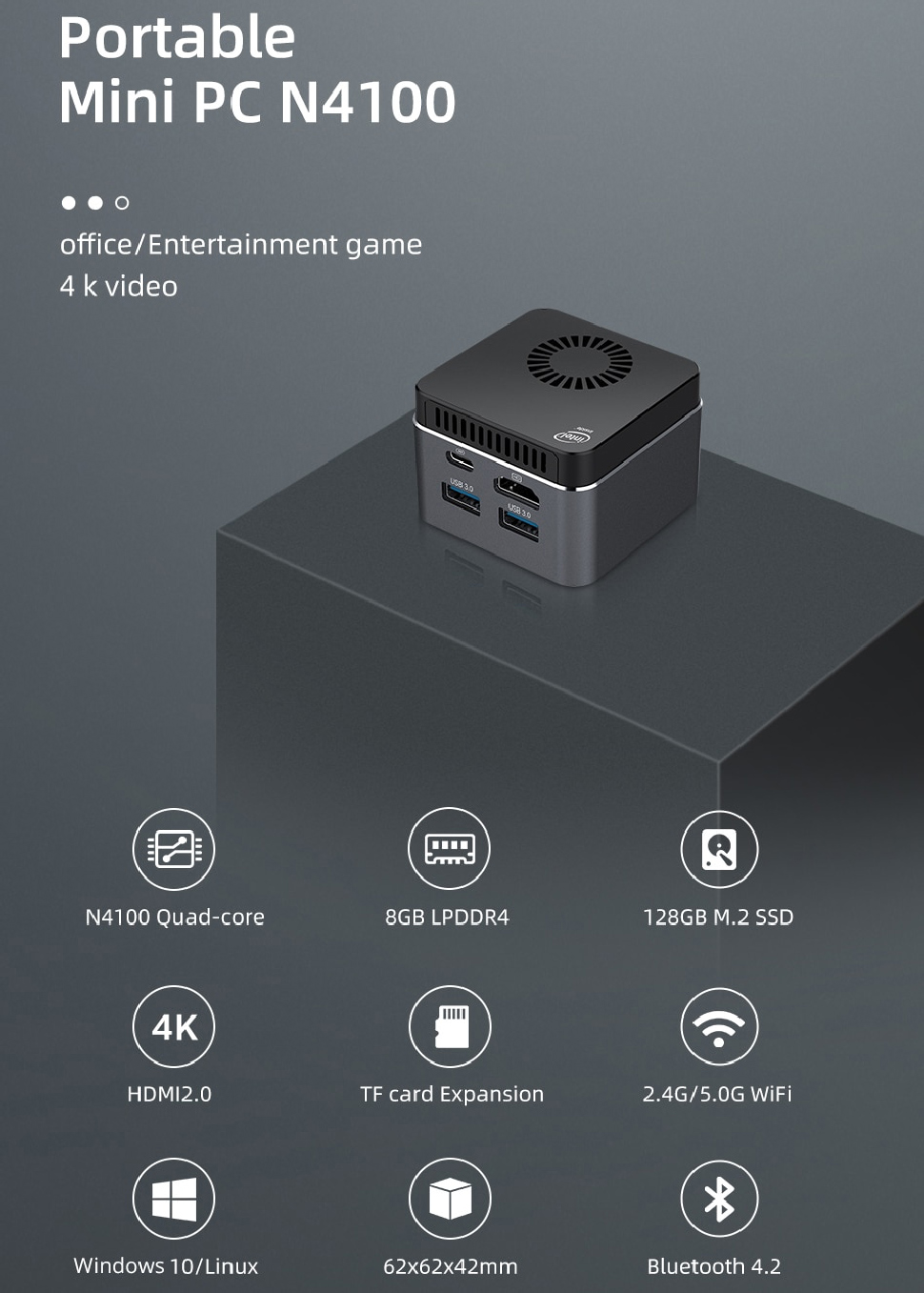
XCY has started sales of its ultra-compact form-factor (UCFF) Portable Mini PC N4100 that fits in the palm of your hand. The XCY Portable Mini PC N4100 has enough horsepower for things like web browsing, email, office productivity as well as music and video streaming applications. 

The egg-sized system is now available for $179 at AliExpress and can even be upgraded, a rare feature for UCFF PCs. 

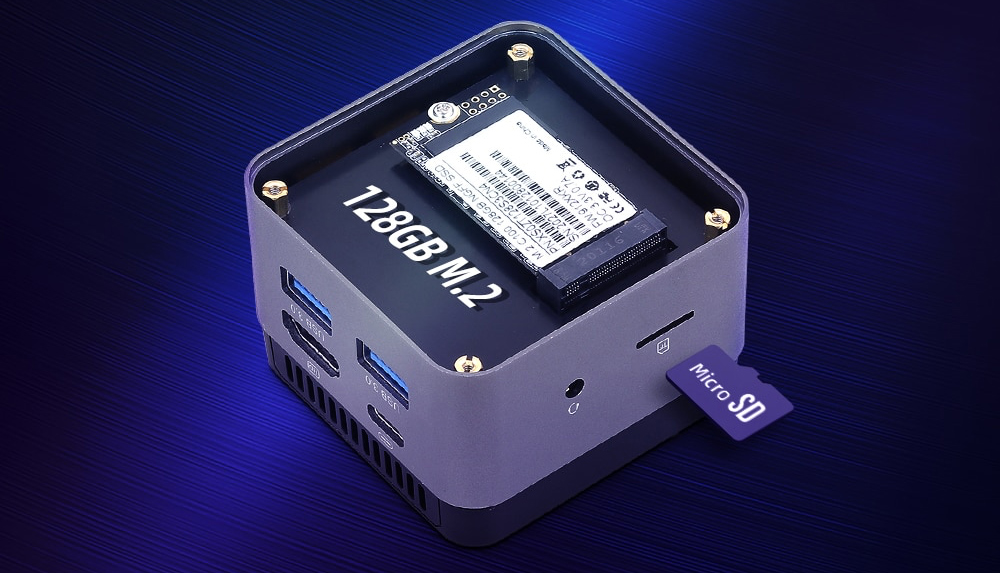
Measuring 62×62×42 mm (2.4×2.4×1.7 inches), the tiny XCY Portable Mini PC N4100 is based on quad-core Intel Celeron N4100 ‘Gemini Lake’ system-on-chip that is paired with 8GB of LPDDR4 RAM as well as a 128GB M.2-2242 SSD that can be upgraded. The unit is not only compact, but also lightweight: its mass is only 121 grams (4.3 ounces), which is comparable to a modern smartphone, meaning you can easily carry it in your pocket.

The Celeron N4100 SoC in the XCY Portable Mini PC N4100 is cooled using an active cooling system, so the product produces some noise. Meanwhile, active cooling also means that the processor never overheats and always delivers its maximum performance. 

(Image credit: XCY)

However XCY has not sacrificed connectivity for portability. The Portable Mini PC N4100 supports Wi-Fi 5 and Bluetooth 4.2 wireless technologies as well as has a USB Type-C for power (i.e., it can use almost any decent USB-C power adapter available today), two USB 3.0 Type-A ports, an HDMI 2.0 output, a microSD slot, and a 3.5-mm connector for headsets. 

The UCFF PC from XCY generally targets the same market segments as various compute sticks. In a nutshell, the Portable Mini PC N4100 can enable low-cost office PCs and be used by those, who need to carry the same system around home or office, but do not exactly need a laptop.

(Image credit: XCY)

Source: AliExpress (via Liliputing)


from TechRadar - All the latest technology news https://ift.tt/3jWCUIK
via IFTTT https://ift.tt/2XjozMJ

What is CFexpress? The new camera memory card format explained

You may have heard: there’s a new kind of memory card in town, and it’s called CFexpress. 

CFexpress cards look like a pocket-drainer at first glance, starting at $199.99 / £210 for 80GB. But they’re important if you want to take advantage of the latest camera features, including 8K video capture, in-camera uncompressed video recording and ultra-rapid burst modes. 

New cameras like the Sony A7S III and Canon EOS R5 have put CFexpress in the spotlight, but it’s not a brand-new format. It was announced in 2016, and the first cards came out in 2017, with the Nikon Z6 and Z7, and Canon EOS C500 Mark II video camera among the first models to have a CFexpress slot.

There’s a little more to learn about CFexpress cards, other than that they cost more than SD cards, though. Here’s everything you need to know.

Do we really need another camera memory card format?

The concept of bottlenecks explains why we need CFexpress cards. When a new camera comes along and offers fast-than-ever burst modes or higher-resolution video at greater frame rates, the processor or sensor’s raw capabilities usually get the credit. 

However, the image buffer, the storage wafer in your memory card, and the storage controller all need to be up to the job too, and the CFexpress format handles the last two of these. 

Its cards use PCIe 3.0, the same interface used by laptop and desktop SSDs – and these are radically faster than the SD cards most of us use today. 

SD cards use a different interface. A high-spec UHS-III card has a maximum theoretical speed of around 624MB/s, while the UHS-II cards you can readily buy tap out at 312MB/s.

CFexpress

(Image credit: Future)

CFexpress raises that to 4GB/s for the fastest, Type C variant, in line with the speed of the main storage drive of a high-end laptop. 

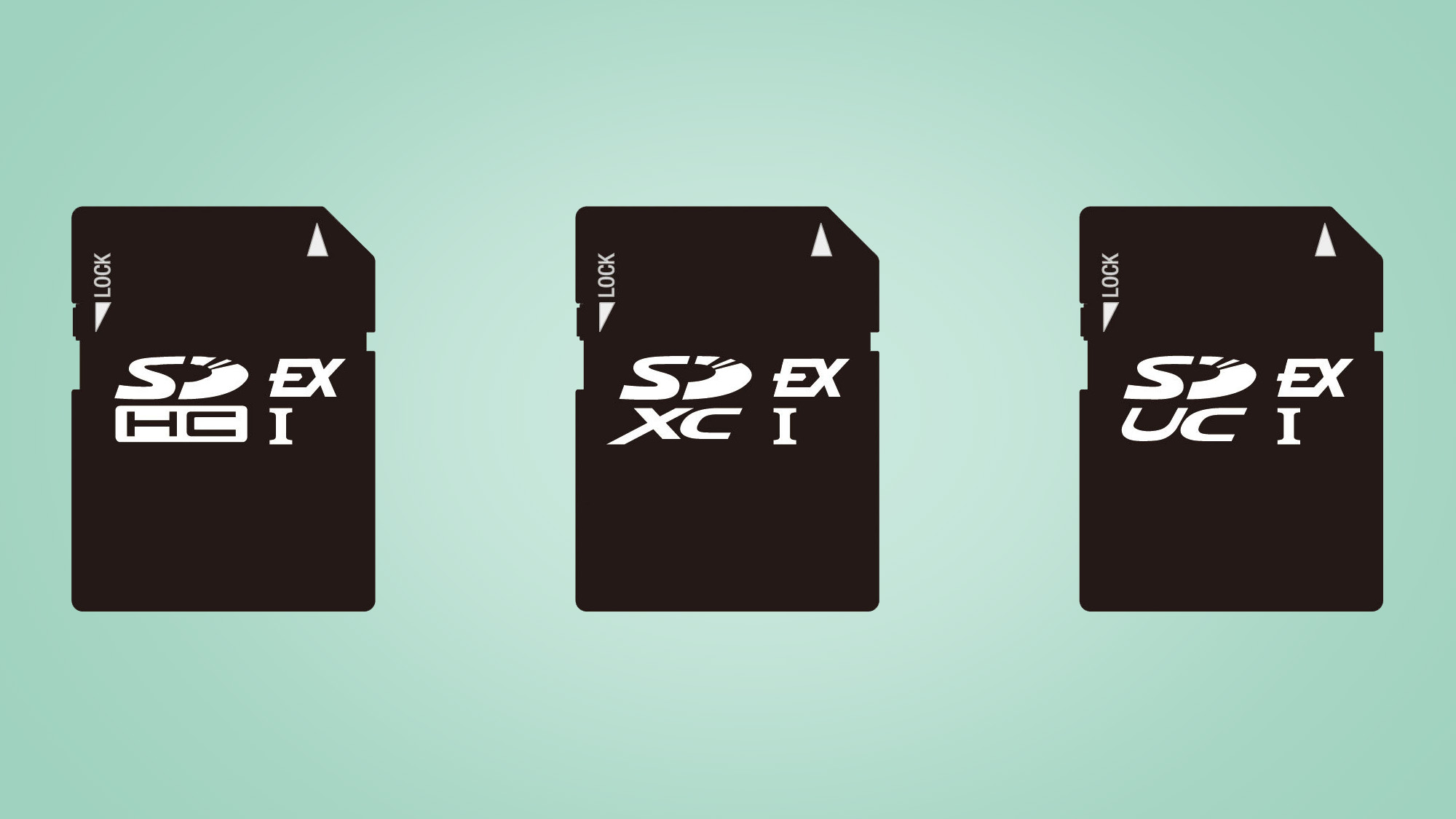
The SD Association, the organization that administers SD card standards, has come up with an alternative to CFexpress. It’s called SD Express, and uses the same PCIe 3.0 interface while offering similar max speeds of 4GB/s.

But just as SD more or less steamrolled Compact Flash for years, it seems that CFexpress has already won this fight – and its use in cameras like the Sony A7S III is proof enough. 

SD Express also arrived three years after CFexpress, giving the latter a significant head start. 

What kind of CFexpress cards are there?

CFexpress cards are faster – and that’s the big takeaway, if it’s all your brain has space for. But things are about to get a little more complicated. 

There are three CFexpress variants: Type A, Type B and Type C. The two newer ones, A and C, were introduced when the CompactFlash Association revised the standard to ‘2.0’ in 2019.

Type A has one PCIe 3.0 pipeline, for a maximum 1GB/s speed, Type B has two pipelines, doubling the headroom to 2GB/s, and Type C has four pipelines for, you guessed it, that headline-grabbing 4GB/s maximum data transfer rate. 

CFexpress

(Image credit: Future)

You can currently buy Type A and Type B cards. And, like SD cards, you should also look at their sustained write speeds, rather than just those printed on the card and its packaging. 

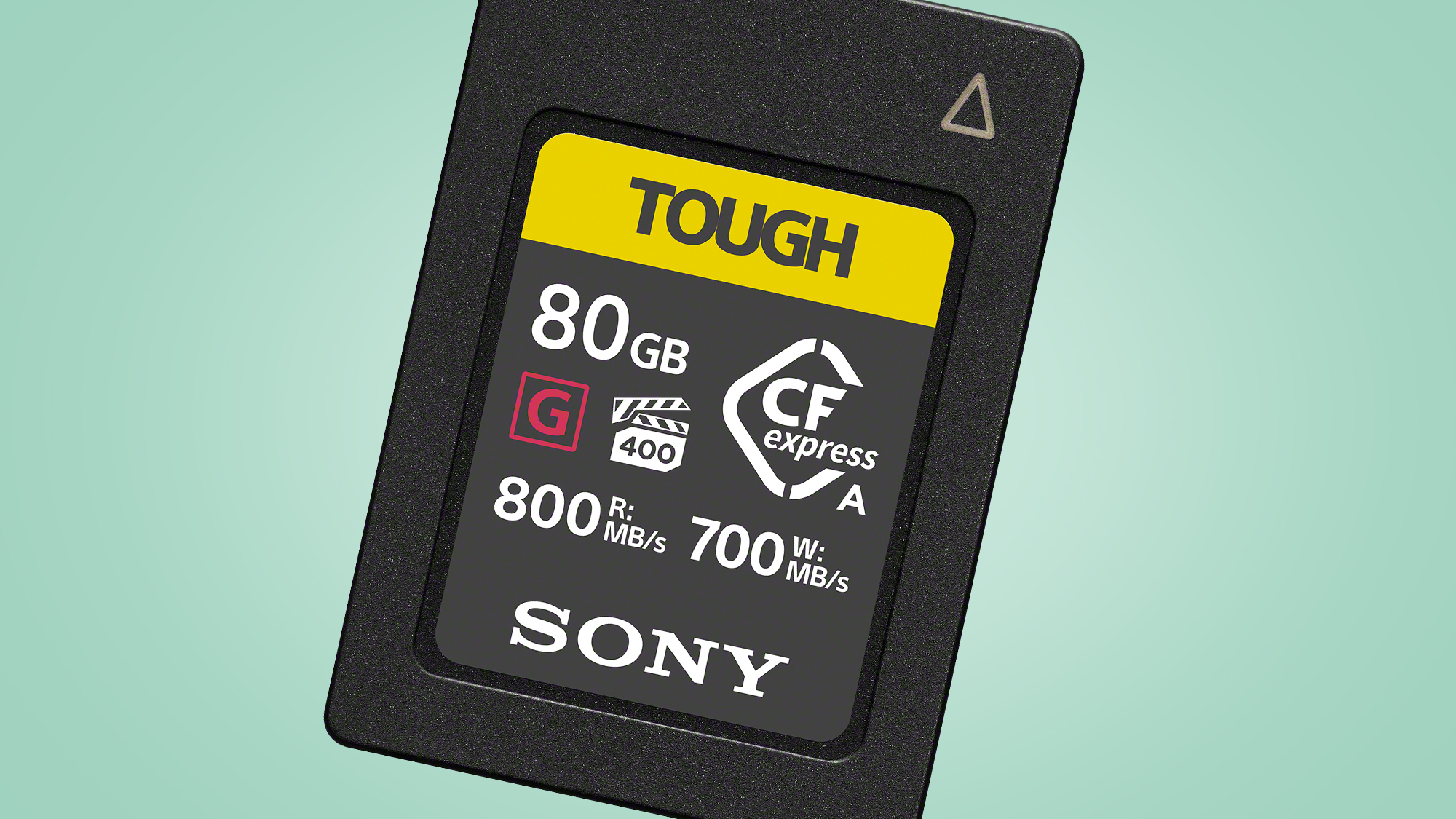
For example, the Sony Tough UHS-II series of SD cards is rated for 299MB/s write speeds, but only provides (minimum) 90MB/s sustained write speeds. Meanwhile, the Sony Tough CFexpress series, based on the Type A standard, offers burst write speeds of 700MB/s, and sustained writes at 400MB/s. 

Speed losses when doing something like shooting video are much lower in a well-designed CFexpress card. 

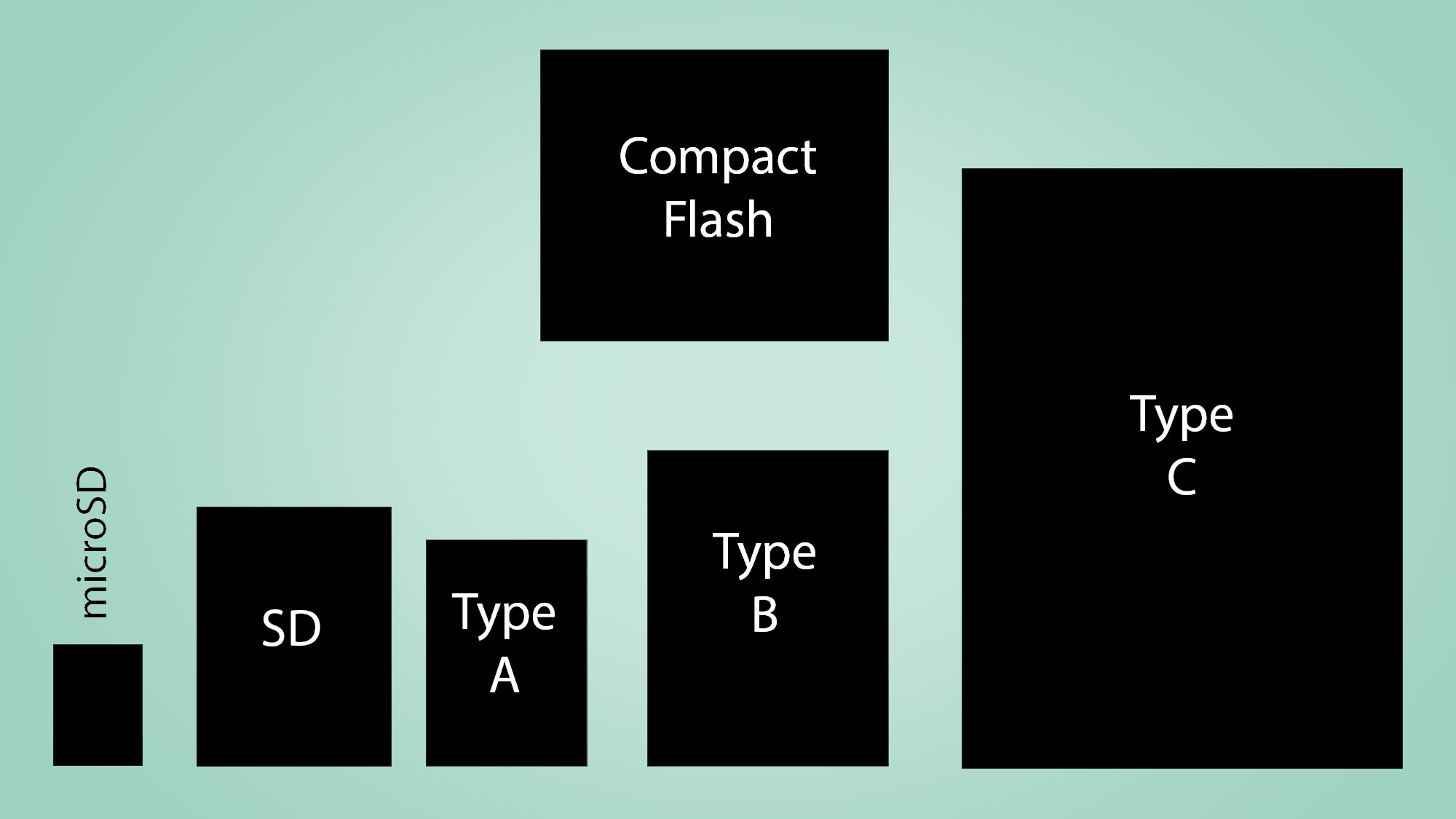
But if CFexpress Type C is faster, why wouldn’t you pick it every time?

As you can see in the diagram above, the three types of CFexpress card are not the same size. Type A cards are the smallest at 28mm x 20mm x 2.8mm, which is slightly smaller and slightly thicker than a standard SD card. 

Type B cards measure 38.5 x 29.8 x 3.8mm, the same shape as XQD memory cards, while Type C cards are much larger at 54 x 74 x 4.8mm – that’s far larger and thicker than even the classic CompactFlash card of years gone by. 

At present, no cameras use the CFexpress Type C standard. Several support Type B, including the Nikon Z6 and Z7. Most cameras with XQD slots can also use some Type B cards, but naturally you’ll be limited to the lower speed of that format’s interface.

CFexpress

(Image credit: Future)

The Sony Alpha A7S III (above) is the first camera to support CFexpress Type A, and this the most interesting format of the moment. Yes, it may offer the lowest performance of the lot, but these cards can fit into a combi slot that will also take SD cards. 

The A7S III has two card slots, both of which will accept SD and CFexpress cards. 

As for the kinds of photographers who will adopt CFexpress in the next couple of years, pros and enthusiasts with money to spend are likely to increasingly choose CFexpress, while SD will still be there for those with a lower-end camera, or those who don’t need top-tier write performance. 

Who makes CFexpress cards and how much do they cost?

There’s no getting away from the fact that many photographers will find CFexpress cards prohibitively expensive. 

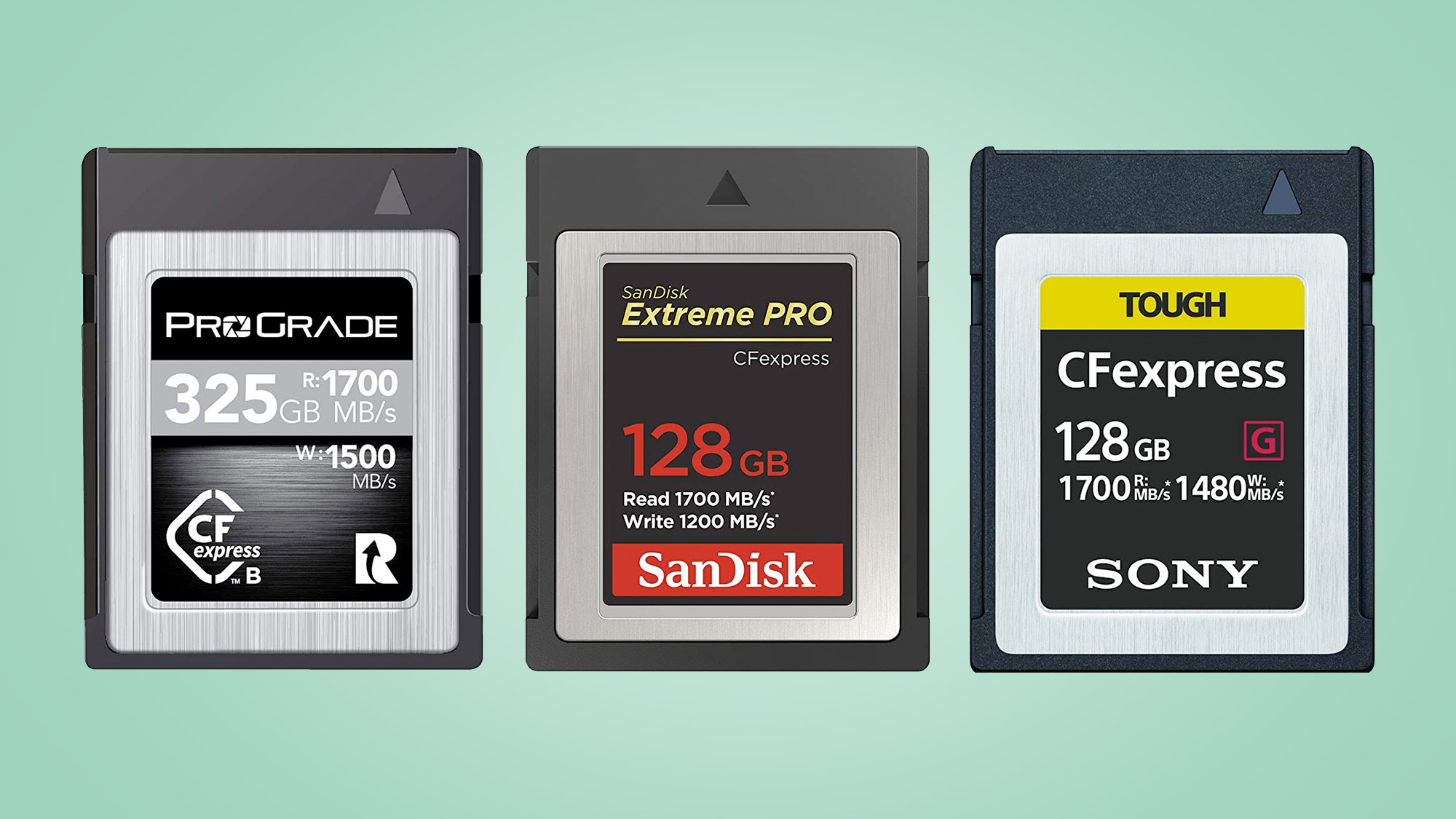
Most of the big names in SD cards are already on-board with this newer format, with Sony, Delkin, SanDisk, Lexar, ProGrade and Integral all producing CFexpress Type B cards. 

There’s a significant difference in the prices of cards from these different brands. Integral and ProGrade provide the cheaper options, but may miss a feature or two; for example, ProGrade cards tend not to have an IP rating, which tells you the water and dust resistance of a product, although we have no complaints about their speed specs.

CFexpress

(Image credit: Future)

ProGrade Gold cards claim 400MB/s sustained write speeds, and its Cobalt range offers incredible sustained writes of 1400MB/s or 1500MB/s – it varies between storage levels – and you won’t find better in a Type B card, as of mid-2020. 

Gold cards cost $179 / £193.99 (128GB), $399 / £279 (256GB), $399 / £499 (512GB), and $899 / £819 (1TB).

Ultra-high performance Cobalt cards are $359 / £389 (325GB) and $899 / £799 (650GB). These appear to be the fastest CFexpress Type B cards money can buy at the moment.

Integral CFexpress cards are among the cheapest around, but make no ruggedisation claims, and only appear to cite burst speed figures. However, at around £165 for the 128GB card (integral cards are much easier to find in the UK and Europe than the US), they’re pretty attractive. 

Sony’s Tough CFexpress series is the top choice for travel use. They are made to three times the strength of the CFexpress standard according to Sony, and tested to withstand 70 newtons of bending force and 5-meter drops. An IP57 rating also means they’re highly water and dust resistant. 

A Sony Tough card costs $219 / £299 (128GB), $399 / £483 (256GB) or $649 / £999 (512GB).

CFexpress card

(Image credit: SanDIsk)

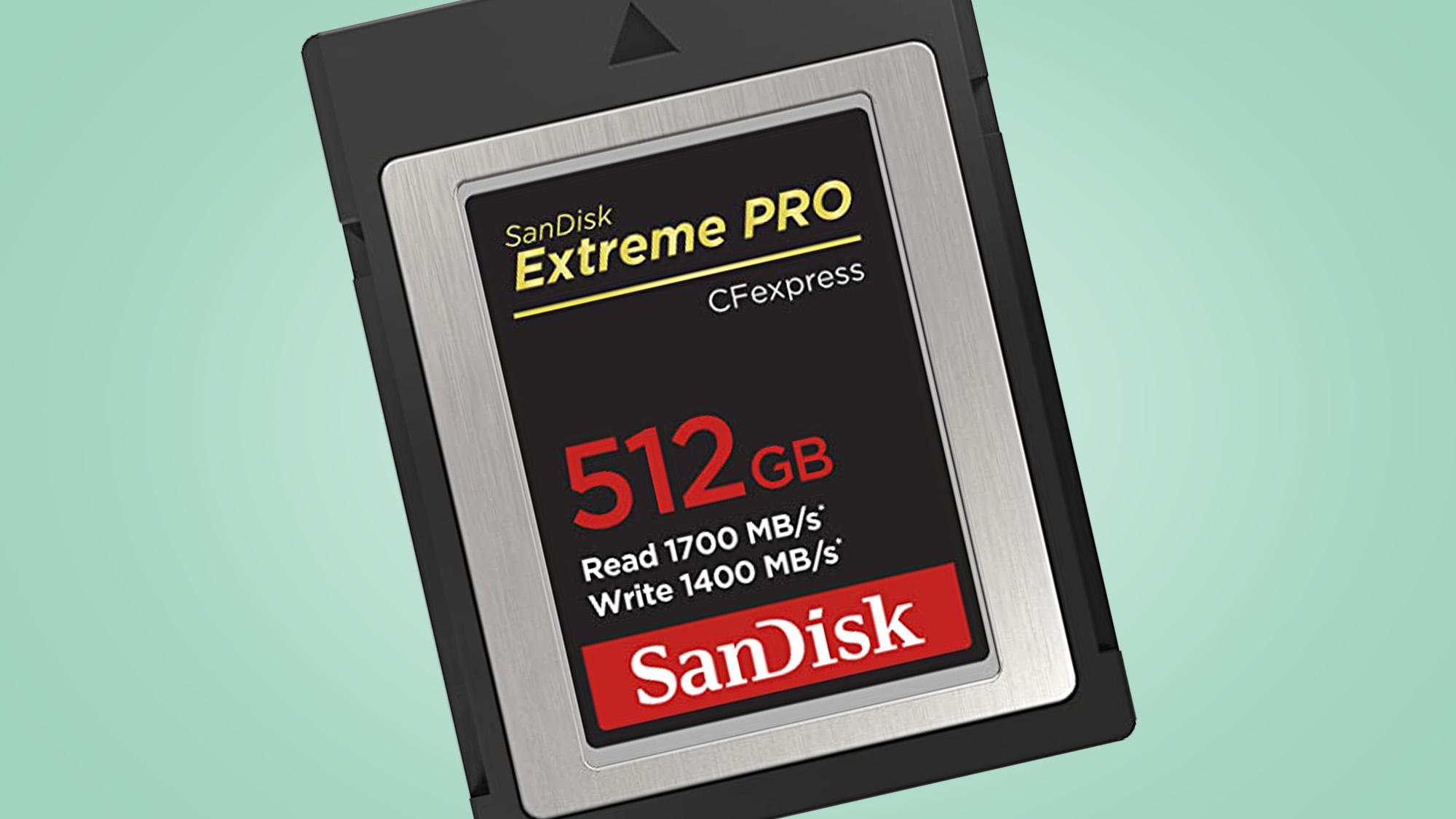
SanDisk’s highly regarded Extreme Pro series are a solid mid-price option, and will be the first choice for many. These cost $199 / £279 (128GB), $399 / £449 (256GB) or $599 / £699 (512GB), and come with a ‘lifetime’ limited warranty that covers failure, but not wear-and-tear or you accidentally snapping them. 

Sony is the only company making CFexpress Type A cards at the time of writing, and these are, sadly, even more expensive than the Type B kind, at $199 / £209 for 80GB, rising to $649 for 512GB.  

What’s the takeaway here? Prices vary between countries quite significantly at higher capacities, and ProGrade’s Cobalt series CFexpress cards appear to offer the best continuous write performance available in 2020. 

What’s next for CFexpress?

The next stage for CFexpress is PCIe 4.0, which may come with the format’s next big revision. This would double the bandwidth per lane, so a theoretical CFexpress 3.0 card might offer 2GB/s speed for Type A sizes, 4GB/s for Type B, and 8GB/s for Type C. 

We’re highly likely to see this announced at some point, because arch CFexpress-rival the SD Association has already announced PCIe 4.0 integration for a future version of SD Express cards; however, don’t expect to see these cards on sale for a couple of years at least.

There’s still a question mark over Type C cards in general, before we even think about the next CFexpress standard. You can’t buy them yet, and you have to wonder which cameras, or other devices, might take the size hit in terms of design as a trade-off in order to benefit from its 4GB/s maximum speed.

SDexpress

(Image credit: SD association)

Even more intensive video capture modes are the obvious use, but do we really need 4GB/s? The efficiency of the HEVC encoding format means you won’t need anything like that data rate even at 8K 120fps. 

Storage of uncompressed video is a much more obvious use case for all that bandwidth. This is normally done over HDMI, as a 2.1-version connector has 48Gbps bandwidth (6GB/s). So while a CFexpress Type C card isn’t quite as fat a pipe as HDMI, it comes much closer than the cards we have today, and would let you store incredibly high data-rate footage in-camera. 

What we’re really waiting for is something much simpler: lower prices. 

We hope the cost of 64-256GB CFexpress cards will start to drop as manufacturing scales up, but don’t expect miracles – a 256GB UHS-II SD card with a V90 rating (continuous 90MB/s write speed) can still cost around $250, so there’s less pressure for CFexpress prices to freefall in the next 12 months.  


from TechRadar - All the latest technology news https://ift.tt/2Ph3ApA
via IFTTT https://ift.tt/3i29eIG

Saturday, August 1, 2020

This cheap and tiny laptop packs some serious firepower, but there's a catch

11.6-inch SZYIYUN laptop - $249.00 from AliExpress
(£195.27/AU$350.20)
Chinese manufacturer SZYIYUN has attempted to revive the famous Netbook with this tiny 11.6-inch laptop. The machine packs plenty of firepower - with an Intel Celeron J4105 CPU,  8GB RAM and 512GB SSD - but other features betray its budget nature.View Deal

About 13 years ago, ASUS kickstarted the Netbook revolution that saw the launch of a pint-sized laptop (with an equally small price tag) able to run Linux or Windows XP. The EEE PC was the first of a series of devices that introduced the joys of untethered mobile computing to millions.

Fast forward to 2020 and a small Chinese company, SZYIYUN, wants to do the same with a curious unnamed machine. The device's price tag ($249.00/£195.27/AU$350.20) is reminiscent of the first Netbooks, but its innards are significantly more powerful.

The laptop packs 8GB of RAM and a 512GB SSD, compared to the 512MB RAM and 8GB onboard storage that featured in the first EEE PC. The SZYIYUN processor, a Celeron J4105, is also an order of magnitude faster than the Celeron CPU that powered ASUS’ pioneering laptop.

Available in pink, black and white, the SZYIYUN machine draws further comparison to the Netbook thanks to its 11.6-inch screen, which has a rather large bezel - like its forebears - and weighs less than 1kg (similar to the LG Gram 14).

The rest of the specification includes a TN display with a 1366 x 768 pixel resolution (probably the only weak spot), two USB ports, an HDMI connector, audio jack, 802.11n, microSD card reader and battery life of up to five hours.

Just bear in mind, this laptop is stereotypically entry level, made entirely of plastic, and features a rather small touchpad that could frustrate some users.

Bear in mind

  • If this product comes from mainland China, it will take at least a month to reach either the US or the UK (and potentially more). You may be levied a tax either directly or through the courier.
  • If you've managed to get hold of a cheaper product with equivalent specifications, in stock and brand new, let us know and we'll tip our hat to you.


from TechRadar - All the latest technology news https://ift.tt/3hY8Ydp
via IFTTT https://ift.tt/2EHQ3p3

Chromebook users get three free months of Stadia Pro

Google is giving you an extra incentive to buy a Chromebook: a whole lot of cloud gaming that could make your laptop shine. The tech giant has introduced a perk that gives Chromebook owners a free three-month trial of Stadia Pro. You’ll need a system...

from Engadget RSS Feed https://ift.tt/2BQvHsx
via IFTTT https://ift.tt/3flyFmC

Roar! This Bronze T-Rex Clock Costs $27,000

When it comes to wacky clocks nobody can hold a candle to MB&F. The company, which makes $100K watches alongside things like this wild mechanical T-rex thing, teamed up with movement maker L’Épée and design house Massena LAB to create a $27,000 desk trinket that looks like something out of Half-Life 2.

Read more...


from Gizmodo https://ift.tt/39P5jvN
via IFTTT https://ift.tt/30hYCiI

Dark Sky on Android shuts down following Apple deal

Like it or not, you’ll have to move on from Dark Sky if you’re an Android user. The 9to5Google reports that Apple has shut down Dark Sky on Android and Wear OS as promised, leaving users without the app’s highly localized weather. Apple had initially...

from Engadget RSS Feed https://ift.tt/2Xl47v3
via IFTTT https://ift.tt/39PFUlq

People Are Apparently Jerking Off With Their Phones During the Pandemic

People are doing things with their phones that I didn’t even know you could do with phones. I mean, I get it: In these crazy coronavirus times, people need to get creative to meet their sexual needs. I totally support having a healthy sex live and masturbation. But… with your phone?

Read more...


from Gizmodo https://ift.tt/39U4LVp
via IFTTT https://ift.tt/3grqiHG

The best energy deals in August 2020

Find the best energy deals now

(Image credit: Future)

Get your quote:
We've partnered with MoneySupermarket to help you find the best energy deals in your area. Our energy comparison tool takes less than five minutes to use, and could save you hundreds on your energy bills. Save money now

The best energy deals could save you up to £400 pounds every year. In fact, switching energy supplier regularly is one of the best ways to ensure you're not paying more for your gas and electricity than you should.

But the best energy deal for one household won't be the same for another. After all, energy prices differ depending on where in the UK you live, and how complicated it is to supply your area; and your bills are affected by how much gas and electricity you use too.

The fastest way to find the right energy deal for your household - and see the exact savings you could make from switching - is to run an energy comparison. 

You'll be shown all the best tariffs available in your area, with an estimate of how much each would cost you every year if you were to switch.

However, it's still possible to get an idea of the best energy deals across the UK, on average, using a typical household’s annual fuel consumption. And that's exactly what we've done in this guide. We've researched the best tariffs on average across the UK this month, highlighting the cheapest energy deals below, and the best green energy deals as well.

If you see something you like, you can either go directly to the supplier for a quote, or you can run an energy comparison to compare the savings you'd make from switching to that tariff with those of other tariffs available in your area, to make sure you're choosing the best energy deal possible. 

Bear in mind that any prices you're quoted will be exactly the same, whether you go directly through the supplier or through a price comparison website. Also, if you decide to switch, most suppliers and comparison sites will handle the switching process for you for free, if you choose.      

The best energy deals where you live

To find the average best energy deals this month in each of the UK’s 14 energy distribution regions, we calculated all prices below according to a typical household’s annual fuel consumption: 12,000 kWh of gas and 2,900 kWh of electricity.

We then compared each price to the Ofgem energy price cap, which is £1,127 per year, to illustrate the savings a typical household would make by switching to one of these cheap energy deals. 

In addition, we’ve also considered whether each supplier below offers any incentives for you to join them, or if they penalise you for leaving your contract with early exit fees.

Don't forget that you could save more or less than the amounts shown below, depending on the amount of energy your household uses. To get a personalised quote for the exact savings your home could make, you'll need to run an energy price comparison. Read on to find the best energy deals, on average, in your region…

East England: best energy deals

Cheapest energy deal: Avro Energy | Simple and SuperFixed | 12 months | Fixed rate | Early exit fees: no | Average annual price: £753.61
Save £391/year
– Avro Energy scores highly on user review site Trustpilot, where it averages 4.7 stars out of 5 from over 33,000 reviews. The supplier's Simple and SuperFixed 12-month fixed tariff undercuts the energy cap by almost £400 per year, making it great value for money. There are no early exit fees, either.
Compare Avro Energy with the rest of the market

Best green energy deal: Tonik Energy | Green SuperPower (1 Year) v6 + Free Boiler Service | 12 months | Fixed rate | Early exit fees: £30/fuel | Average annual price: £765.15
Save £361/year
– If you’re looking for a green energy deal, then the Green SuperPower (1 Year) v6 + Free Boiler Service tariff could be a better choice. This is because you get 100% renewable electricity as standard. Plus, you can also choose to include 10% green gas and carbon-offset the remaining 90%. Although early exit fees apply, this is currently the cheapest green energy deal available in East England. Compare Tonik with the rest of the market

East Midlands: best energy deal

Cheapest and best green energy deal: Tonik Energy | Green SuperPower (1 Year) v6 + Free Boiler Service | 12 months | Fixed rate | Early exit fees: £30/fuel | Average annual price: £744.58
Save £382/year
– Tonik are committed to supplying their customers with green energy at an affordable cost. That’s why they supply 100% renewable electricity and 10% green gas, with the remaining 90% as carbon-offset. You’ll also get a free boiler service with this plan, but watch out for the early exit fees. Compare Tonik with the rest of the market

London: best energy deal

Cheapest and best green energy deal: Tonik Energy | Green SuperPower (1 Year) v6 + Free Boiler Service | 12 months | Fixed rate | Early exit fees: £30/fuel | Average annual price: £783.97
Save £343/year
– As well as being the cheapest tariff available in London, Tonik’s Green SuperPower (1 Year) v6 is also green. This is because Tonik supply 100% renewable electricity and 10% green gas, with the remaining 90% as carbon-offset. On top of this, you get a free boiler service worth over £80 with this plan. Early exit fees do apply though. Compare Tonik with the rest of the market

Merseyside and North Wales: best energy deal

Cheapest and best green energy deal: Tonik Energy | Green SuperPower (1 Year) v6 + Free Boiler Service | 12 months | Fixed rate | Early exit fees: £30/fuel | Average annual price: £788.11
Save £338/year
– Like all Tonik’s tariffs, their Green SuperPower (1 Year) v6 + Free Boiler Service deal has 100% renewable electricity as standard. Plus, you also have the chance to include 10% green gas and carbon-offset the remaining 90%. You’ll also get a free boiler service as part of the deal, but watch out for the exit fees if you decide to leave your contract early. Compare Tonik with the rest of the market

North East England: best energy deal

Cheapest and best green energy deal: Outfox the Market | Fix’D 20 12.0 | 12 months | Fixed rate | Early exit fees: no | Average annual price: £770.06
Save £356/year
– With Outfox the Market’s Fix’D 20 12.0 tariff, you can enjoy cleaner and cheaper energy. All of their electricity is 100% renewable, so you can make a real and tangible difference by switching. Plus, their customers rate their customer service as ‘excellent’ on Trustpilot. Compare Outfox with the rest of the market

North Scotland: best energy deal

Cheapest and best green energy deal: Tonik Energy | Green SuperPower (1 Year) v6 + Free Boiler Service | 12 months | Fixed rate | Early exit fees: £30/fuel | Average annual price: £827.05
Save £299/year
– Not only is Tonik’s Green SuperPower (1 Year) v6 the cheapest energy tariff in North Scotland, but you also get a free boiler service worth over £80 thrown in, too. On top of this, the tariff is also green and all electricity is 100% renewable. Compare Tonik with the rest of the market

North West England: best energy deal

Cheapest energy deal and best green energy deal
Outfox the Market | Fix’D 20 12.0 | 12 months | Fixed rate | Early exit fees: no | Average annual price: £762.37
Save £364/year
– With an average of 4.5 stars out of 5 on user review site Trustpilot, Outfox the Market are one of the UK’s most popular energy suppliers. As well as excellent customer service, they also supply green energy that’s 100% renewable. All that is even better when you consider this deal is over £350 cheaper than the price cap. Compare Outfox with the rest of the market

South East England: best energy deals

Cheapest variable energy deal: Outfox the Market | One Green Flex 2.0 | No contract | Variable | Early exit fees: no | Average annual price: £783.88
Save £343/year
– Outfox the Market offer a number of cheap, green energy deals. In the South East of England, their One Green Flex 2.0 tariff comes out as the cheapest available. Remember though, it’s a variable tariff, so the price could go up (or, indeed, get even lower). Compare Outfox with the rest of the market

Cheapest fixed energy deal: Tonik Energy | Green SuperPower (1 Year) v6 + Free Boiler Service | 12 months | Fixed rate | Early exit fees: £30/fuel | Average annual price: £803.36
Save £323/year
– If you’d rather opt for a fixed contract, then Tonik’s Green SuperPower (1 Year) v6 + Free Boiler Service tariff is the best available in the area. It’s a green tariff and, although you don’t quite save as much money as you do with the variable tariff, you’re locked into a great deal. As an added bonus, you also get a free boiler service. Compare Tonik with the rest of the market

South England: best energy deal

Cheapest and best green energy deal: Tonik Energy | Green SuperPower (1 Year) v6 + Free Boiler Service | 12 months | Fixed rate | Early exit fees: £30/fuel | Average annual price: £782.47
Save £344/year
– Not only is this Tonik Energy deal the cheapest in the area, but it’s also green. In addition, you also get a free boiler service which is worth over £80 when you sign up. Just remember that there are early exit fees involved in the contract. Compare Tonik with the rest of the market

South Scotland: best energy deal

Cheapest and best green energy deal: Outfox the Market | Fix’D 20 12.0 | 12 months | Fixed rate | Early exit fees: no | Average annual price: £768.86
Save £358/year
– Outfox the Market’s Fix’D 20 12.0 tariff is the cheapest option in South Scotland. Plus, because it uses 100% renewable electricity, it’s also a green tariff. On top of this, Outfox the Market boasts an average of 4.5 out of 5 stars on Trustpilot, so you also know you’re entering a contract with a supplier people trust. Compare Outfox with the rest of the market

South Wales: best energy deal

Cheapest and best green energy deal: Outfox the Market | Fix’D 20 12.0 | 12 months | Fixed rate | Early exit fees: no | Average annual price: £770.95
Save £356/year
– Outfox the Market’s Fix’D 20 12.0 tariff is impressively cheap at £770 per year. It’s also fixed for 12 months, so you’re locked into a great deal. Plus, even if circumstances change, there are no exit fees. This means you can switch whenever you like. Compare Outfox with the rest of the market

South West England: best energy deal

Cheapest and best green energy deal: Tonik Energy | Green SuperPower (1 Year) v6 + Free Boiler Service | 12 months | Fixed rate | Early exit fees: £30/fuel | Average annual price: £810.04
Save £316/year
– Tonik’s Green SuperPower (1 Year) v6 comes with a free boiler service, too. This 12-month plan uses 100% renewable electricity and you can choose to include 10% green gas and carbon-offset the remaining 90%.Just watch out for those early exit fees. Compare Tonik with the rest of the market

West Midlands: best energy deal

Cheapest and best green energy deal: Outfox the Market | Fix’D 20 12.0 | 12 months | Fixed rate | Early exit fees: no | Average annual price: £763.86
Save £363/year
– With over 20,000 reviews on Trustpilot, Outfox the Market have an average customer rating of 4.5 stars out of 5. But, as well as providing industry-leading customer service, they also offer green energy. This is because their Fix’D 20 12.0 tariff uses 100% renewable energy. So, not only can you make a greener choice by switching, but you could also save over £350. Compare Outfox with the rest of the market

Yorkshire: best energy deal

Cheapest and best green energy deal: Yorkshire Energy | Green Flamborough - Fixed until 31st July 2021 | 13 months | Fixed rate | Early exit fees: £30/fuel | Average annual price: £760.81
Save £366/year
– In Yorkshire, local supplier Yorkshire Energy comes out on top. Their Green Flamborough - Fixed until 31st July 2021 tariff is fixed for 13 months rather than the usual 12, so you get a little bit of extra security. As an added bonus, it’s a green tariff and they’re a community-focused company. Compare Yorkshire Energy with the rest of the market

How to find the cheapest energy deals

Keeping track of the best energy deal can be difficult. With new deals and new companies appearing all the time, it really does pay to do your research and check for cheap energy deals regularly.

Between January and May of last year, almost 2.5 million electricity customers switched supplier because they found a better deal elsewhere. The best way to know if there’s a better deal on the market for you is to run an energy comparison on an impartial price comparison website.

However, please be aware that most energy comparison sites will automatically show you the best deals they can switch you to. In order to see all deals (and often the very cheapest), you'll need to change the results filter to include plans that require switching directly through the supplier.

Find the best energy deals for your home now
We've partnered with MoneySupermarket to help you find the very best energy deals in your area. Whether you want to reduce your energy bills or carbon footprint, or receive a better service than you currently get, our energy comparison tool takes less than five minutes to use and could save you hundreds on your energy bills every year. Start saving now


from TechRadar - All the latest technology news https://ift.tt/2C8TFPZ
via IFTTT https://ift.tt/3gjjko3