
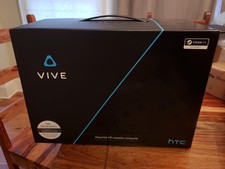
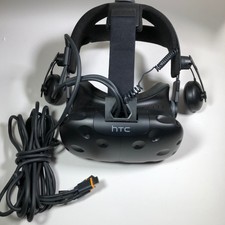
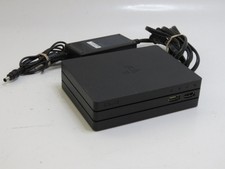
Brand New - HTC VIVE 9D Virtual Reality Gaming System Platform
ID: 223345825748
Auction price: $8800.00
Bid count:
Time left: 24d 9h
Buy it now: $8800.00
January 26, 2019 at 05:04PM
via eBay https://ebay.to/2DNgVAS http://bit.ly/2MNKRju


Fourteen years after unveiling its first location in New York, Nintendo is finally opening an official store in Japan, too. Nintendo Tokyo will be located in Shibuya Parco, the new flagship of the Parco department store chain. Nintendo Tokyo is scheduled to open at the same time as the shopping center in fall.
In an announcement, Nintendo said “we are preparing to make this store, which will be a new base for communicating Nintendo information in Japan, an enjoyable place for a wide range of consumers.” In addition to games, consoles, accessories like amiibo, and branded merchandise, Nintendo Tokyo will also host gaming kiosks and events (if the New York store, in Rockefeller Center, is anything to go by, these might include tournaments, demos, and launches).
Nintendo recently posted strong third-quarter revenue growth, but also cut its Switch forecast for the year. Sales may pick up again, however, if Nintendo releases a smaller and less expensive version of the console, as Japanese financial publication Nikkei reported it plans to do.


It seems inevitable that the high seas will eventually play host to a sort of proxy war as automated vessels clash over territory for the algae farms we’ll soon need to feed the growing population. But this rocket-launching robo-boat is a peacetime vessel concerned only with global weather patterns.
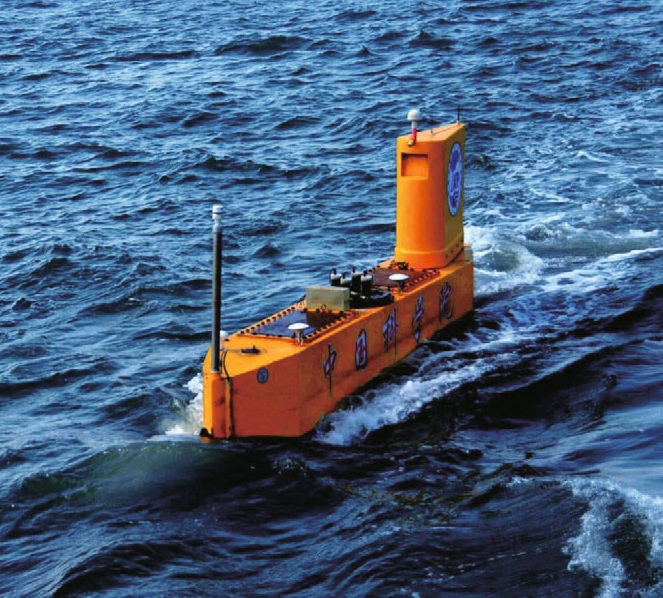
The craft is what’s called an unmanned semi-submersible vehicle, or USSV, and it functions as a mobile science base — and now, a rocket launch platform. For meteorological sounding rockets, of course, nothing scary.
It solves a problem we’ve seen addressed by other seagoing robots like the Saildrone: that the ocean is very big, and very dangerous — so monitoring it properly is equally big and dangerous. You can’t have a crew out in the middle of nowhere all the time, even if it would be critical to understanding the formation of a typhoon or the like. But you can have a fleet of robotic ships systematically moving around the ocean.
 In fact this is already done in a variety of ways and by numerous countries and organizations, but much of the data collection is both passive and limited in range. A solar-powered buoy drifting on the currents is a great resource, but you can’t exactly steer it, and it’s limited to sampling the water around it. And weather balloons are nice, too, if you don’t mind flying it out to where it needs to be first.
A robotic boat, on the other hand, can go where you need it and deploy instruments in a variety of ways, dropping or projecting them deep into the water or, in the case of China’s new USSV, firing them 20,000 feet into the air.
“Launched from a long-duration unmanned semi-submersible vehicle, with strong mobility and large coverage of the sea area, rocketsonde can be used under severe sea conditions and will be more economical and applicable in the future,” said Jun Li, a researcher at the Chinese Academy of Sciences, in a news release.
The 24-foot craft, which has completed a handful of near-land cruises in Bohai Bay, was announced in the paper. You may wonder what “semi-submersible” means. Essentially they put as much of the craft as possible under the water, with only instruments, hatches and other necessary items aboveboard. That minimizes the effect of rough weather on the craft — but it is still self-righting in case it capsizes in major wave action.

The USSV’s early travels
It runs on a diesel engine, so it’s not exactly the latest tech there, but for a large craft going long distances, solar is still a bit difficult to manage. The diesel on board will last it about 10 days and take it around 3,000 km, or 1,800 miles.
The rocketsondes are essentially small rockets that shoot up to a set altitude and then drop a “driftsonde,” a sensor package attached to a balloon, parachute or some other descent-slowing method. The craft can carry up to 48 of these, meaning it could launch one every few hours for its entire 10-day cruise duration.
The researchers’ findings were published in the journal Advances in Atmospheric Sciences. This is just a prototype, but its success suggests we can expect a few more at the very least to be built and deployed. I’ve asked Li a few questions about the craft and will update this post if I hear back.


You may think that the worst you’ll risk by buying a bargain-bin smart bulb or security camera will be a bit of extra trouble setting it up or a lack of settings. But it’s not just while they’re plugged in that these slapdash gadgets are a security risk — even from the garbage can, they can still compromise your network.
Although these so-called Internet of Things gadgets are small and rather dumb, they’re still full-fledged networked computers for all intents and purposes. You may not need to do much, but you still need to take many of the same basic precautions to prevent them from, say, broadcasting your private information unencrypted to the world, or granting root access to anyone walking by.
In the case of these low-cost “smart” bulbs investigated by Limited Results (via Hack a Day), the issue isn’t what they do while connected but what they keep onboard their tiny brains, and how.
All the bulbs they tested proved to have no real security at all protecting the information kept on the chips inside. After exposing the PCBs, they attached a few leads and in a moment each device would spit out its boot data and be ready to take commands.
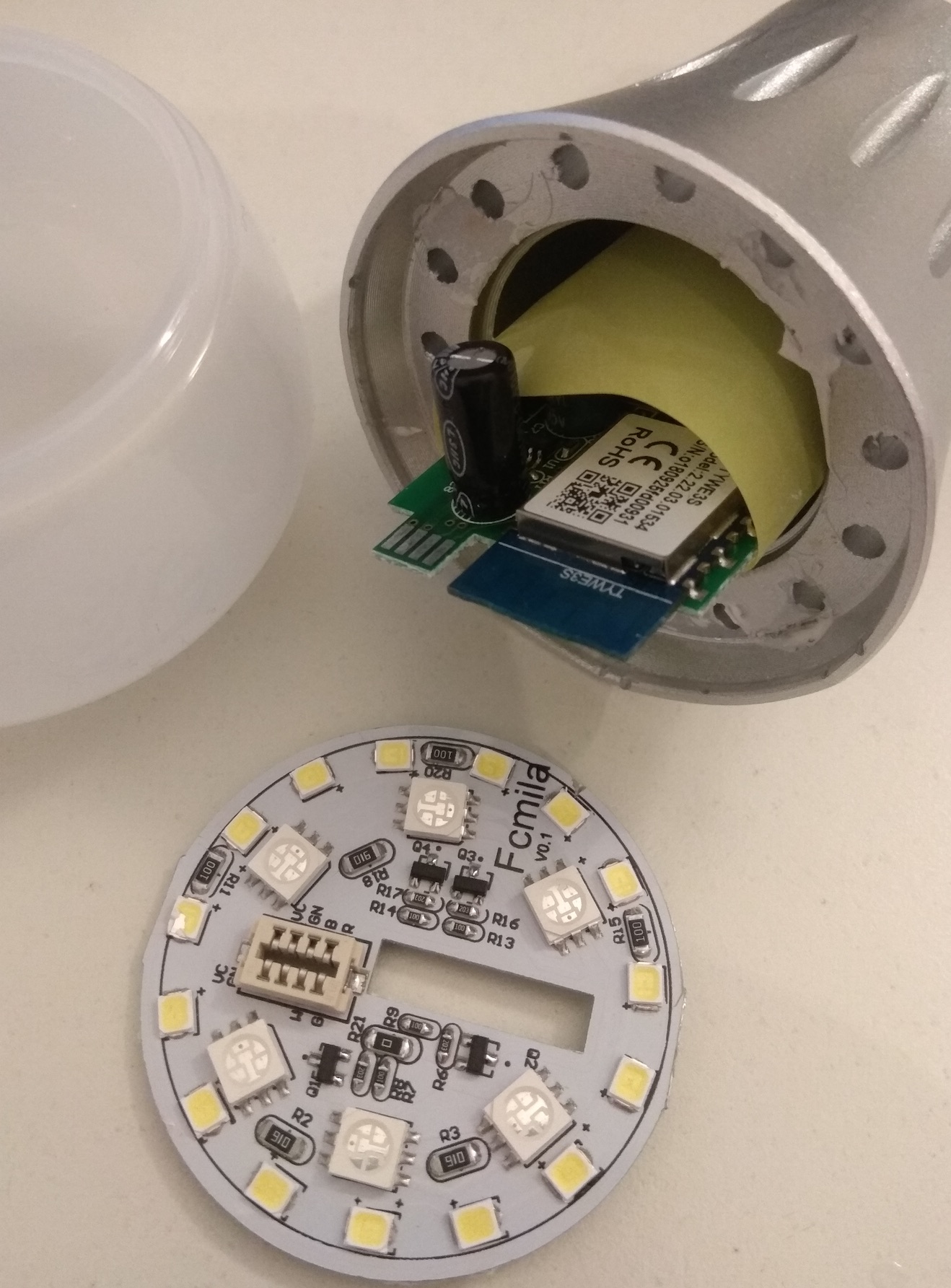 The data was without exception totally unencrypted, including the wireless password to the network to which the device had been connected. One device also exposed its private RSA key, used to create secure connections to whatever servers it connects to (for example to check for updates, upload user data to the cloud and so on). This information would be available to anyone who grabbed this bulb out of the trash, or stole it from an outdoor fixture or bought it secondhand.
“Seriously, 90 percent of IoT devices are developed without security in mind. It is just a disaster,” wrote Limited Results in an email. “In my research, I have targeted four different devices : LIFX, XIAOMI, TUYA and WIZ (not published yet, very unkind people). Same devices, same vulnerabilities, and even sometimes exactly same code inside.”
Now, these particular bits of information exposed on these devices aren’t that harmful in and of themselves, although if someone wanted to, they could take advantage of it in several ways. What’s important to note is the utter lack of care that went into these devices — not just their code, but their construction. They really are just basic enclosures around an off-the-shelf wireless board, with no consideration given to safety, security or longevity. And this type of thing is not by any means limited to smart bulbs.
These devices all proudly assert that they support Alexa, Google Home or other standards. This may give users a false sense that they are in some way accredited, inspected or otherwise held to basic standards.
In fact, in addition to all of them having essentially no security at all, one had its (conductive) metal shell insulated from the PCB only by a loose piece of adhesive paper. This kind of thing is an electrical fire, or at least a short, waiting to happen.
As with any other class of electronics, there’s always a pretty good reason why one is a whole lot cheaper than another. But in the case of a cheap CD player, the worst you’re going to get is skipping or a scratched disc. That’s not the case with a cheap baby monitor, a cheap smart outlet, a cheap internet-connected door lock.
I’m not saying you need to buy the premium version of every smart gadget out there — consumers need to be aware of the risks they are exposing themselves to with the installation of any such device, let alone a poorly made one.
If you want to limit your own risk, a simple step you can take is to have your smart home devices and such isolated on a subnet or guest network. Make sure that the devices, and of course your router, are password protected, and take common sense measures like changing that password regularly.


If you’re interested in Meizu’s insane smartphone that doesn’t have any port or button, you can now pre-order it on Indiegogo for $1,299. Supply is limited as the company is only selling 100 units for now.
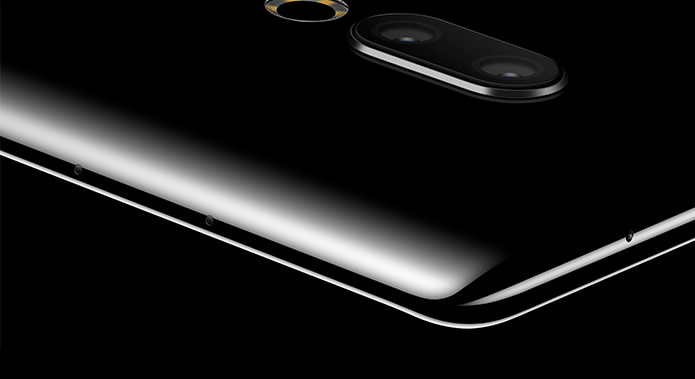
The Meizu Zero looks like any modern phone at first sight. But if you look beyond the display, you’ll notice that there’s absolutely zero port or button.
The volume button has been replaced with a touch-sensitive surface. The fingerprint sensor is integrated in the display. Wireless charging is the only way to charge the device. And if you’re thinking about putting your SIM card in the phone, there’s no SIM slot either — I hope your carrier supports eSIM cards.
There’s no speaker grille either. Meizu is using the screen as a speaker by sending vibrations through the display. It also works as a microphone, apparently.
It’s unclear if this is just a giant joke or an actual product. But it’s an interesting experiment. For $1,299, you get a phone with a 5.99-inch AMOLED display and a Snapdragon 845 system-on-a-chip. The company expects to ship the device in April 2019.


Sick of filling the limited space on your phone with apps, photos and videos? Sometime in the near future, your smartphone could ship with more than one terabyte (1TB) of internal storage and run 10 times faster than a standard memory card.
Samsung is best known for making smartphones, but the company’s memory division — one of its most profitable units — just announced it has begun mass-producing a 1TB flash storage chip for phones. There’s no word on when they’ll be inside smartphones, but Samsung said it plans to increase production during the first half of this year.
“Smartphone enthusiasts will soon be able to enjoy storage capacity comparable to a premium notebook PC, without having to pair their phones with additional memory cards,” Samsung said.
That 1TB capacity is double the previous highest that the Korean firm has produced. Its newest chip gave the Galaxy Note 9 a 512GB model, which passes the terabyte milestone when a 512GB SD card is added. This new breakthrough promises to offer that without the help of a card, but the company also boasted of improved performance.
Samsung said its new tech reaches speeds of up to 1,000 megabytes per second (MB/s) — that would transfer a 5GB-sized full HD video in just five seconds, as opposed to nearly one minute with conventional microSD cards. Increased memory will also enable better-quality high-resolution video shooting thanks to faster random read speed, it said.
Sounds good, but might this ship before the end of the year? The Samsung rumor mill is already speculating that the upcoming Galaxy Note 10 could include a 1TB model, but at this stage there is no concrete evidence. Keep an eye out for future leaks for more hints.


Apple is launching 58 new Today at Apple sessions to beef up its in-store education offerings for people who want to explore Apple’s products. The sessions, which cover video, photography, accessibility, coding, music, health and more, are free to attend and available at all of Apple’s retail stores across the world.
For the unveiling, Apple brought a group of reporters to its Apple Park campus in Cupertino last week. Throughout the day, Apple took us through sample Today at Apple sessions across Apple’s three categories: Skills, Walks and Labs. Skills are quick, 30-minute sessions designed to teach you new techniques, Walks are actual physical walks with certain Apple products and services and Labs are 90-minute sessions where you create a project.
“So I think of Skills, Walks, Labs almost as, you know, Spanish 1, Spanish 2, Spanish 3,” Apple SVP of Retail Angela Ahrendts told a group of reporters at Apple’s spaceship campus last week. “I mean, most things have green diamond, blue diamond, red, black diamond, I mean, there’s always levels.”
When Today at Apple first launched, it was a bit more open. Now, it’s a lot more structured, Ahrendts said.
First up, I participated in a Garage Band Skills session, where we learned how to quickly create a beat using the beat sequencer. This session is geared toward people who are new to Apple’s tech and may need an introduction to the product or the software.
That is designed to prepare you for the next level of sessions, Walks. At Apple’s campus, we did a photo walk using the iPad Pro with Pencil and digital illustration app Procreate. The task at hand was to walk around Apple’s spaceship campus, snap photos of colorful scenes, capture that color in Procreate and then use the app’s numerous drawing tools to create a portrait. Here’s my masterpiece.

Walks, Apple Senior Director Karl Heiselman said, has been the most popular type of session.
“We think the reason why they’re so popular is you can’t do them on the internet,” he said.
Last, but not least, we did a Lab where we learned how to create jump-cuts in the Clips app.
All of these sessions are entirely free to attend. Since launching Today at Apple almost two years ago, Apple has hosted 18,000 sessions per week. Millions of people have attended the sessions, so far, but it’s hard to get a totally accurate number, Ahrendts said.
“If you sign up, we have a number but the minute the session starts around the big screen, usually three times more people, you know, kind of hover over it,” Ahrendts said.
Apple’s in-store sessions are a way for the company to build brand loyalty and differentiate itself from the likes of Google and other hardware companies. While Apple’s online store is geared toward purchasing products and receiving customer support, its retail stores are designed to be focused on people and their experiences, Ahrendts said.
“If you’re taking the time to come into a store, we’re assuming you want a much more human experience,” she said.
Today is the biggest launch of sessions to date, with Ahrendts likening the update to its in-store sessions to updates to Apple’s digital software, “but you could assume there will always continue to be updates on our store software forever.”


Over the past few years, mattress company Casper has expanded its product lineup to include everything from dog beds to nap pillows. (It’s also opened its own nap store.) The latest addition: the Glow, an $89 light.
While the company has never made this kind of internet-connected hardware before, Chief Strategy Officer Neil Parikh pitched the Glow as part of Casper’s mission to improve sleep. And although there’s already whole categories of sleep-friendly light bulbs and smart lamps, the Glow has a couple of smart touches that could make it particularly appealing.
The basic use of the Glow is pretty straightforward. You turn it on by flipping it over, and it fills your room with warm LED light. The light then dims to darkness over a 45-minute period — as Chief Product Officer Jeff Chapin put it, it’s “mimicking the setting of the sun and it helps you get sleepier as it dims into lower and lower amplitudes.”
You can control and customize the Glow with a smartphone app, but Chapin said, “There are some people who are never going to download the app and that’s fine.” That’s because the Glow can also be controlled by gesture — flipping it to turn it on and off again, twisting it (when it’s set on a flat surface) to adjust the brightness and wiggling it to get a low light.
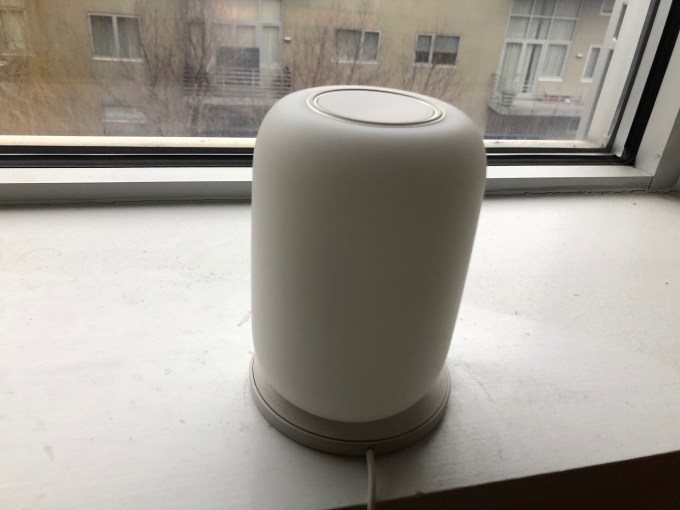
The Glow is also portable, so if you wake up in the middle of the night and need to get a glass of water or use the restroom, you can just pick it up and carry it with you, rather than turning on a bright kitchen light. You can also set a wake-up time so that the Glow gradually lights up again.
“We’ve leveraged the good and the bad of light so that it would help you fall asleep, stay asleep and go back to sleep into the night,” Chapin said.
In fact, if you’re a frequent traveler who struggles with jet lag, you can even “freeze” the settings, pack the Glow in your suitcase and take it with you to your destination, though Chapin admitted, “We don’t know how many people are going to do that.”
In addition to buying a single Glow for $89, you can also get a two-pack for $169. The light comes with a small base for wireless charging.
The Casper team sent me a couple of Glows to try out for myself. I wasn’t able to download the app, but the Glow was indeed largely controllable by gesture. (My only real complaint is that the wiggle-for-dim-light only worked sporadically for me.)
Keep in mind that I didn’t have a particularly sophisticated or sleep-friendly lighting setup before this, and that it’s hard to know how I would have slept on any given night without the Glow. Still, I can say that I found myself getting sleepier as the light dimmed, and I seemed to pass out more quickly and reliably than normal. And since the Glow is pretty small (five inches tall and three inches wide), it was easy to find room for it in my cluttered bedroom, and to carry it around when necessary.
It sounds like Casper has plans for more products that go beyond bedding, addressing broader environmental factors that affect sleep.
“You can expect a lot more from us in the same vein, trying to help people [sleep] across the board, in a multivariate way,” Parikh said. “It’s a very complicated problem.”


Apple has released an update on its spending in the U.S. According to the company, Apple is now working with 9,000 different companies in the U.S. Those companies mostly work on hardware components and chipsets for Apple’s devices.
You may remember that Apple announced last year it would spend $390 million to expand Finisar’s production in the U.S. Finisar has been working on a key component for the iPhone and iPad Pro — the TrueDepth camera system.
That investment was part of a commitment to spend $1 billion in U.S.-based companies with its Advanced Manufacturing Fund in order to build new facilities and help manufacturers.
But Apple is already spending much more money with American companies. In 2018 alone, Apple spent $60 billion, which represents a 10 percent increase compared to 2017. The company estimates that it represents around 450,000 jobs.
In addition to Finisar, Apple names a few partners in its announcement — Corning, Cincinnati Test Systems and Broadcom.
Finally, if you take into account everybody working for Apple in one way or another, there are now 2 million people in the U.S. helping Apple as an employee, a contractor, a store manager, a supplier, etc. This number is up from 600,000 in 2011.


The gaming world is excited to play Anthem, BioWare’s answer to Destiny and other big-budget online shooters — but an exclusive preview weekend for the mech-flying game has struggled to get off the ground. Of course, it wouldn’t be a game launch these days without a few hiccups to spice things up, but it is a little embarrassing.
The 40-gigabyte demo was made available today to those who had pre-ordered the game, as well as press and other “VIPs.” The game, announced last year at E3, is a loot-focused shooter where you pilot mechs through a huge open world, engage in cooperative combat and exploration and all that.
At least, so they say. Reports immediately came flooding in on forums and social media that not only was Origin, the service on which the demo is offered, failing to function properly, but that the game itself wasn’t connecting to servers, or if it did, wouldn’t load beyond the intro sequence.
I encountered this myself; after eventually getting loaded and logged in, I managed to get into the starting town area where you will, in the full game, upgrade your gear, accept quests and so on. But when I attempted to launch the first mission or otherwise enter the actual game world, the loading bar would stop about 95 percent of the way done and stay there forever (I waited about five minutes and reloaded a couple times to make sure it wasn’t just my aging rig). Those who made it all the way in complained of lag and glitches.
No one really ever expects a major title, especially one with a major online components, to launch even in a limited way without a few speed bumps, but something like this can really put the brakes on a hype train. Publisher EA admitted to the laundry list of issues from a support Twitter account:
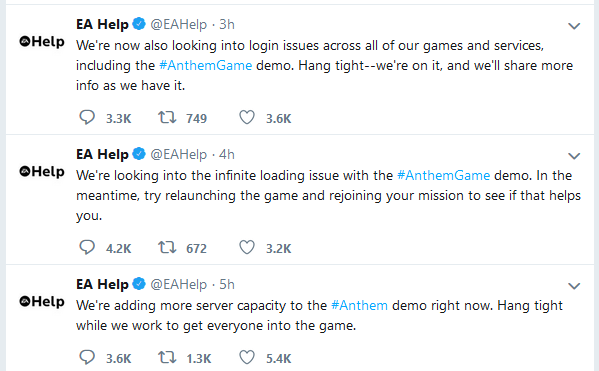
Funnily enough EA Help’s own servers were having trouble as well, so not only could people not play Anthem, they couldn’t report that they couldn’t play Anthem.
Patience is a necessary virtue in today’s AAA game launches, but the people hoping to play this weekend aren’t randos but paying customers; this preview demo weekend was supposed to be a pre-order bonus, but the first day is a bust so far. Considering BioWare and EA knew exactly how many players could be trying to connect today — and those numbers are likely far less than those who will try the open beta or connect on launch day — it’s rather odd that they were seemingly caught so off-guard.
Anthem is certainly promising and the developers have gone out of their way to assure players that many of the hated practices of online games these days would not find a home on their platform. But launch problems always jar the confidence of undecided buyers, and there’s almost no question that the game will be better a month or two after its actual debut. Launch numbers could be affected by players not believing the game is ready to play, and therefore not being willing to pay.
I fully anticipate these issues getting resolved at some point soon, however, and will collect my impressions of the game in a separate post when that happens.


Apple has registered new iPad models in the Eurasian Economic Commission reference database. The Moscow-based commission keeps a product database pretty much like the FCC in the U.S. And it sounds like Apple is about to launch a new iPad mini 5 and an updated entry-level iPad.
That database has shown information on new Apple products in the past — MySmartPrice first discovered today’s new filings. There are two different filings that both mention new tablets that run iOS 12.
The first filing mentions five different models, while the second one mentions two different models. Usually, each configuration gets a different model number depending on storage and LTE capabilities.
It lines up with previous rumors that mentioned a new iPad mini and a new cheap iPad for early 2019. Ming-Chi Kuo expects an updated iPad mini with a 7.9-inch display. The device hasn’t been updated for years and many believed that Apple would stop updating it. But if you still like that form factor, Apple may have something new for you.
When it comes to the normal-size iPad, Apple last updated the 9.7-inch iPad in March 2018. While all eyes are on the iPad Pro, many people are still looking for the cheapest iPad they can get. And the $329 9.7-inch iPad is a good deal. Apple usually updates that model every year.
Today’s filings don’t say what those devices will look like, unfortunately. It’s unclear if Apple is going to reduce the bezels of those devices, add a Face ID sensor or switch to USB-C.


 The state of New York's Attorney General has settled a case with a company that made millions of dollars selling likes, comments and followers on social media, according to CNN. The activity of the now-defunct Devumi was discovered as part of a probe...
 Social networks like Facebook and Twitter have set up war rooms and disclosure systems to warn of potential election meddling, but the Canadian government doesn't believe that's good enough. The country's Democratic Institutions Minister has establis...
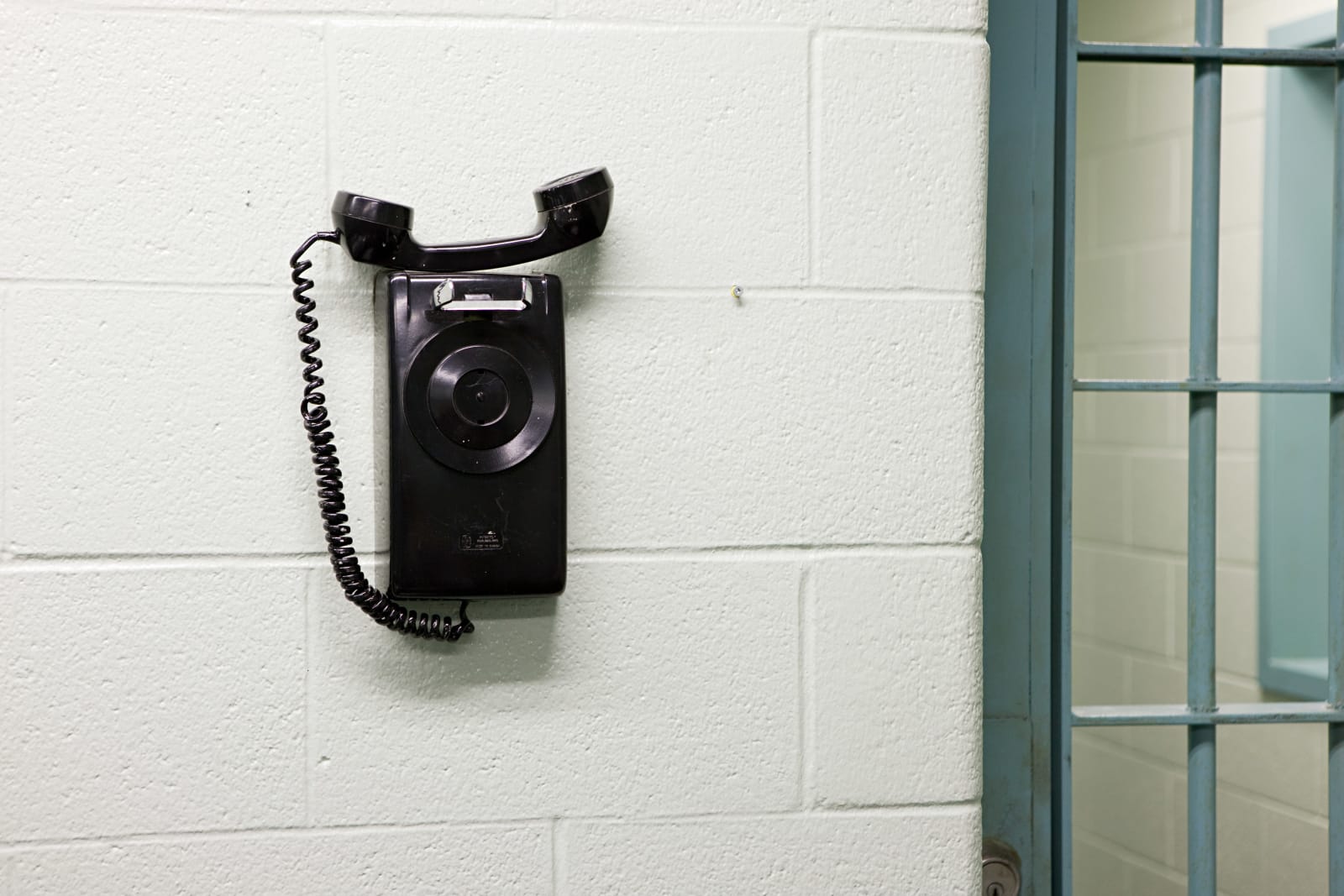 Prisons across the United States are reportedly building biometric databases that include voice recordings of incarcerated people, according to The Intercept. The report cites contracting documents for the state of New York's prison system, as well a...
 The US government plans to turn the tables on North Korea-linked hackers trying to compromise key infrastructure. The Justice Department has unveiled an initiative to map the Joanap botnet and "further disrupt" it by alerting victims. The FBI and t...
 Apple is grappling with another employee accused of stealing autonomous vehicle trade secrets. NBC News has learned that the FBI arrested Jizhong Chen for allegedly trying to swipe self-driving car tech and pass it along to a Chinese competitor. Afte...
 With the upcoming release of Nike's $350 Adapt BB, self-lacing shoes are set to become more commonplace, and Puma isn't about to let its rival take all the credit. After all, the German company showed off its own self-lacing sneaker, the Autodi...
 Criterion's curated selection of films will be available for you to stream again in a few short months. The standalone Criterion Channel service will arrive on April 8th in the US and Canada, and you'll be able to stream the movies on desktop, Apple...