Showing posts with label Gadgets – TechCrunch. Show all posts

Tuesday, November 10, 2020

Josh.ai launches a ‘nearly invisible’ Amazon Echo competitor that’s the size of a coin

In the past several weeks we’ve seen refreshes and product expansions from about every facet of the smart home virtual assistant world. Apple launched the HomePod Mini, Google offered a long-overdue refresh of the Google Home and Amazon found even more speaker shapes to shove Alexa into.

Today, we’re getting an addition from a startup competitor. Josh.ai has aimed to build out a niche in the space by building a smart assistant product that’s designed to be professionally installed alongside other smart home wares, and they announced a new product this afternoon.

The device, Josh Nano, fully buys into a more luxury home-focused niche with a low-profile device that appears to be a little bit bigger than a half-dollar, though the bulk of the device is embedded into the wall itself and wired back to a central unit via power-over-ethernet. The device bundles a set of four microphones eschewing any onboard speaker, instead opting to integrate directly with a user’s at-home sound system. Josh boasts compatibility with most major AV receiver manufacturers in addition to partnerships with companies like Sonos. There isn’t much else to the device; a light for visual feedback, a multi-purpose touch sensor and a physical switch to cut power to the onboard microphones in case users want extra peace of mind.

Image via Josh.ai

The aim of the new hardware is to hide the smart features of a home and move away from industry-standard touchscreen hubs with dated interfaces. By stripping down a smart home product to its essential feature, Josh.ai hopes it can push more users to buy in more fully with confidence that subsequent hardware releases won’t render their devices outdated and ugly. The startup is taking pre-orders for the device (available in black and white color options) now and hopes to start shipping early next year.

Powering these devices is a product the company calls Josh Core, a small server which basically acts as a hub for everything Josh talks to in a user’s home, ensuring that interactions between smart home devices can occur locally, minimizing external requests. The startup will also continue selling its previously released Josh Micro, which integrates a dedicated speaker into the wall-mounted hardware.

Though Josh.ai partners directly with professional installers on the hardware, the startup has been scaling as a software business, offering consumers a license to their technology on an annual, five-year or lifetime basis. The price of that license also differs depending on what size home they are working with, with “small” rollouts being classified as homes with fewer than 15 rooms. In terms of hardware costs, Josh.ai says that pricing varies, but for most jobs, the average cost for users works out to be something like $500 per room.

Massive tech companies naturally design their products for massive audiences. For startups like Josh.ai this fact provides an in-road to design products that aren’t built for the common needs of a billion users. In fact, the selling point for plenty of their customers comes largely from the fact that they aren’t buying devices from Google, Amazon or Apple and hard-wiring microphones that feed back to them inside their home.

Though 95% of the startup’s business today focuses on residential, going forward, the company is also interested in scaling how their tech can be used in commercial scenarios like conference rooms or even elevators, the startup tells me.


from Gadgets – TechCrunch https://ift.tt/2GODfhX
via IFTTT https://ift.tt/2Iotfge

Monday, November 9, 2020

Mirror founder Brynn Putnam on life with Lululemon — and whether or not she sold too soon

Brynn Putnam has a lot to feel great about. A Harvard grad and former professional ballet dancer who opened the first of what have become three high-intensity fitness studios in New York, she then launched a second business in 2016 when — while pregnant with her son — she was exercising at home and couldn’t find a natural way watch a class on her laptop or phone. Her big idea: to install a mirrored screen in users’ homes that’s roughly eight square feet and through which they could exercise along to all manner of streamed and on-demand exercise classes through a subscription package costing just $39 per month.

If you’ve followed the home fitness craze, you may know already that idea, Mirror, quickly took off with celebrities, who gushed about the product on social media. The company also attracted roughly $75 million in venture funding across several fast rounds. Indeed, by the end of last year, people had bought  “tens of thousands” of Mirrors, according to Putnam, and she was beginning to envision Mirror’s as content portal that might feature fashion, enable doctor’s visits, and bring both kids classes and therapy into the home, among other things. As she told The Atlantic back in January, “We view ourselves as the third screen in people’s homes.”

Then, in June, the company sold for $500 million in cash — including a $50 million earn-out — to the athleisure company Lululemon. For Putnam, the deal was too compelling, allowing her to secure the future of her company, which continues to run as a subsidiary. Investors might have liked it, too, given that it meant a fast return on their investment, not to mention that Mirror had steep competition, including from Peloton, the biggest giant in the home fitness market.

Still, as the pandemic has raged on, it’s easy to wonder what the young company might have become, given the amount of time that people and their children are spending at home and in front of their screens. As it happens, that’s not something about which Putnam says she spends time worrying about, including as Lululemon begins to put more muscle behind Mirror — which Putnam is still running with a 125 employees.

Just today, for example, Lululemon announced that it is installing Mirrors in 18 of its now 506 U.S. locations, including in San Francisco, Washington, D.C., and Miami. Lulemon hasn’t start selling products directly through Mirror yet but “shoppable content” is “certainly on our radar,” says Putnam. And the company’s revenues, expected earlier this year to reach $100 million, and now on target to surpass $150 million revenue, she says.

We talked with Putnam late week about life at Lululemon, what could have been, and what will be in a chat that’s been edited lightly for length. (You can listen to the full conversation here.)

TC: People who follow the company know why you started Mirror, but how, exactly, did you start Mirror?

BP: In the case of Mirror, I had this concept for the product, and then really, the first step was buying a Raspberry Pi, a piece of one-way glass, and an Android tablet, and assembling it in my in my kitchen to see if this idea in my mind would be able to work and come to life.

TC: Did you take any coding classes? People might not imagine that a former ballet performer with a chain of fitness studios would put something together like that in her kitchen.

BP: No, I’ve been very fortunate to have a husband who has a bit of a development background. And so he helped me to put the first little bit of code into the Mirror and just really ensure that the concept I had in my mind could be brought to life. And then from there, obviously, over time, we hired a team.

TC: Are they manufactured in the States? In China? How did you start figuring out how to put those pieces together?

BP: I had heard a lot of hardware horror stories about teams working with design agencies to design these beautiful products and who, by the time they actually got to manufacturing, found out that something wasn’t feasible about their design when it came to commercialization or just running out of money in the process. So I actually went backwards. I drew a sketch on a napkin and did a small set of bullets of the things that I thought were really just crucial to make the product a success. And then I went to find factories in China that were familiar with digital signage, working with large pieces of glass, large mirrors, learned about their systems and processes, and then brought it back to the U.S. to a local manufacturer here on the East Coast to refine into a prototype. And then we eventually moved to Mexico when we were ready to scale.

TC: The mirror is about $1,500 dollars. How did you go about winning the trust of consumers that would lead them to make such a sizable investment?

BP: When you’re when you’re building an innovation product, you can’t really compete on specs and features like you do with phones or laptops. So you’re really building building a brand, which means that you’re telling stories. And in our case, we spent a lot of time, from the very early days, really imagining the life of our members and figuring out how to craft that story and tell that story.

And then we were fortunate early on to have members fall in love with the product. And then they started to tell our story for us. So once you have that customer flywheel that starts to kick in, your job becomes much easier.

TC: You had actors, celebrities, designers, and social media influencers talking about their Mirrors. Was it just a matter of sending it off to a few people who started getting online and sharing [their enthusiasm for the product] with their followers? Was it that simple?

BP: We knew that we wanted to make big bets early on to make the Mirror brand seem larger and more established than it was, because it’s a premium product in a new category. And we wanted people to trust in us and the brand. And so we did things like out-of-home advertisements quite early, we moved into television quite early, and we also did some very strategic early celebrity placements. But the way in which the celebrity placements grew and expanded was very much not intended and was just kind of a fascinating early example of the network effects of the product. One celebrity would get it and then another would see it in their home. Or they would see it in their stylist’s home or their agent’s home. And it spread through that community very, very quickly in one of the earliest examples of member love for us.

TC: How did you convince early adopters that your business had staying power, and were investors persuaded as quickly?

BP: Trying to assure customers that they wouldn’t invest in this Mirror, and then the company would go out of business in a few years and they would be they’d be left with a piece of hardware but no access to the content or the community that they’d fallen in love with was very important. It was one of the factors in deciding to partner with Lululemon and have the incredible brand stability and love of such a premium global brand.

In terms of fundraising, I think we were we were really fortunate to have a product that once you saw it, you got it and fell in love with it in a market that was clearly big and growing, with a really good competitive data point in Peloton.

TC: Who started that conversation with Lululemon? Were you talking to Peloton and other potential acquirers?

BP: I’ve been really fortunate to actually work with Lululemon for my entire fitness career. There was a team of Lululemon educators here in New York who were the very first clients of my studio business, and frankly, in many ways were responsible for helping that business to grow and thrive and to give me confidence as a first-time small business owner. Then we reconnected with Lululemon about a year before the acquisition as an investor; they made a small minority investment in the company. And we began to work together on various projects . . .From there, really, the partnership just grew. Mirror was not for sale. We were not looking for an acquirer. But it’s really your responsibility as a founder to always be weighing your vision, your responsibility to your team and your responsibility to your shareholders. And so when the opportunity presented itself — before COVID actually — it felt like really just too good an opportunity to pass up.

TC: But you also you had ambitions of turning this into a much broader content portal where you would maybe have doctor visits and other things, which I would think won’t happen now.

BP: The vision for Mirror very much remains the same and we’re excited to continue to expand the types of content that we offer via the Mirror platform, really with an eye toward any type of immersive experience that makes you a better version of yourself. So I think you will see a broader range of content from us in the coming years.

TC: You’ve mention in the past as a selling point that Mirror is a product that’s used by families. Is there children’s programming or is that coming soon?

BP I think one of the things that surprised us but delighted us about Mirror has been the number of households that have over two members. More than 65% of our households have over two members, which means that you’re often getting younger members of the household involved. I do think that is a function of both the versatility of the platform and the fact that multiple people can participate in more content. At the same time, we’ve actually seen the number of users under 20 grow about 5x during the COVID months as young adults have returned home to be with their their families or teenagers have started doing remote schooling. So we’ve leaned into that with what we call “family fun” content that’s designed to be performed by the whole family together.

TC: Do you see a secondary market for refurbished Mirrors in the future? Will there be a second version, if there isn’t already?

BP: We’ll obviously continue to to refine the hardware over time, but the real focus of the business is through improving the content, community and experience, and so for us — unlike Apple, where the goal is to really release a new model every year and continue to have folks upgrade the hardware — we focus on providing updates via the software and the content, so that we’re continuing to add value onto the baseline experience.

TC: What can people look forward to on this front?

BP: We’re taking a major step toward  building a connected community through our community feature set launching this holiday, including a community feature that enables members to see and communicate with each other and their instructor; face offs that allow members to compete head-to-head against another member of the community and earn points as you hit your target heart rate zones; and friending, so you can find and follow your friends in the Mirror community to share your favorite workouts, join programs together and cheer each other on.

TC: Are you still selling Mirrors to hotels and business outside of Lululemon?

BP: We do have b2b relationships. You can find mirrors in hotels, small gyms, buildings, residences, and then obviously direct-to-consumer through the Mirror website, the Lululemon website, and both of our stores

TC: When you look at Peloton now and how its stock has completely exploded this year,  do you think ever that you should have hung on a little longer? Do you ever think ‘maybe I sold too soon?’

I’ve woken up every day really for my entire career kind of focused on the same mission but trying to solve the problem and achieve my vision and in different ways. Which is: I really believe that confidence in your own skin is the foundation of a good and happy life. And fitness is an incredible tool for building that confidence that carries over into your personal relationships, your work performance, your friendships. And so for me, that’s always really been the North Star, which is, ‘How do we get more Mirrors into more homes and provide more access to to that self confidence?’ So I spend very little time comparing to competitors and much more time focused on our members’ needs and how to meet them.


from Gadgets – TechCrunch https://ift.tt/35cmEhr
via IFTTT https://ift.tt/32wV2lk

Despite global headwinds, Chinese hardware startups remain to take on the world

Bill Zhang lowered himself into lunges on a squishy mat as he explained to me the benefits of the full-body training suit he was wearing. We were in his small, modest office in Xili, a university area in Shenzhen that’s also home to many hardware makers. The connected muscle stimulator attached to the suit, called Balanx, is designed to bring so-called electronic muscle stimulation, which is said to help improve metabolism and burn fat.

“We are not really aiming at Chinese consumers at this point,” said Zhang, who started Balanx in 2014. “The suit is for the more savvy consumers in the West.”

Prospects for hardware makers were looking bright until two years ago when the Trump administration began setting trade barriers on China. Relations between the two countries have been deteriorating over a series of flashpoint events, from Beijing’s policy on Hong Kong to the coronavirus pandemic.

Chinese entrepreneurs don’t expect relationships between the countries to warm up anytime soon, but many do believe the new office will make “less erratic” and “more rational” policy decisions, according to conversations TechCrunch had with seven Chinese hardware startups. Chinese tech businesses, big or small, are adapting swiftly in the new era of U.S.-China competition as they continue to woo overseas customers.

Designed in China

Zhang is just one of the many entrepreneurs looking to bring state-of-the-art Chinese hardware to the world. This generation of founders no longer hawk cheap electronic copycats, the image attached to the old “Made in China” regime. Decades of knowledge transfer, product development, manufacturing, export practice and policy support have made China a powerhouse for producing new technologies that are both edgy and still widely affordable.

The Balanx smart training suit / Source: Balanx

Anker’s power banks, Roborock’s vacuums and Huami’s fitness trackers are just a few items that have gained loyal followings in several overseas markets, not to mention global household names like Huawei, Xiaomi, Oppo and DJI.

Consumer sentiment is also changing. Europeans’ perception of “Made in China” quality and innovation has “improved significantly” over the last 10 to 15 years, said Frank Wang who oversees marketing at Xiaomi-backed Dreame which makes premium home appliances including cheaper alternatives to Dyson hairdryers and vacuums.

The new players are eager to replicate the success of their predecessors. They seek media attention and retail partners at international trade fairs like CES, teach themselves Facebook and Google campaigns, and court gadget lovers on crowdfunding platforms. Investors ranging from GGV Capital to Xiaomi rush to back scrappy startups that are already shipping millions of units around the globe.

For Donny Zhang, a Shenzhen-based electronics parts supplier to hardware companies, businesses have been shrinking as soon as the trade war began. “My clients are taking the brunt because the costs of procurement have increased,” he said of those who directly or indirectly deal with American firms.

While many export-led hardware businesses loathe decreasing profitability, some learn to adapt and look for a silver lining. That has unexpectedly spurred new directions for factory owners in China. Indiegogo, one of the world’s largest crowd-funding platforms, saw the changes first hand.

“Once tariffs increase, there’s not much profit margin left for manufacturers because the middlemen already eat up the bulk of their profit,” Lu Li, general manager for Indiegogo’s global strategy, told TechCrunch.

“A good solution is for factories to skip the middlemen and sell directly to consumers with their own brands. Once the goal of brand building is clear, they often come to us because they need marketing help as a first step to establish themselves as a global consumer brand.”

The trend, dubbed “direct-to-consumers” or D2C, also plays into China’s national plan to encourage manufacturing upgrade and homegrown innovations to compete globally, an initiative that began to take shape around 2015. The development naturally makes China Indiegogo’s fastest-growing region in the last two years: in the first three quarters of 2020, businesses coming from China jumped 50% year-over-year, according to Li.

Localize

Having an appealing product and brand is just the prerequisite. Ever-changing trade policies and geopolitics have forced many Chinese businesses to localize seriously, whether that means setting up a foreign entity or building a local team.

Dreame’s wireless vacuum / Source: Dreame

For Tuya, which provides IoT solutions to device makers around the world, the trade war’s effect has been “minimal” since it has operated a U.S. entity since 2015, which employs its local sales and technical support staff. Most of its research and development, however, still lies in the hands of its engineers in India and China, the latter of which can be a potential contention point, as shown by TikTok’s recent backlash in the U.S.

“The key is compliance. We have a dedicated team of security experts to work on compliance issues. For instance, we were one of the first to get GDPR certified in Europe,” said the company’s chief marketing office Eva Na.

The company’s readiness is prompted by practical needs though. Many of its clients are large Western corporations that demand strict legal compliance in vendors, so Tuya began collecting the needed certificates early on. Connecting 200,000 SKUs today, Tuya’s footprint is found in over 190 overseas countries, which account for over 60% of its business.

Well-funded Tuya may have the financial and operational capacity to sustain an overseas team; but for smaller startups, localization can be a costly and tedious learning curve. Many opted to set up a Hong Kong entity to tap the city’s status as a global financial hub and evade trade restrictions on China, an advantage of the territory that began to crumble following Beijing’s implementation of the national security law.

Balanx, the smart training suit maker, has a Hong Kong entity like many of its export-facing hardware peers. To cope with new global headwinds, it registered a virtual company in Nevada but quickly realized the entity is of little use unless it has an on-the-ground operation in the U.S.

“Many local banks would ask for utility bills and etc. if I want to open an account, which we don’t have. We realized we must have a local team,” asserted the founder.

Hope

Zhang is positive that small companies like his own will remain under the radar in spite of U.S. sanctions. “Just avoid having any government connection,” he said.

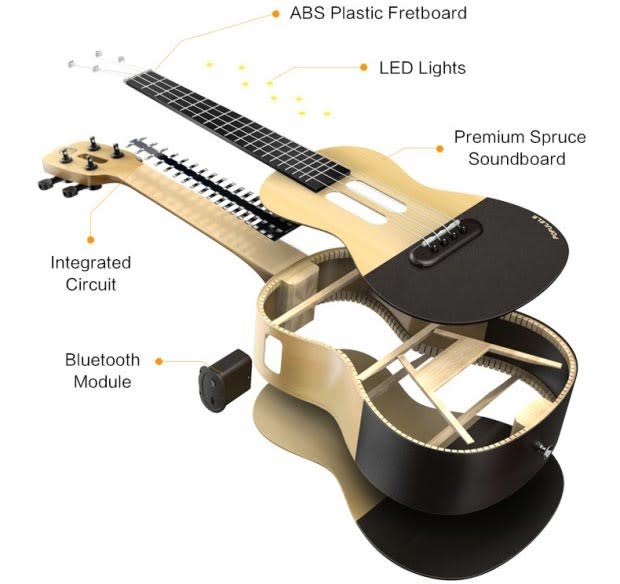
Populele, PopuMusic’s smart ukulele / Source: PopuMusic

Indeed, some of the more “benign” and niche products are continuing to thrive in their global push. PopuMusic, a Xiaomi-backed startup making smart instruments like ukulele and guitar to teach beginners, is one. “We aren’t affected by the trade war. We are in a business that’s neither threatening nor aggressive,” said Zhang Bohan, founder of PopuMusic, which counts the U.S. as one of its biggest overseas markets.

Chinese brands are also seeing their edge as the coronavirus sweeps across the globe and confines millions at home. Hardware makers like Balanx, Dreame and PopuMusic have long learned to master e-commerce and logistics in a country where online shopping is ubiquitous.

“Consumers in Europe and the U.S. are growing more accustomed to e-commerce, a bit like those in China five to eight years ago,” said Wang of Dreame.

Rather than rethinking the U.S., PopuMusic is forging further ahead by launching a new connected guitar via an Indiegogo campaign. Global expansion is at the core of the startup’s vision, the founder said. “We are global from day one. We had an English name before even coming up with a Chinese one.”

In the process of making big bucks, hardware makers may have to downplay their “Made in China” or “Designed in China” brand, said Li of Indiegogo. This could help them avoid unnecessary geopolitical complications and attention in their international push. But one has to wonder how this new generation of entrepreneurs is reckoning with their national pride. How do they deal with the mission passed down by Beijing to promote Chinese innovation in the global marketplace? It’s a line that Chinese entrepreneurs have to tread carefully in their global journey in the years to come.


from Gadgets – TechCrunch https://ift.tt/3lmnQVm
via IFTTT https://ift.tt/2UdmQqA

Sony prepares to enter the drone game with Airpeak

Sony has announced that it is entering the drone market with a new brand called Airpeak, though the specifics of the drone itself are left something of a mystery. It plans to launch the project next spring.

The barebones announcement says only that Sony has been inspired by the “recent proliferation” of drones and the changes they have caused in both the industrial and creative sectors.

Airpeak will focus on multiple industries as well, though it has its work cut out for it if it intends to go up against DJI, which has become the first choice in the consumer UAV sector.

Sony describes the drone as being developed within “the field of AI robotics,” which, along with the aim to enable drone use where it was previously difficult to do so, suggests Sony plans to integrate a fair amount of intelligence into the drones’ systems.

Small UAVs have gotten smarter and smarter, able now to avoid obstacles, recognize other flying objects, and navigate between buildings without any intervention from their human operators. But many of these capabilities are still essentially theoretical rather than widely deployed.

Beyond the name, general flavor of the project, and a render of what is almost certainly a rotor, that is the sum total of what we know about Sony’s new project. Expect more to be posted to the official website in time.


from Gadgets – TechCrunch https://ift.tt/3eFLEAW
via IFTTT https://ift.tt/36nVXWz

Wednesday, November 4, 2020

DJI’s pint-sized Mavic Mini gets camera and connection upgrades

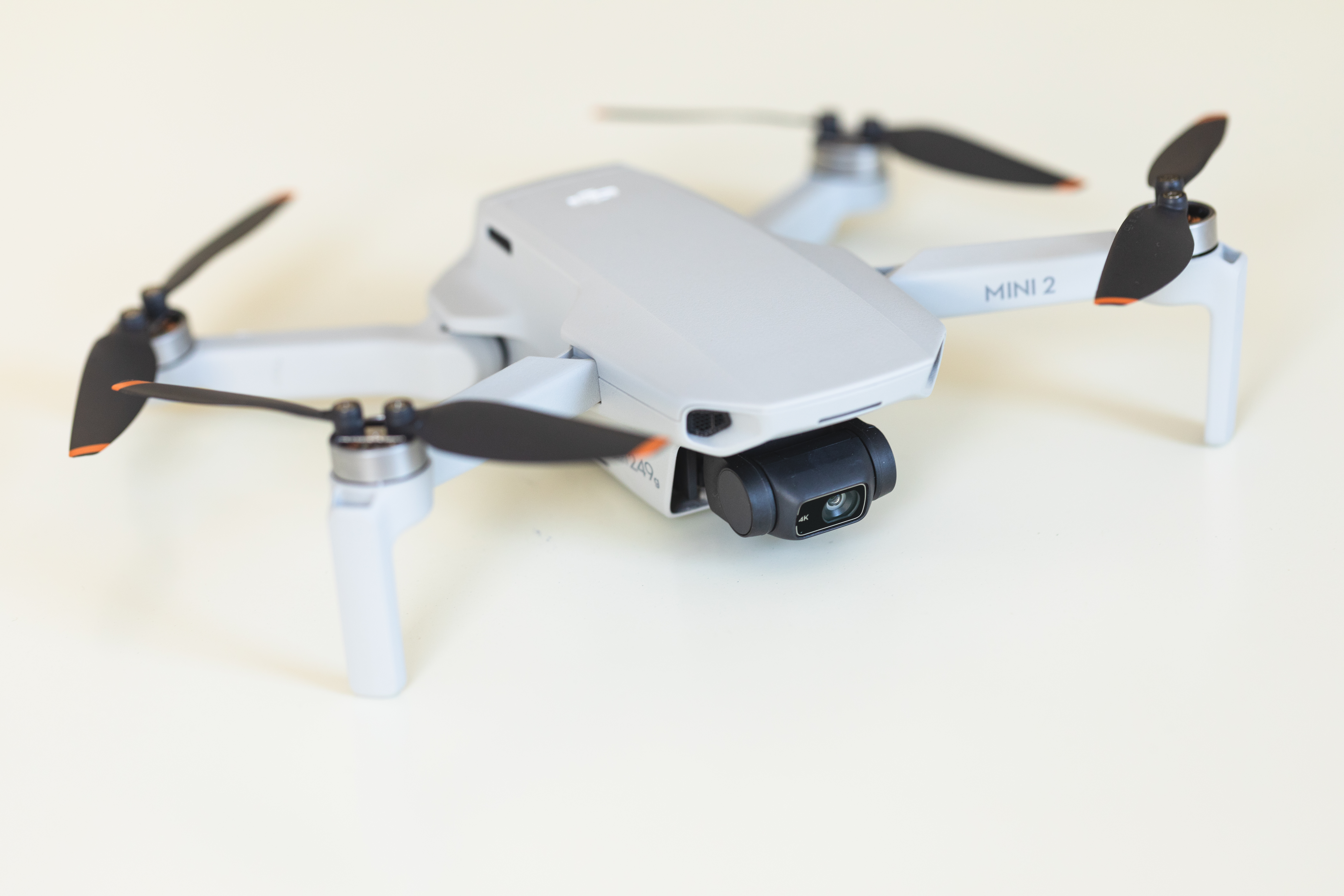
We dug DJI’s Mavic Mini when the drone arrived last year. As Matt noted in his review, “It packs everything critical to be a quality drone. It has a good camera, good range and a good controller. It holds up well in the wind and is quick enough to be fun.” Today, DJI improves two of those things with the arrival of the Mini 2.

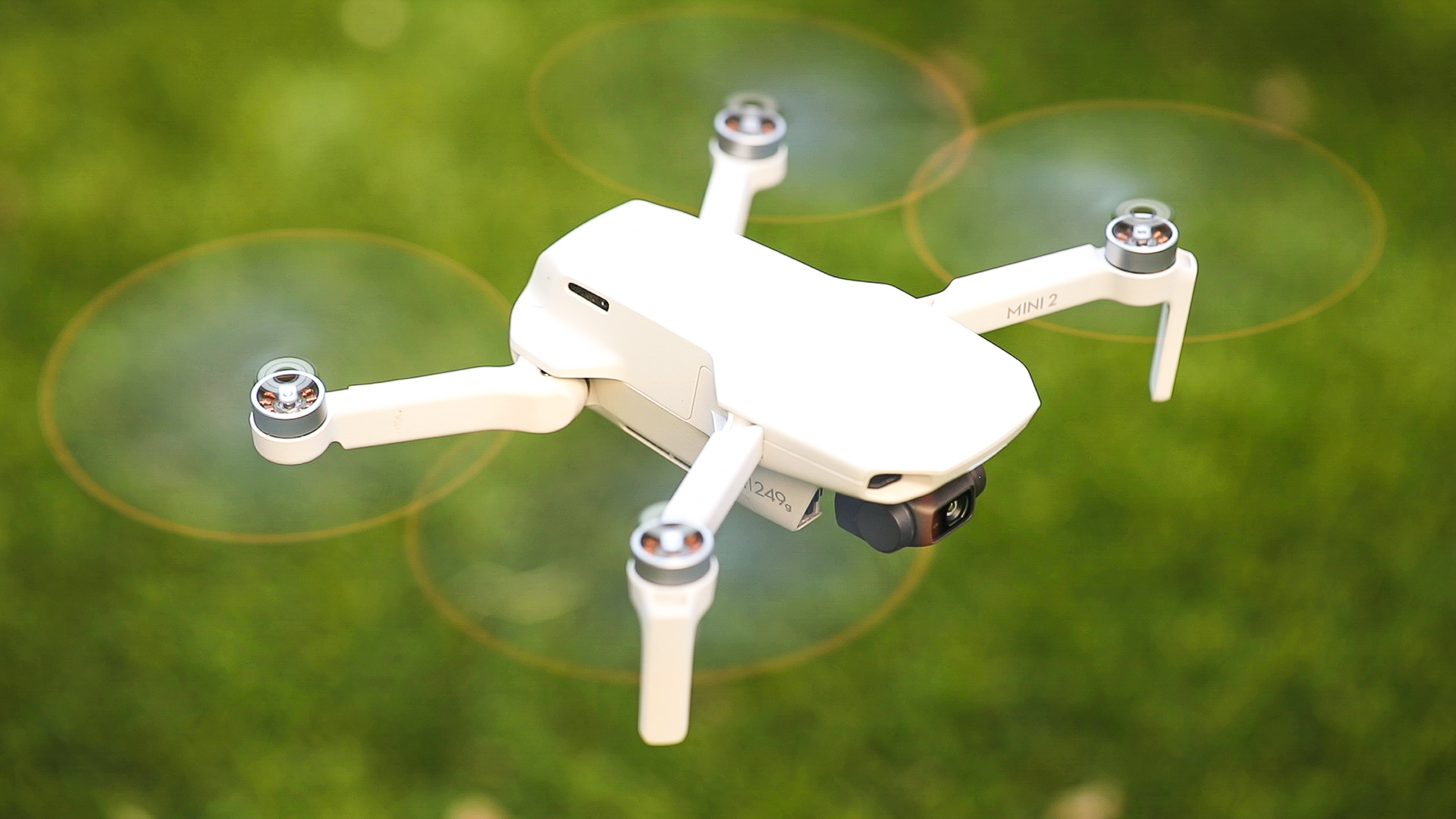
The new version, which hits retail today, is more refinement than redefinition. This is one of those cases where that’s perfectly fine, as the first release was a solid one, owing to the learnings of several generations of DJI and Mavic drones. The size and weight are essentially the same here. The Mini 2 weighs 249 grams — which comes out to about 0.55 pounds. It folds up and can be stashed away in a bag.

Image Credits: Gregory Manalo

The camera is probably the biggest upgrade here. The system is now capable of shooting 4K videos at 30 FPS. Stills, meanwhile, are 12-megapixels, and there’s 4x digital zoom (which DJI says is capable of up to 2x and still offer lossless quality). I suspect zoom is going to be a continued spot for improvement on these systems, going forward.

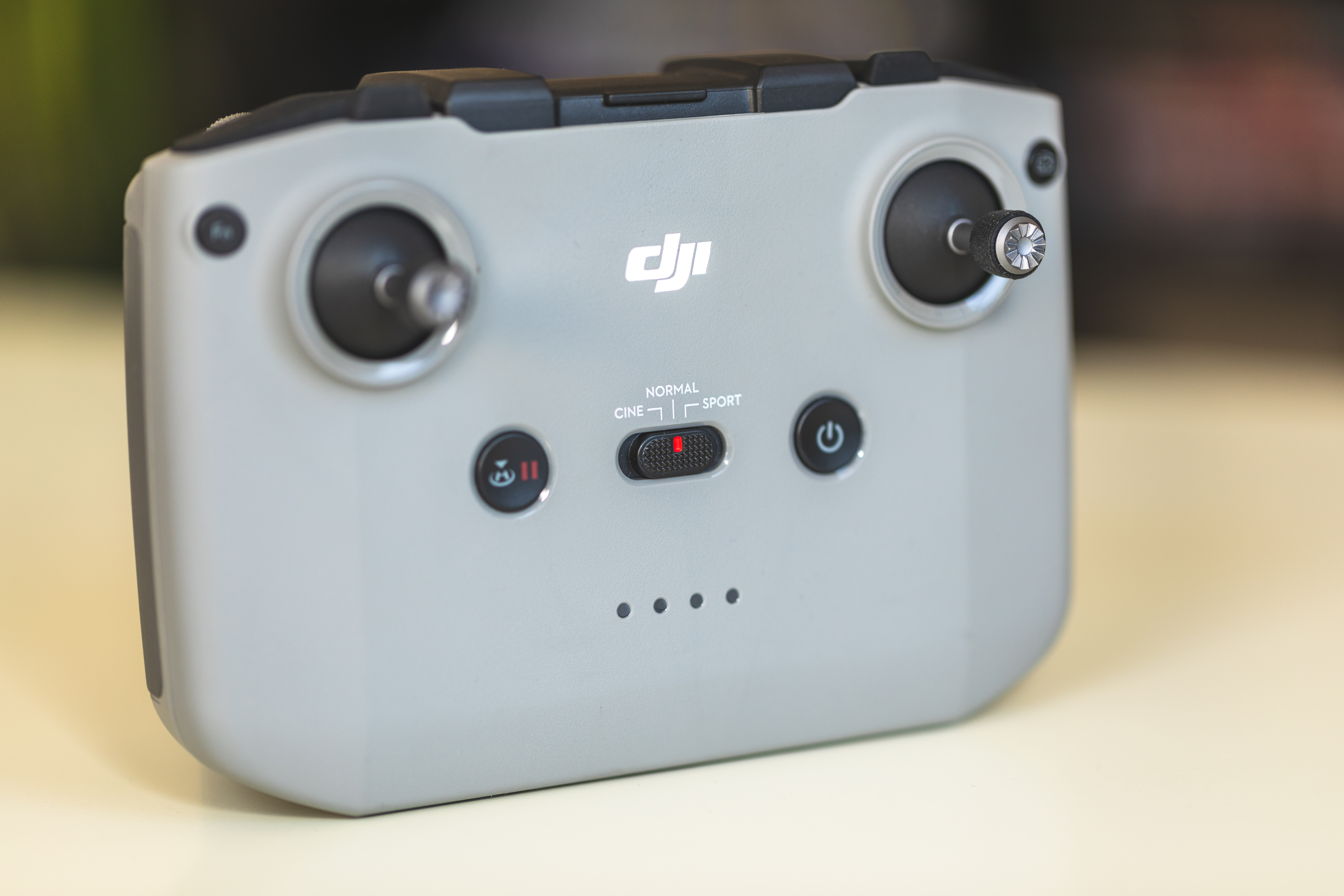
The other big change is the arrival of DJI’s proprietary OcuSync wireless technology — specifically OccuSync 2.0 here. The technology is also available on the latest Mavic Air. Per DJI:

OcuSync 2.0 is DJI’s world-renowned transmission technology responsible for ensuring stable, long distance, and reliable connection between the remote controller and the drone. Dual-frequency technology automatically switches between channels to help against interference.

Image Credits: Gregory Manalo

Among other things, the upgrade means a transmission rate of 19 km — around 150% of the range its predecessor delivered. Though DJI has to remind you here that you really ought to keep the tiny drone in your line of sight while operating. The battery should give you a solid 31 minutes (a slight improvement over the original’s stated 30-minute flight time).

DJI’s preprogrammed image capture is always a highlight. There are five quick-shot modes (Dronie, Helix, Rocket, Circle, Boomerang), three panoramas (Sphere, 180 and Wide-Angle) and two image modes (Triple Shot and Timed Shots).

Image Credits: Gregory Manalo

There’s a bit of a notable price bump here. The system now starts at $449 (up from $399), which includes the drone, remote and a single battery; $599 will get you two additional batteries, a charging hub and a carrying case — a solid addition.


from Gadgets – TechCrunch https://ift.tt/3etsDl4
via IFTTT https://ift.tt/2I2a4bF

Monday, November 2, 2020

Raspberry Pi Foundation announces the cute little Raspberry Pi 400

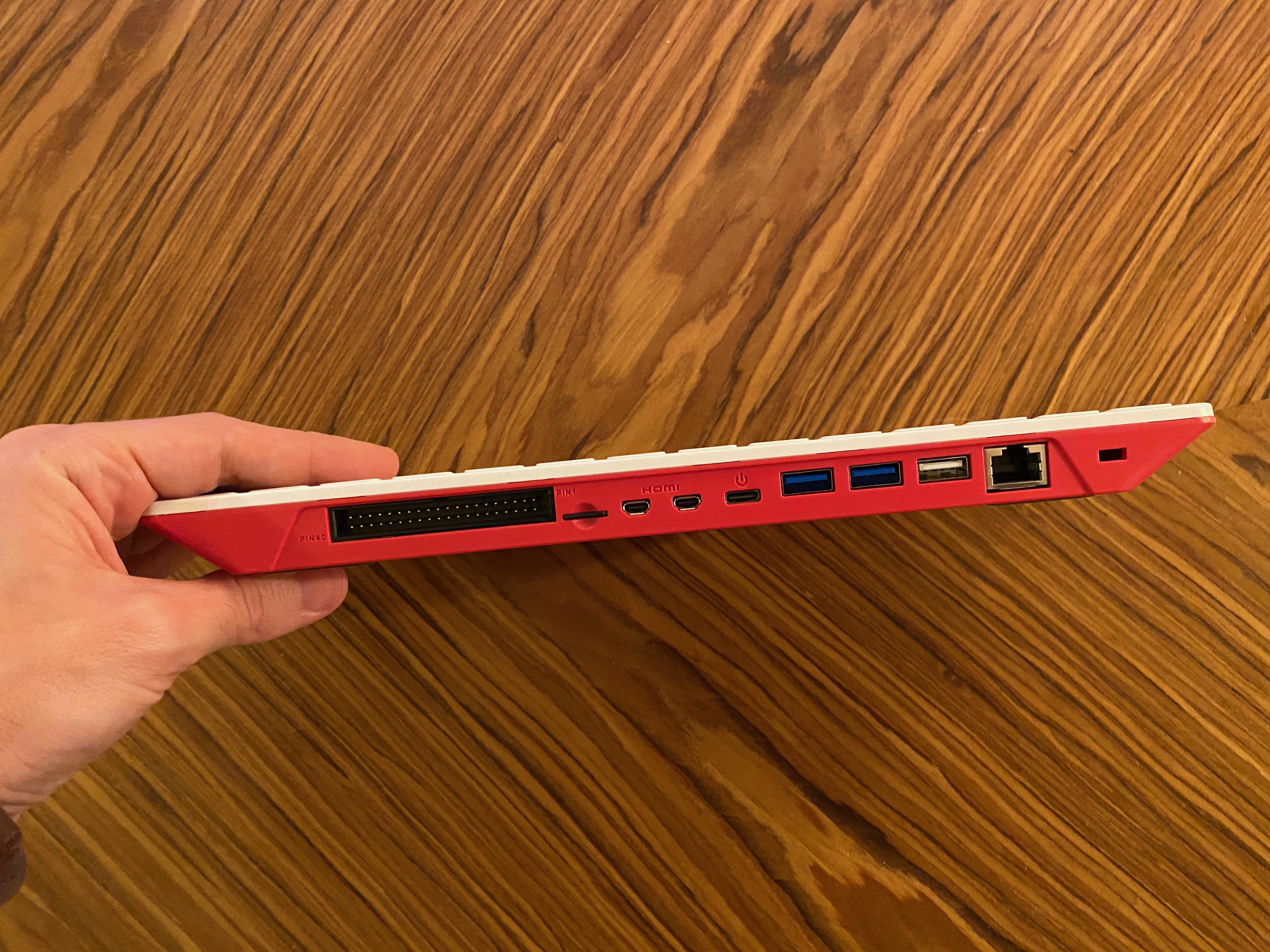
This is the Atari 400 Raspberry Pi 400. The Raspberry Pi Foundation is launching a new product today — and it’s a brand new device. As you can see on the photo, the Raspberry Pi 400 is a computer integrated in a compact keyboard that costs $70.

And it is the easiest way to get started with a Raspberry Pi. If you’re not familiar with the Raspberry Pi, it’s a single-board computer with a lot of connectors that is the size of a deck of cards.

You can give it to a kid so that they can play around with a terminal, you can use it for your weekend projects as the computing brain or you can give it to your grandparents to replace their slow Windows XP computer that they use to receive emails.

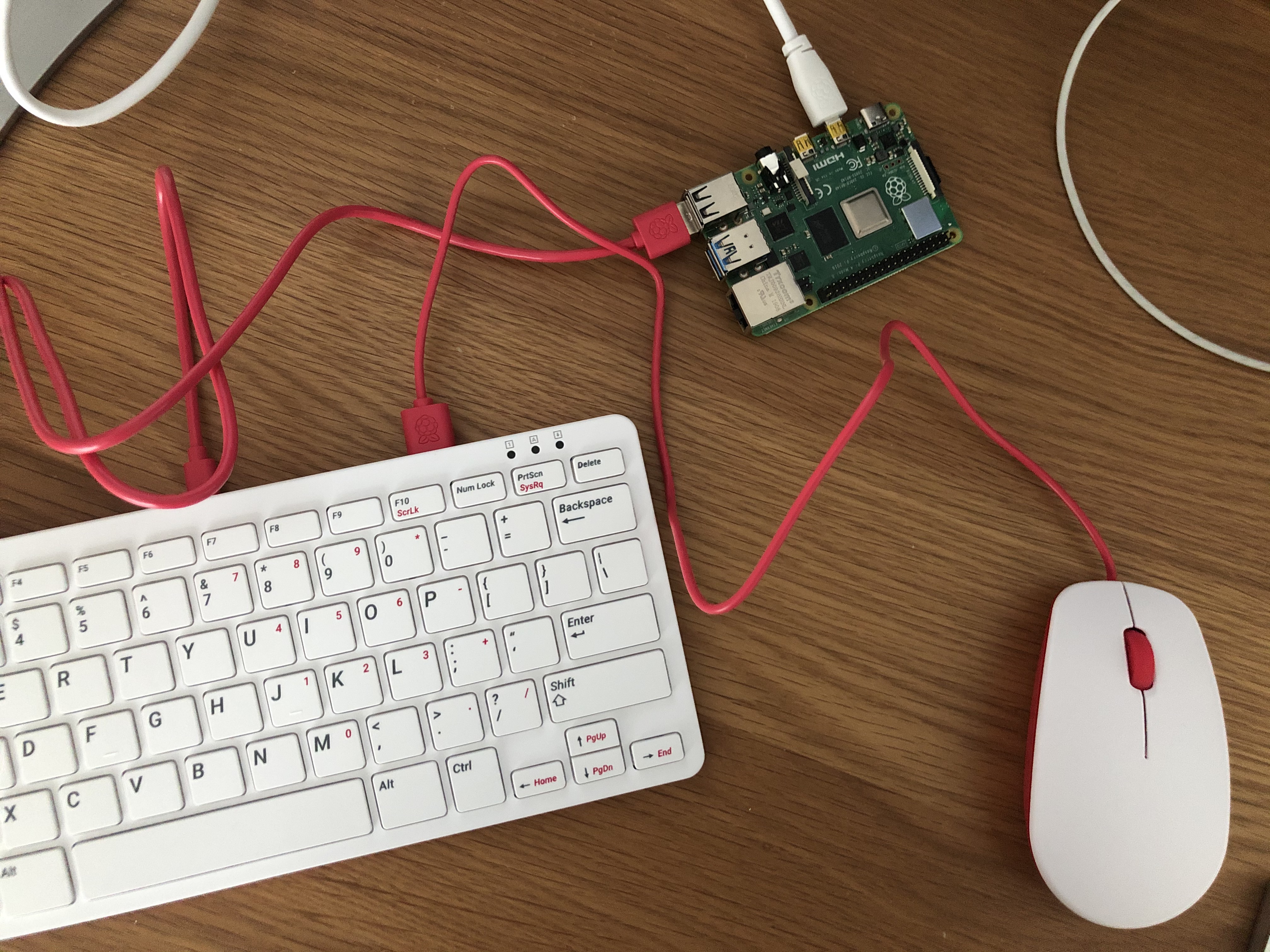
Last year, when the Raspberry Pi Foundation introduced the Raspberry Pi 4, the foundation also used this opportunity to release a cute mouse and a keyboard. Of course, you could use these accessories with a Raspberry Pi. And your basic setup would look something like this:

Image Credits: Romain Dillet / TechCrunch

Those are great goodies for Raspberry Pi fans. And yet, there are many, many keyboard and mouse manufacturers out there. Building their own mouse and keyboard didn’t really make sense.

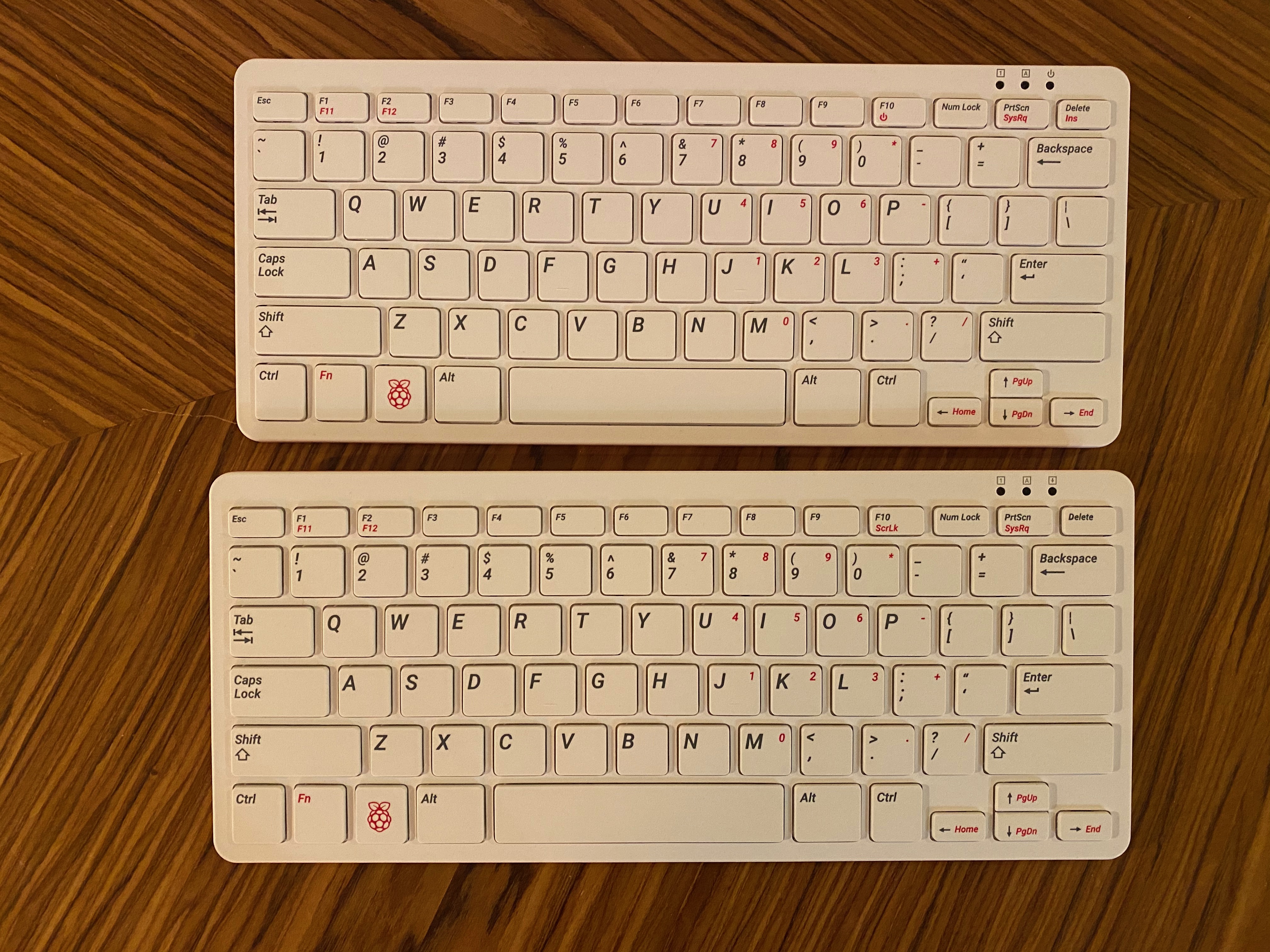
It turns out that the Raspberry Pi Foundation had another idea in mind. The Raspberry Pi 400 is essentially the exact same keyboard — but with an integrated Raspberry Pi. Their next project has been sitting there right in front of us for the past year.

Raspberry Pi 400 (top) and Raspberry Pi keyboard (bottom). Image Credits: Romain Dillet / TechCrunch

The Raspberry Pi Foundation has already sent me a Raspberry Pi 400 to try it out. While many of my colleagues are excited about the PlayStation 5 and the Xbox Series X, I was also really excited about receiving this new device.

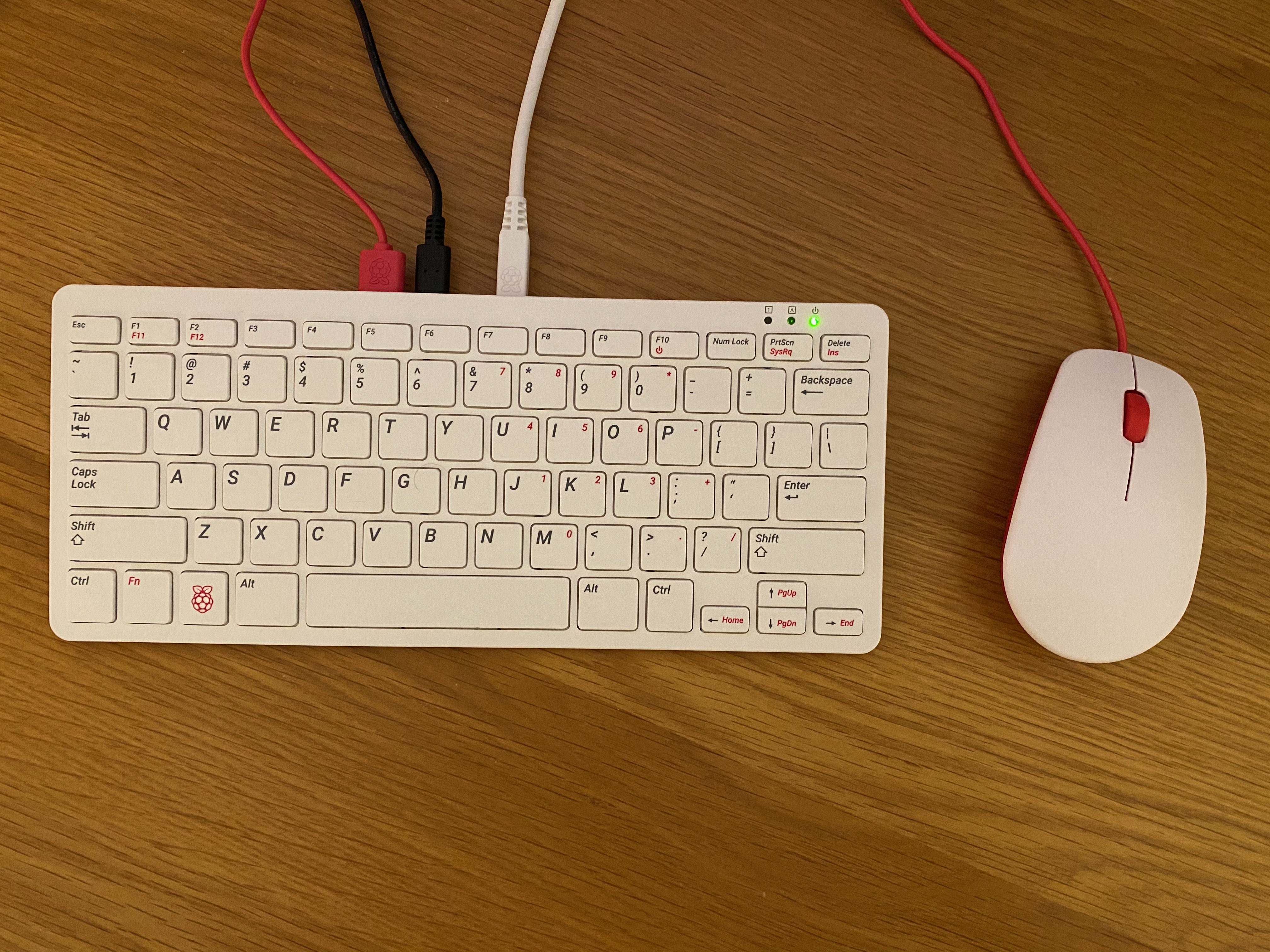
Because, yes, the Raspberry Pi 400 (or, as TechCrunch’s Brian Heater called it, the PiStation) looks really cute. You plug a couple of cables and you’re ready to go. As far as I can see, it’s a fanless device so it doesn’t make any sound when it’s on.

Image Credits: Romain Dillet / TechCrunch

Putting a computer inside a keyboard is nothing new. You could even say that personal computers started this way. Back in the 1980s, you could plug your computer-in-a-keyboard to your TV and get started right away.

At some point, computers became more complicated. You had to buy a computer tower, a display, a mouse, a keyboard, etc. Laptops reversed this trend by packing everything you need in one device. But laptops aren’t perfect either.

The Raspberry Pi 400 is a great device for kids. In many ways, it’s much more powerful than a Chromebook. You can learn a lot more about computers and you feel less restricted in what you can do.

I could see it in schools, at home in the play room or on a shelf waiting to be plugged to a display. This is a great way to get started playing around with computers.

Image Credits: Romain Dillet / TechCrunch

It gets more interesting when you think about older kids. Many people have said that closed schools have been particularly challenging this year, especially because you don’t necessarily have enough computers for everyone in your home.

If your kid is old enough to get a smartphone, that doesn’t mean they have a comfortable setup for remote classes. The Raspberry Pi 400 is a cheap device that could fill that gap. Moreover, the Raspberry Pi 400 could be a good way to separate school from leisure activities (and social networks).

Now let’s talk about specifications. The Raspberry Pi 400 is pretty similar to a Raspberry Pi 4, but not exactly. It has an ARM-based system on a chip (64-bit quad-core ARM Core-A72 at 1.8GHz for those who are curious). It comes with 4GB of RAM, Wi-Fi, Bluetooth 5.1, Bluetooth Low Energy and Gigabit Ethernet.

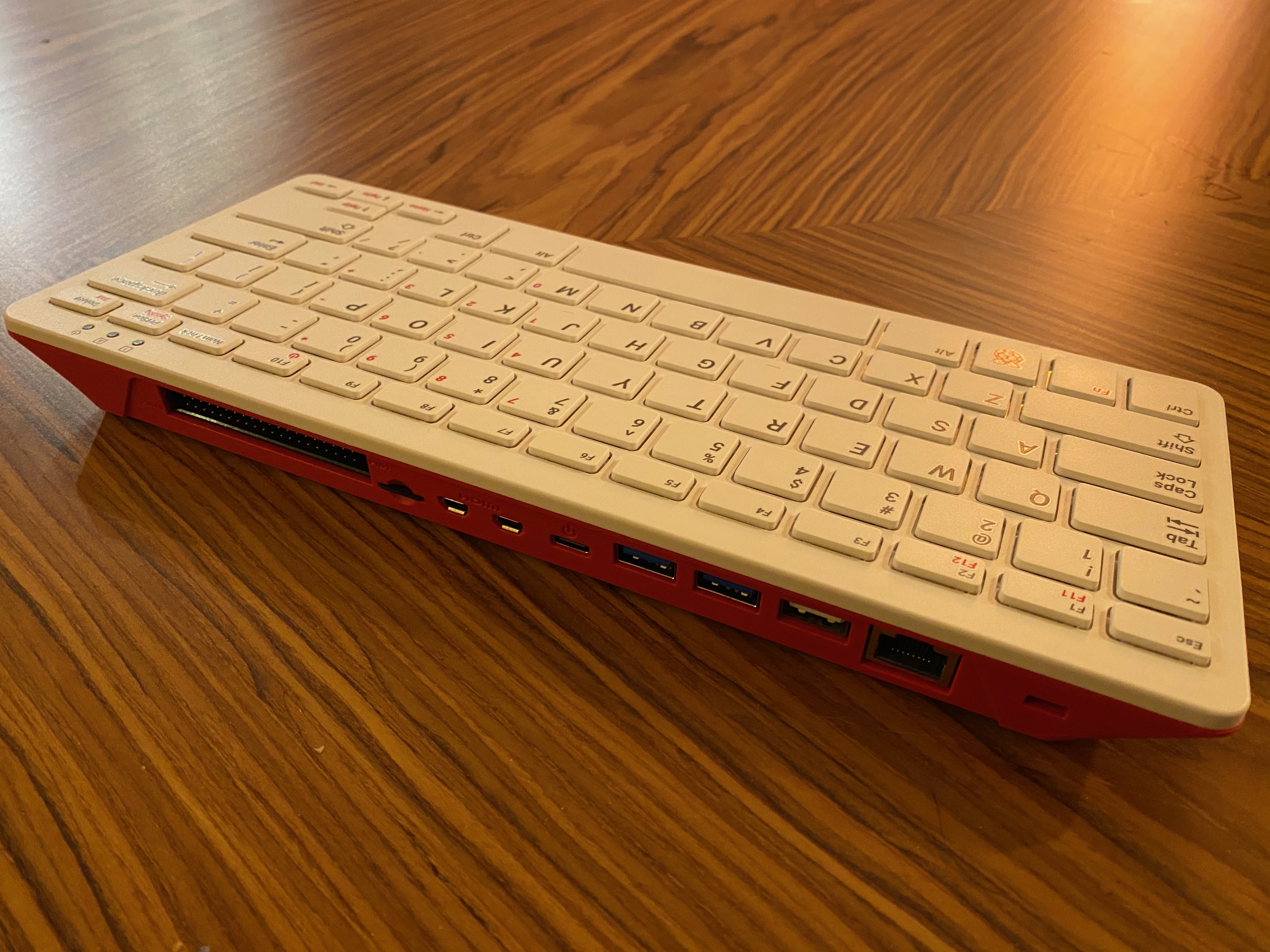
When it comes to ports, you get two micro-HDMI ports, which means that you can plug two 4K displays in case you really need a lot of screen real estate. There are two USB 3.0 ports, one USB 2.0 port and a USB-C port for the power brick.

Like other Raspberry Pi devices, it uses microSD cards for the operating system and to store your data. You can use Raspberry Pi Desktop, a Debian-based Linux operating system, or a third-party operating system, such as Ubuntu.

There are different models with UK, US, French, Italian, German and Spanish keyboard layouts. In addition to the $70 device, you can buy the Raspberry Pi 400 kit with a mouse, a power supply, a micro-HDMI to HDMI cable, a pre-formatted microSD card and the official beginner’s guide for $100. It should be available in the coming days.

Image Credits: Romain Dillet / TechCrunch


from Gadgets – TechCrunch https://ift.tt/3kOP3zJ
via IFTTT https://ift.tt/35O6byY

Wednesday, September 16, 2020

JAWS architect Glen Gordon is joining Sight Tech Global, a virtual event Dec. 2-3

For people who are blind or visually impaired, JAWS is synonymous with freedom to operate Windows PCs with a remarkable degree of control and precision with output in speech and Braille. The keyboard-driven application makes it possible to navigate GUI-based interfaces of web sites and Windows programs. Anyone who has ever listened to someone proficient in JAWS (the acronym for “Job Access With Speech”) navigate a PC can’t help but marvel at the speed of the operator and the rapid fire machine-voice responses from JAWS itself.

For nearly 25 years, JAWS has dominated the field of screen readers, and is in use by hundreds of thousands of people worldwide. It is inarguably one of the greatest achievements in modern assistive technology. We are delighted to announce that Glen Gordon, the architect of JAWS for over 25 years, is joining the agenda at Sight Tech Global, which is a virtual event (December 2-3) focused on how AI-related technologies will influence assistive technology and accessibility in the years ahead. Attendance is free and registration is open.

Blind since birth, Gordon’s interest in accessibility developed out of what he calls “a selfish desire to use Windows at a time when it was not at all clear that graphical user interfaces could be made accessible.” He has an MBA from the UCLA Anderson School, and he learned software development through “the school of hard knocks and lots of frustration trying to use inaccessible software.” He is an audio and broadcasting buff and host of FSCast, the podcast from Freedom Scientific.

The latest public beta release of JAWS contains a glimpse of the future for the storied software: It now works with certain user voice commands — “Voice Assist” — and provides more streamlined access to image descriptions, both thanks to AI technologies that the JAWS team at Freedom Scientific is using in JAWS as well as FUSION (which combines JAWS and ZoomText, a screen magnifier). Those updates address two of JAWS’ challenges — the complexity of the available keyboard command set that intimidates some users and “alt tags” on images that don’t always adequately describe the image.

“The upcoming versions of JAWS, ZoomText, and Fusion use natural language processing to allow many screen reader commands to be performed verbally,” says Gordon. “You probably wouldn’t want to speak every command, but for the less common ones Voice assist offers a way to minimize the key combinations that you need to learn.”

“Broadly speaking, we’re looking to make it easier for people to use a smaller command set to work efficiently. This fundamentally means making our products smarter, and being able to anticipate what a user wants and needs based on their prior actions. Getting there is an imprecise process and we’ll continue to rely on user feedback to help guide us towards what works best.”

The next generation of screen readers will take advantage of AI, among other technologies, and that will be a major topic at Sight Tech Global on December 2-3. Get your free pass now.

Sight Tech Global welcomes sponsors. Current sponsors include Verizon Media, Google, Waymo, Mojo Vision and Wells Fargo. The event is organized by volunteers and all proceeds from the event benefit The Vista Center for the Blind and Visually Impaired in Silicon Valley.

Pictured above: JAWS Architect Glen Gordon in his home audio studio. 


from Gadgets – TechCrunch https://ift.tt/35J094z
via IFTTT https://ift.tt/3kBVJ3J

Thursday, July 2, 2020

Festo’s latest biomimetic robots are a flying feathered bird and ball-bottomed helper arm

You could be excused for thinking that German robotics company Festo does nothing but put together fabulous prototype robots built to resemble kangaroos, jellyfish, and other living things. They do in fact actually make real industrial robots, but it’s hard not to marvel at their biomimetic experiments; Case in point, the feathered BionicSwift and absurd BionicMobileAssistant motile arm.

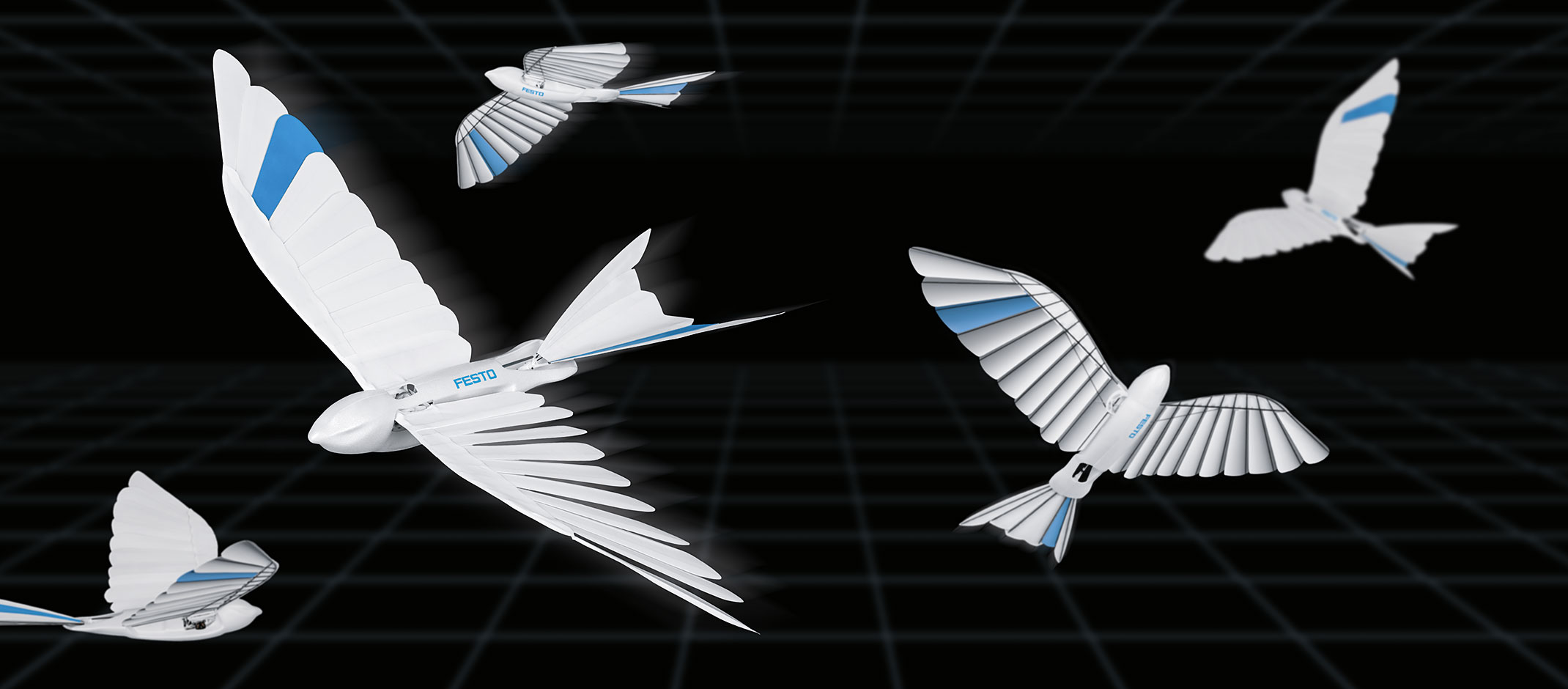
Festo already has a flying bird robot — I wrote about it almost 10 years ago. They even made a flying bat as a follow-up. But the BionicSwift is more impressive than both because, in an effort to more closely resemble its avian inspiration, it flies using artificial feathers.

Image Credits: Festo

“The individual lamellae [i.e. feathers] are made of an ultralight, flexible but very robust foam and lie on top of each other like shingles. Connected to a carbon quill, they are attached to the actual hand and arm wings as in the natural model,” Festo writes in its description of the robot.

The articulating lamellae allow the wing to work like a bird’s, forming a powerful scoop on the downstroke to push against the air, but separating on the upstroke to produce less resistance. Everything is controlled on-board, including the indoor positioning system that the bird was ostensibly built to demonstrate. Flocks of BionicSwifts can fly in close quarters and avoid each other using an ultra wideband setup.

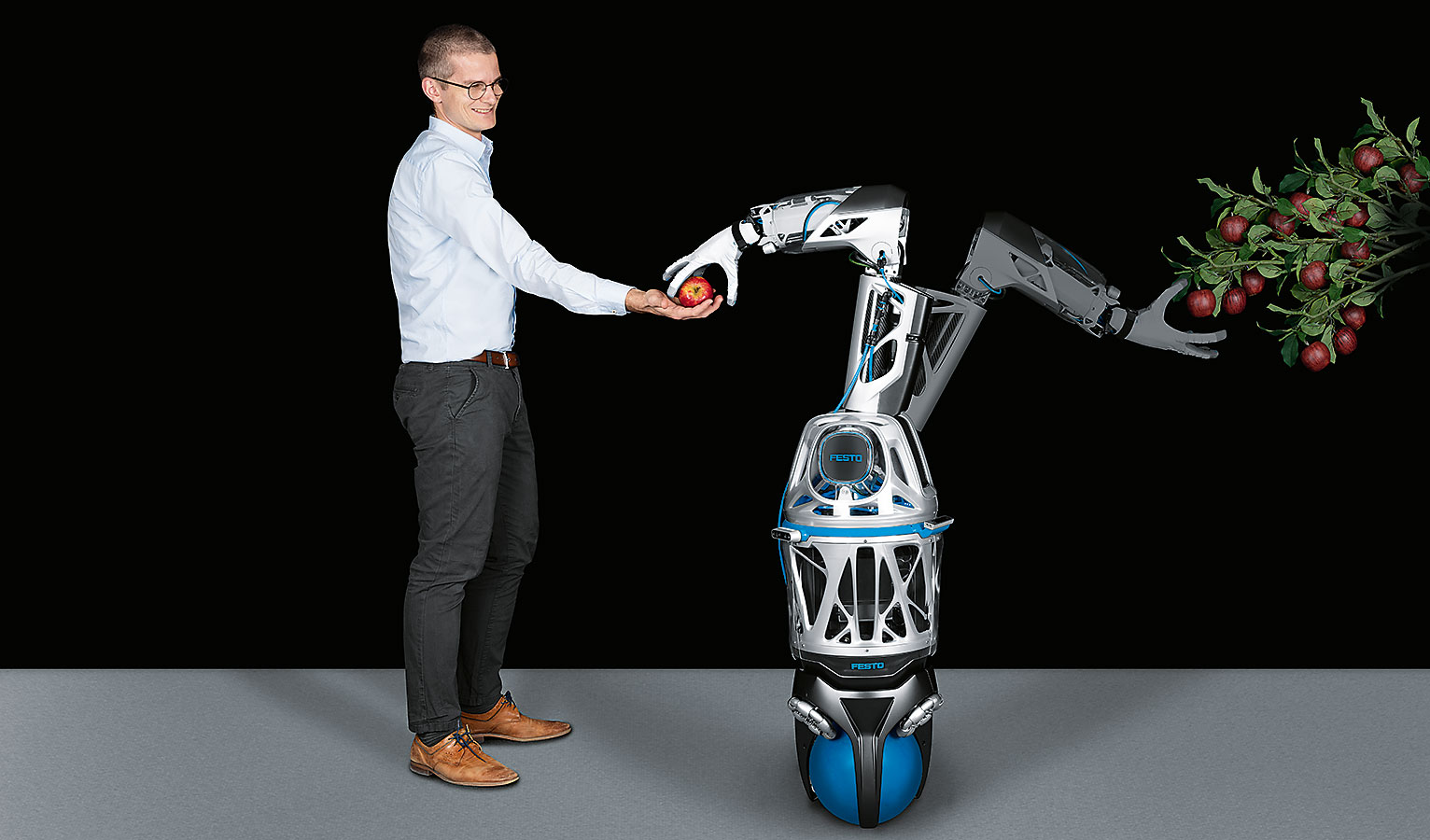
Festo’s BionicMobileAssistant seems like it would be more practical, and in a way it is, but not by much. The robot is basically an arm emerging from a wheeled base — or rather a balled one. The spherical bottom is driven by three “omniwheels,” letting it move easily in any direction while minimizing its footprint.

The hand is a showcase of modern robotic gripper design, with all kinds of state of the art tech packed in there — but the result is less than the sum of its parts. What makes a robotic hand good these days is less that it has a hundred sensors in the palm and fingers and huge motility for its thumb, but rather intelligence about what it is gripping. An unadorned pincer may be a better “hand” than one that looks like the real thing because of the software that backs it up.

Not to mention the spherical movement strategy makes for something of an unstable base. It’s telling that the robot is transporting scarves and not plates of food or parts.

Of course, it’s silly to criticize such a machine, which is aspirational rather than practical. But it’s important to understand that these fascinating creations from Festo are hints at a possible future more than anything.


from Gadgets – TechCrunch https://ift.tt/3ilF5Fb
via IFTTT https://ift.tt/38kpRLY

Monday, June 22, 2020

Watch Apple’s WWDC keynote live right here

Apple is holding a keynote today on the first day of its developer conference, and the company is expected to talk about a ton of software updates. WWDC is a virtual event this year, but you can expect the same amount of news, in a different format. At 10 AM PT (1 PM in New York, 6 PM in London, 7 PM in Paris), you’ll be able to watch the event as the company is streaming it live.

Rumor has it that the company plans to unveil new versions of its operating systems. Get ready for iOS 14 and its sibling iPadOS 14, a new version of macOS, some updates for watchOS and tvOS as well.

But the most interesting rumor of the year is that Apple could announce a major change for the Mac. The company could start using its own in-house ARM systems on a chip instead of Intel’s processors. It would have a ton of consequences for third-party apps running on your Mac as well as Mac hardware in general. Imagine a MacBook with a battery that lasts as long as what you get from an iPad. There could be some more hardware news, such as a new design for the iMac or some Tile-style hardware trackers.

You can watch the live stream directly on this page as Apple is streaming its conference on YouTube.

If you have an Apple TV, you can download the Apple Events app in the App Store. It lets you stream today’s event and rewatch old ones. The app icon was updated a few days ago for the event.

And if you don’t have an Apple TV and don’t want to use YouTube, the company also lets you live-stream the event from the Apple Events section on its website. This video feed now works in all major browsers — Safari, Microsoft Edge, Google Chrome and Mozilla Firefox.

Of course, you also can read TechCrunch’s live blog if you don’t want to stop everything and watch a video.


from Gadgets – TechCrunch https://ift.tt/3hMA6wJ
via IFTTT https://ift.tt/37N1KFt

Thursday, April 30, 2020

The ‘PuffPacket’ could help researchers learn when, how and why people vape

Vaping is a controversial habit: it certainly has its downsides, but anecdotally it’s a fantastic smoking cessation aid. The thing is, until behavioral scientists know a bit more about who does it, when, how much and other details, its use will continue to be something of a mystery. That’s where the PuffPacket comes in.

Designed by Cornell engineers, the PuffPacket is a small device that attaches to e-cigarettes (or vape pens, or whatever you call yours) and precisely measures their use, sharing that information with a smartphone app for the user, and potentially researchers, to review later.

Some vaping devices are already set up with something like this, to tell a user when the cartridge is running low or a certain limit has been reached. But generally when vaping habits are studied, they rely on self-report data, not proprietary apps.

“The lack of continuous and objective understanding of vaping behaviors led us to develop PuffPacket to enable proper measurement, monitoring, tracking and recording of e-cigarette use, as opposed to inferring it from location and activity data, or self-reports,” said PhD student Alexander Adams, who led the creation of the device, in a Cornell news release.

The device fits a number of e-cigarette types, fitting between the mouthpiece and the heating element. It sits idle until the user breathes in, which activates the e-cigarette’s circuits, and the PuffPacket’s as well. By paying attention to the voltage, it can tell how much liquid is being vaporized, as well as simpler measurements like the duration and timing of the inhalation.

An example using real data of how location and activity could be correlated with vaping

This data is sent to the smartphone app via Bluetooth, where it is cross-referenced with other information, like location, motion and other metadata. This may lead to identifiable patterns, like that someone vapes frequently when they walk in the morning but not the afternoon, or after coffee but not meals, or far more at the bar than at home — that sort of thing. Perhaps even (with the proper permissions) it could track use of certain apps — Instagram and vape? Post-game puff?

Some of these might be obvious, others not so much — but either way, it helps to have them backed up by real data rather than asking a person to estimate their own usage. They may not know, understand or wish to admit their own habits.

“Getting these correlations between time of day, place and activity is important for understanding addiction. Research has shown that if you can keep people away from the paths of their normal habits, it can disrupt them,” said Adams.

No one is expecting people to voluntarily stick these things on their vape pens and share their info, but the design — which is being released as open source — could be used by researchers performing more formal studies. You can read the paper describing PuffPacket here.


from Gadgets – TechCrunch https://ift.tt/3d1Zyep
via IFTTT https://ift.tt/2yiDP3l

Monday, February 24, 2020

Forensic Architecture redeploys surveillance state tech to combat state-sponsored violence

The specter of constant surveillance hangs over all of us in ways we don’t even fully understand, but it is also possible to turn the tools of the watchers against them. Forensic Architecture is exhibiting several long-term projects at the Museum of Art and Design in Miami that use the omnipresence of technology as a way to expose crimes and violence by oppressive states.

Over seven years Eyal Weizman and his team have performed dozens of investigations into instances of state-sponsored violence, from drone strikes to police brutality. Often these events are minimized at all levels by the state actors involved, denied or no-commented until the media cycle moves on. But sometimes technology provides ways to prove a crime was committed and occasionally even cause the perpetrator to admit it — hoisted by their own electronic petard.

Sometimes this is actual state-deployed kit, like body cameras or public records, but it also uses private information co-opted by state authorities to track individuals, like digital metadata from messages and location services.

For instance, when Chicago police shot and killed Harith Augustus in 2018, the department released some footage of the incident, saying that it “speaks for itself.” But Forensic Architecture’s close inspection of the body cam footage and cross reference with other materials makes it obvious that the police violated numerous rules (including in the operation of the body cams) in their interaction with him, escalating the situation and ultimately killing a man who by all indications — except the official account — was attempting to comply. It also helped additional footage see the light which was either mistakenly or deliberately left out of a FOIA release.

In another situation, a trio of Turkish migrants seeking asylum in Greece were shown, by analysis of their WhatsApp messages, images, and location and time stamps, to have entered Greece and been detained by Greek authorities before being “pushed back” by unidentified masked escorts, having been afforded no legal recourse to asylum processes or the like. This is one example of several recently that appear to be private actors working in concert with the state to deprive people of their rights.

Situated testimony for survivors

I spoke with Weizman before the opening of this exhibition in Miami, where some of the latest investigations are being shown off. (Shortly after our interview he would be denied entry to the U.S. to attend the opening, with a border agent explaining that this denial was algorithmically determined; We’ll come back to this.)

The original motive for creating Forensic Architecture, he explained, was to elicit testimony from those who had experienced state violence.

“We started using this technique when in 2013 we met a drone survivor, a German woman who had survived a drone strike in Pakistan that killed several relatives of hers,” Weizman explained. “She has wanted to deliver testimony in a trial regarding the drone strike, but like many survivors her memory was affected by the trauma she has experienced. The memory of the event was scattered, it had lacunae and repetitions, as you often have with trauma. And her condition is like many who have to speak out in human rights work: The closer you get to the core of the testimony, the description of the event itself, the more it escapes you.”

The approach they took to help this woman, and later many others, jog her own memory, was something called “situated testimony.” Essentially it amounts to exposing the person to media from the experience, allowing them to “situate” themselves in that moment. This is not without its own risks.

“Of course you must have the appropriate trauma professionals present,” Weizman said. “We only bring people who are willing to participate and perform the experience of being again at the scene as it happened. Sometimes details that would not occur to someone to be important come out.”

A digital reconstruction of a drone strike’s explosion was recreated physically for another exhibition.

But it’s surprising how effective it can be, he explained. One case exposed American involvement hitherto undisclosed.

“We were researching a Cameroon special forces detention center, torture and death in custody occurred, for Amnesty International,” he explained. “We asked detainees to describe to us simply what was outside the window. How many trees, or what else they could see.” Such testimony could help place their exact location and orientation in the building and lead to more evidence, such as cameras across the street facing that room.

“And sitting in a room based on a satellite image of the area, one told us: ‘yes, there were two trees, and one was over by the fence where the American soldiers were jogging.’ We said, ‘wait, what, can you repeat that?’ They had been interviewed many times and never mentioned American soldiers,” Weizman recalled. “When we heard there were American personnel, we found Facebook posts from service personnel who were there, and were able to force the transfer of prisoners there to another prison.”

Weizman noted that the organization only goes where help is requested, and does not pursue what might be called private injustices, as opposed to public.

“We require an invitation, to be invited into this by communities that invite state violence. We’re not a forensic agency, we’re a counter-forensic agency. We only investigate crimes by state authorities.”

Using virtual reality: “Unparalleled. It’s almost tactile.”

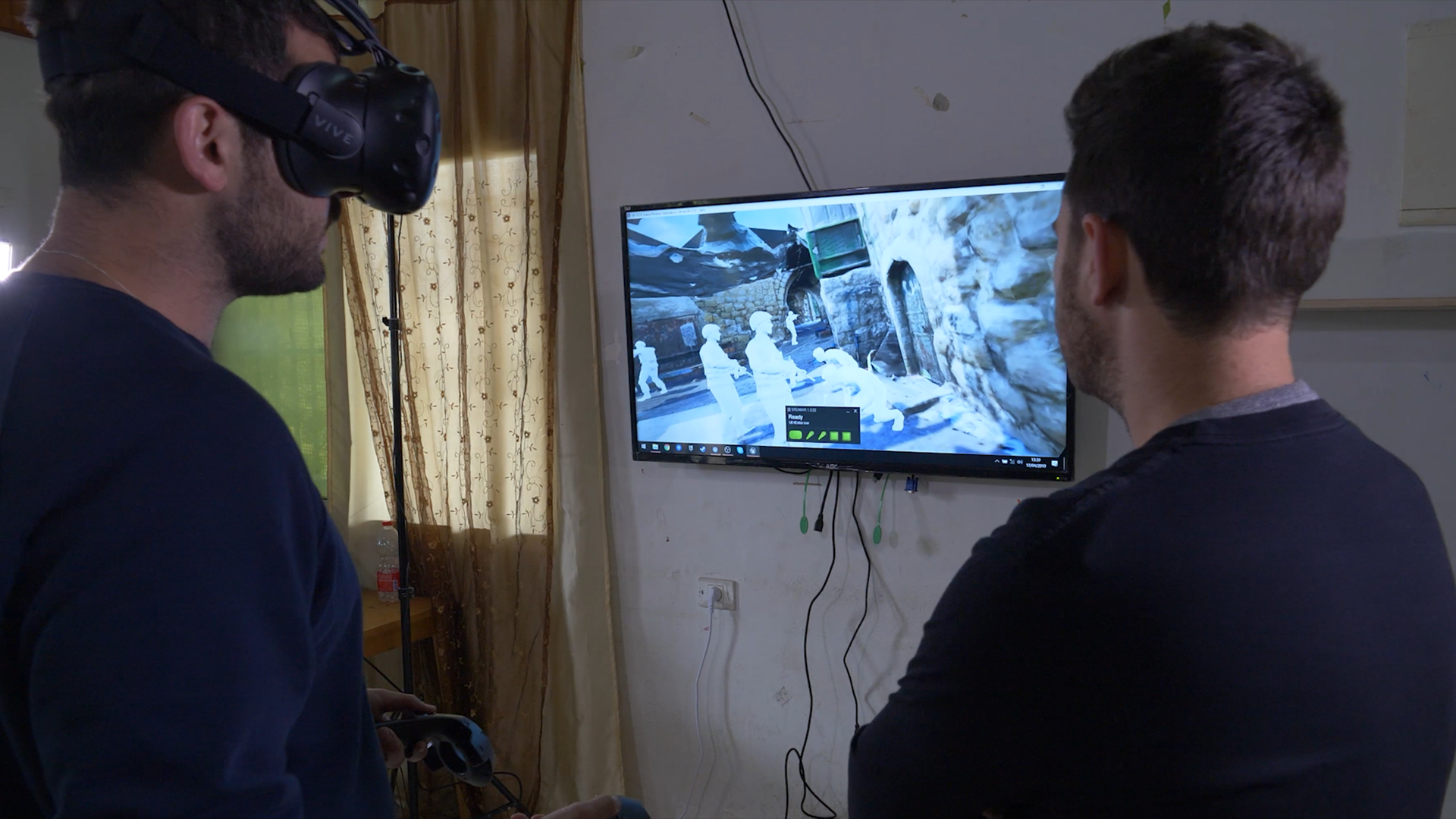
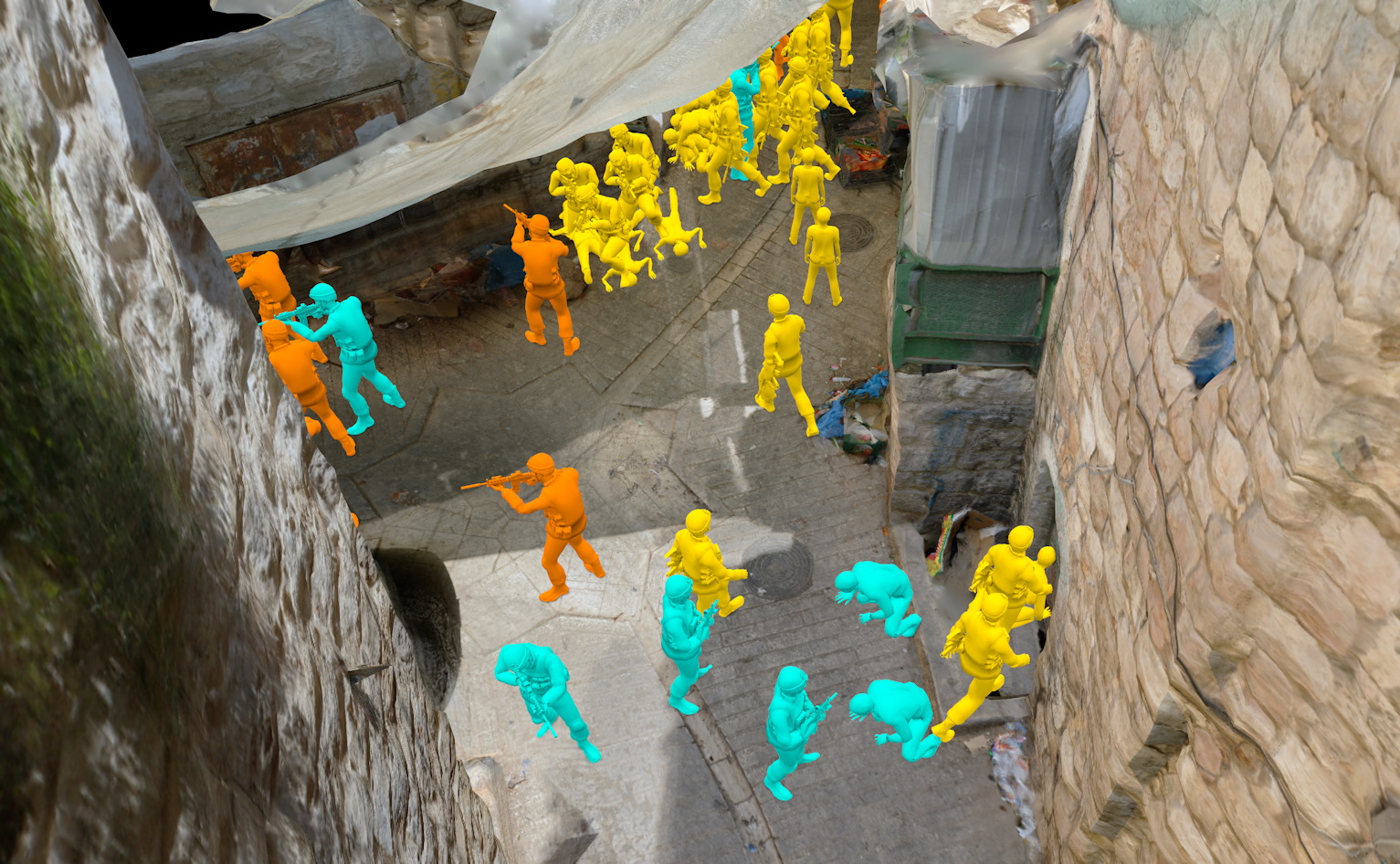
In the latest of these investigations, being exhibited for the first time at MOAD, the team used virtual reality for the first time in their situated testimony work. While VR has proven to be somewhat less compelling than most would like on the entertainment front, it turns out to work quite well in this context.

“We worked with an Israeli whistleblower soldier regarding testimony of violence he committed against Palestinians,” Weizman said. “It has been denied by the Israeli prime minister and others, but we have been able to find Palestinian witnesses to that case, and put them in VR so we could cross reference them. we had victim and perpetrator testifying to the same crime in the same space, and their testimonies can be overlaid on each other.”

Dean Issacharoff – the soldier accused by Israel of giving false testimony – describes the moment he illegally beat a Palestinian civilian. (Caption and image courtesy of Forensic Architecture)

One thing about VR is that the sense of space is very real; If the environment is built accurately, things like sight-lines and positional audio can be extremely true to life. If someone says they saw the event occur here, but the state says it was here, and a camera this far away saw it at this angle… these incomplete accounts can be added together to form something more factual, and assembled into a virtual environment.

“That project is the first use of VR interviews we have done —  it’s still in a very experimental stage. But it didn’t involve fatalities, so the level of trauma was a bit more controlled,” Weizman explained. “We have learned that the level and precision we can arrive at in reconstructing and incident is unparalleled. It’s almost tactile; You can walk through the space, you can see every object: guns, cars, civilians. And you can populate it until the witness is satisfied that this is what they experienced. I think this is a first, definitely in forensic terms, as far as uses of VR.”

A photogrammetry-based reconstruction of the area of Hebron where the incident took place.

In video of the situated testimony, you can see witnesses describing locations more exactly than they likely or even possibly could have without the virtual reconstruction. “I stood with the men at exactly that point,” says one, gesturing towards an object he recognized, then pointing upwards: “There were soldiers on the roof of this building, where the writing is.”

Of course it is not the digital recreation itself that forces the hand of those involved, but the incontrovertible facts it exposes. No one would ever have know that the U.S. had a presence at that detainment facility, and the country had no reason to say it did. The testimony wouldn’t even have been enough, except that it put the investigators onto a line of inquiry that produced data. And in the case of the Israeli whistleblower, the situated testimony defies official accounts that the organization he represented had lied about the incident.

Avoiding “product placement” and tech incursion

Sophie Landres, MOAD’s Curator of Public Programs and Education, was eager to add that the museum is not hosting this exhibit as a way to highlight how wonderful technology is. It’s important to put the technology and its uses in context rather than try to dazzle people with its capabilities. You may find yourself playing into someone else’s agenda that way.

“For museum audiences, this might be one of their first encounters with VR deployed in this way. The companies that manufacture these technologies know that people will have their first experiences with this tech in a cultural or entertainment contrast, and they’re looking for us to put a friendly face on these technologies that have been created to enable war and surveillance capitalism,” she told me. “But we’re not interested in having our museum be a showcase for product placement without having a serious conversation about it. It’s a place where artists embrace new technologies, but also where they can turn it towards existing power structures.”

Boots on backs mean this not an advertisement for VR headsets or 3D modeling tools.

She cited a tongue-in-cheek definition of “mixed reality” referring to both digital crossover into the real world and the deliberate obfuscation of the truth at a greater scale.

“On the one hand you have mixing the digital world and the real, and on the other you have the mixed reality of the media environment, where there’s no agreement on reality and all these misinformation campaigns. What’s important about Forensic Architecture is they’re not just presenting evidence of the facts, but also the process used to arrive at these truth claims, and that’s extremely important.”

In openly presenting the means as well as the ends, Weizman and his team avoid succumbing to what he calls the “dark epistemology” of the present post-truth era.

“The arbitrary logic of the border”

As mentioned earlier, Weizman was denied entry to the U.S. for reasons unknown, but possibly related to the network of politically active people with whom he has associated for the sake of his work. Disturbingly, his wife and children were also stopped while entering the states a day before him and separated at the airport for questioning.

In a statement issued publicly afterwards, Weizman dissected the event.

In my interview the officer informed me that my authorization to travel had been revoked because the “algorithm” had identified a security threat. He said he did not know what had triggered the algorithm but suggested that it could be something I was involved in, people I am or was in contact with, places to which I had traveled… I was asked to supply the Embassy with additional information, including fifteen years of travel history, in particular where I had gone and who had paid for it. The officer said that Homeland Security’s investigators could assess my case more promptly if I supplied the names of anyone in my network whom I believed might have triggered the algorithm. I declined to provide this information.

This much we know: we are being electronically monitored for a set of connections – the network of associations, people, places, calls, and transactions – that make up our lives. Such network analysis poses many problems, some of which are well known. Working in human rights means being in contact with vulnerable communities, activists and experts, and being entrusted with sensitive information. These networks are the lifeline of any investigative work. I am alarmed that relations among our colleagues, stakeholders, and staff are being targeted by the US government as security threats.

This incident exemplifies – albeit in a far less intense manner and at a much less drastic scale – critical aspects of the “arbitrary logic of the border” that our exhibition seeks to expose. The racialized violations of the rights of migrants at the US southern border are of course much more serious and brutal than the procedural difficulties a UK national may experience, and these migrants have very limited avenues for accountability when contesting the violence of the US border.

The works being exhibited, he said, “seek to demonstrate that we can invert the forensic gaze and turn it against the actors—police, militaries, secret services, border agencies—that usually seek to monopolize information. But in employing the counter-forensic gaze one is also exposed to higher level monitoring by the very state agencies investigated.”

Forensic Architecture’s investigations are ongoing; you can keep up with them at the organization’s website. And if you’re in Miami, drop by MOAD to see some of the work firsthand.


from Gadgets – TechCrunch https://ift.tt/2PlmEDy
via IFTTT https://ift.tt/32ssd8r